Chattanooga Audit Estimates $302,000 a Year in Uncollected Take-Home Vehicle Mileage Payments
The Tennessee city stopped the required 30-cents-a-mile payroll deduction in October 2022 without changing its policy, and the April audit found it wasn't monitoring how its 458 take-home vehicles are used.
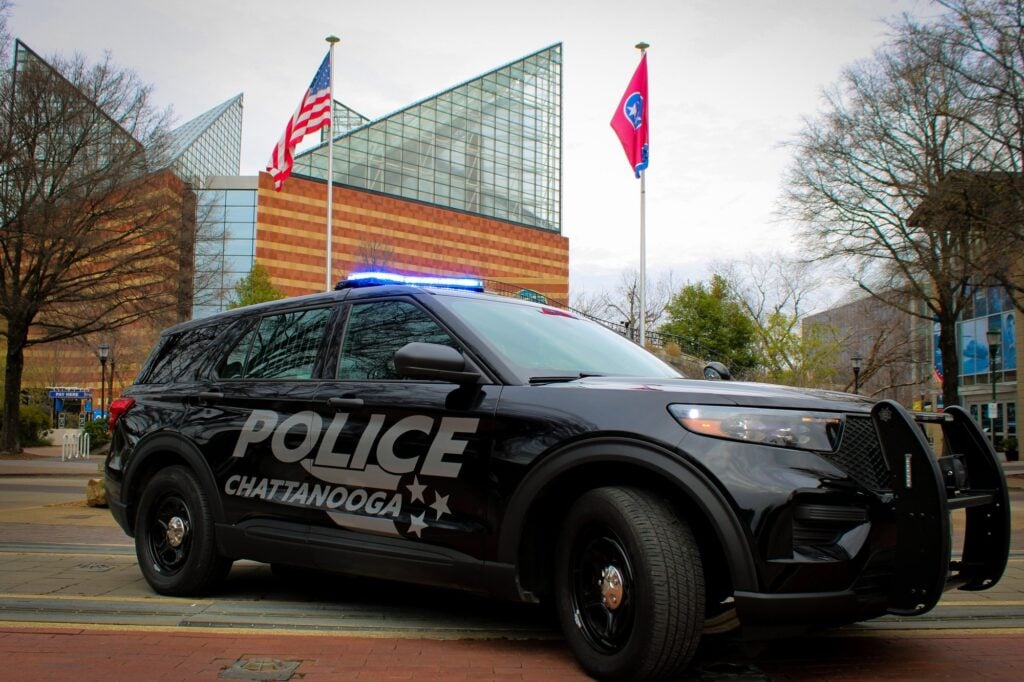
Source: City of Chattanooga Office of Internal Audit ↗
Chattanooga, Tennessee, employees who take a city vehicle home and live outside the city limits are supposed to pay the city back 30 cents for each commute mile driven beyond those limits, through a weekly payroll deduction. The city hasn’t taken those deductions since October 2022, and its Office of Internal Audit estimates the city should have received $302,000 a year from them.
The estimate comes from Performance Audit 25-06, an April 1 review of the city’s take-home vehicle program by City Auditor Stan Sewell’s office. It is based on a statistical sample of vehicles, not a count.
A Deduction Stopped Without a Policy Change
The requirement is still in the city’s Employee Information Guide: employees living outside the city limits “will pay a weekly mileage reimbursement to the City through payroll deduction calculated at a rate of $0.30 per mile.” The audit found otherwise in practice: “The decision to eliminate the reimbursements was conveyed to department heads by administration; however, the policy was not updated nor was the change approved by city council.”
Finance agreed to resume the deductions, with an estimated implementation date of Oct. 1, 2026. The mayor’s press secretary, Stephanie Cepak, told Local 3 News that “the updates related to this audit were approved mid-November.” The Chattanooga Police Department, which holds 387 of the city’s 458 take-home vehicles, called the “failure to collect” description “a complete mischaracterization of the truth,” according to Local 3.
Where the Cars Go Home
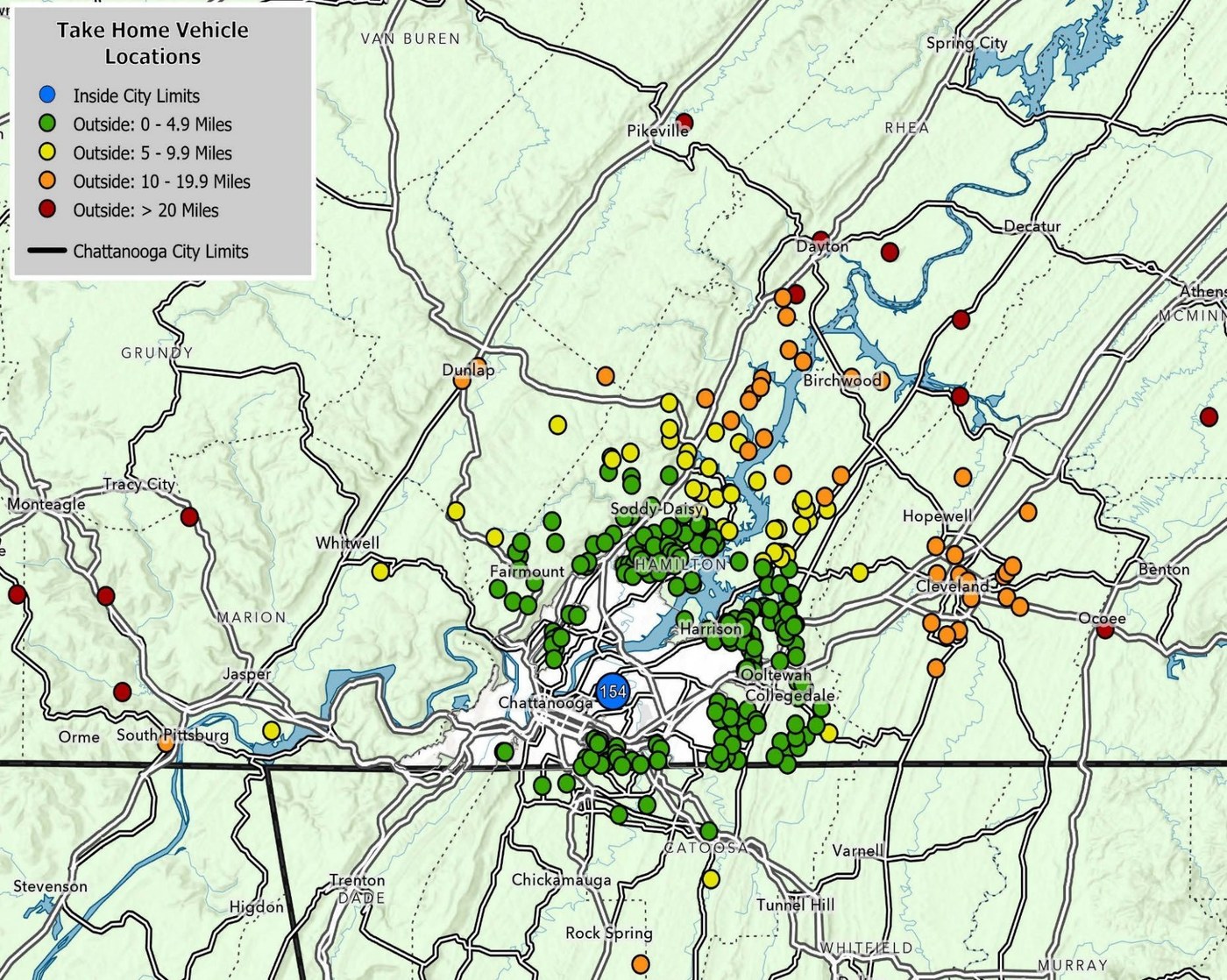
The 458 take-home vehicles make up 29% of the city’s 1,550-vehicle fleet, 63 more than the city’s 2018 audit counted. They log 13,166 round-trip commute miles a day, and 82% of that mileage is outside the city limits. Of the 304 vehicles that go home outside the city, 81 commute more than 20 miles. The longest commute, to Sewanee, Tennessee, is 58.4 miles each way. City policy lets employees with take-home vehicles live within a 75-mile radius of their primary work location.
What Else the Auditors Found
- No department submitted a written take-home vehicle program, documented assignments, monitored use, reported fringe benefits or collected the mileage payments, as policy requires.
- Vehicles are assigned by position rather than documented need, and a take-home vehicle “sometimes functions as an employee benefit rather than a business need.”
- The policy doesn’t require departments to track what their programs cost, and many city vehicles have no GPS.
- Eleven employees in six departments received a taxable fringe benefit the city never reported.
Management concurred with all 17 of the audit’s recommendations. They include making the Fleet Division the program’s administrator, requiring measurable eligibility criteria such as callbacks and response times, annual cost/benefit reviews, tracking business and personal miles, re-evaluating the 75-mile radius and a standard authorization form signed by each employee.
Sewell’s office also audited the city’s fleet management division, finding more than $1 million spent without authorization.