MTA Plans Year-Long Pilots of Overseas Buses to Draw New Makers to the U.S.
Rolling stock chief Jessie Lazarus says pilot fleets of five to 10 buses each would run in New York service for 52 weeks, giving foreign manufacturers a low-risk look at the market before they build here.
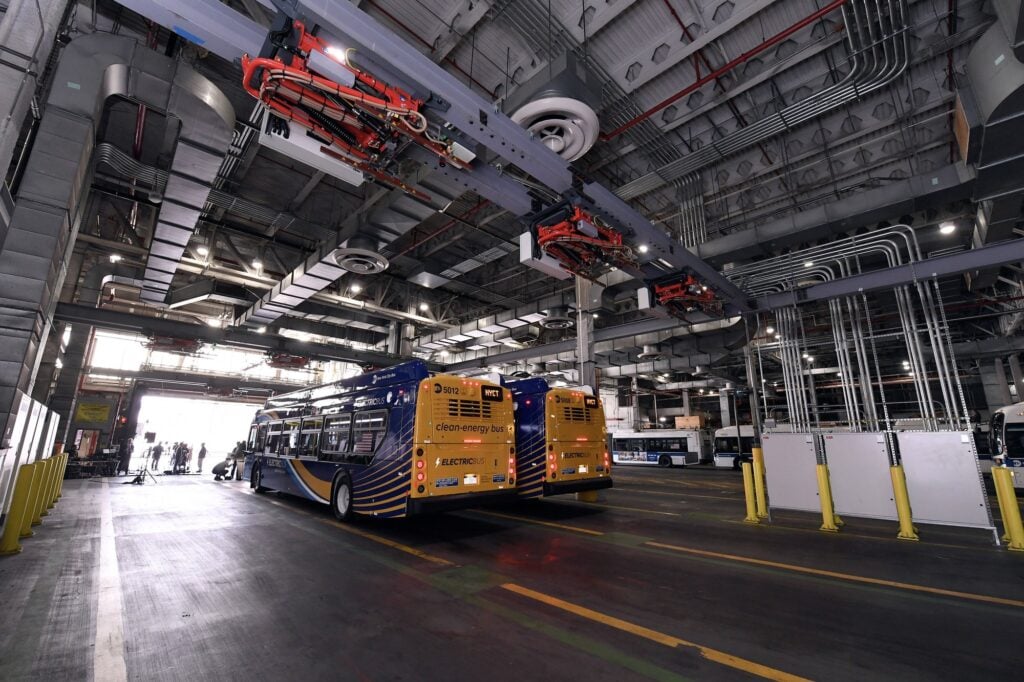
Source: Streetsblog NYC ↗
The Metropolitan Transportation Authority plans to buy small pilot fleets of buses from European and Asian manufacturers and run them in New York City service for a year, the agency’s head of rolling stock told Streetsblog NYC in an interview published Nov. 25.
“We are going to run several pilot fleets,” Jessie Lazarus said. “Think of the fleet size as five to 10 buses. We’re going to run those buses for 52 weeks.”
The goal is to get manufacturers that don’t build in the U.S. to set up here, Lazarus said. The MTA would learn how unfamiliar designs hold up in its operation, and the builders would learn the city’s operating environment before committing to an American factory. “I think for any new manufacturing relationship, we need to de-risk this for both sides,” she said.
The MTA would buy the pilot buses without federal funding, and the pilots will emphasize electric buses, Streetsblog reported.
Why the MTA Is Looking Abroad
Federal funding covers 80% of a bus’s cost when it meets Buy America rules, but the domestic market has shrunk to two main builders, Gillig and New Flyer, according to the Streetsblog report, which cited the Eno Center for Transportation. Gillig does not bid on large-agency requests for proposals, and the MTA paused an order for almost 500 New Flyer electric buses earlier this year over reliability problems.
Lazarus made the same case to the MTA’s Capital Program Committee in June. The domestic market is “significantly smaller than those in Europe and Asia, resulting in fewer manufacturers, limited production capacity, reduced competition, and higher costs,” the committee minutes summarize her as saying. She told the committee the agency was engaging both domestic and international manufacturers.
The need is large. MTA executives say the agency must order 4,500 buses over the next few years, according to Streetsblog. In September, Gov. Kathy Hochul announced an MTA request for proposals for 650 compressed natural gas buses, the largest single fleet upgrade since 2013.
“Having a funded capital program with $12 billion set aside for rolling stock and very specific commitments on bus replacement and bus purchase is the biggest tool that we have,” Lazarus told Streetsblog.
Suppliers and Tariffs
Lazarus said the MTA also hopes the overseas builders’ component suppliers follow them. Parts makers have gone through the same shrinkage as bus builders, she said: the supplier market “is pretty similar to that in the [original equipment manufacturer] side, which is a ton of consolidation and not a lot of competition.”
She called tariffs the biggest obstacle. “We can overcome a lot, but we can’t really overcome the current volatility of the tariff environment,” she said.
Lazarus said she hopes MTA orders, combined with demand from other transit agencies, will be enough to bring manufacturers to North America. “We don’t want to be buying from abroad once we solve the problem, we’re trying to solve the problem so we don’t have to do that,” she said.
Editor’s note: This industry update was provided by the supplier or source and has not been independently verified by Modern Public Fleet. How we handle supplier announcements