CDOT Deploys 24/7 Crash Protection Trucks on 3 Denver Interstates
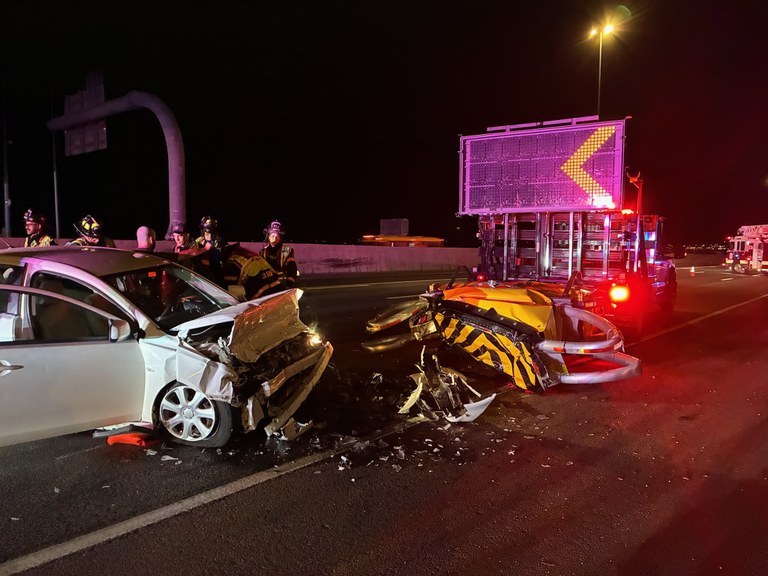
Neon green attenuator units absorbed a real strike on Oct. 10 before the program was publicly announced.
Source: Colorado DOT ↗
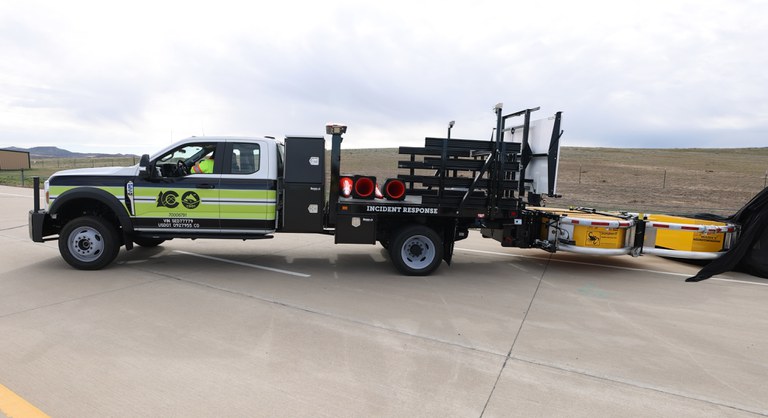
Three Denver-area interstates now carry crash protection trucks around the clock, as the Colorado Department of Transportation deployed neon green attenuator units on Interstate 25, Interstate 225 and Interstate 70 in Denver, with plans to expand the fleet to other regions of Colorado.
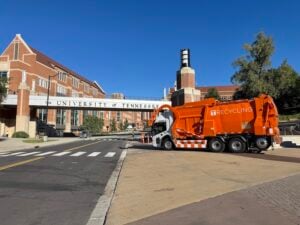
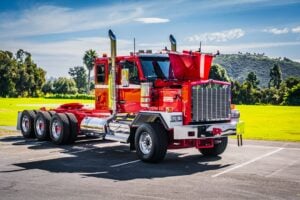
Each truck carries a large arrow board to direct motorists away from incident scenes and a rear-mounted attenuator designed to absorb the impact if a vehicle enters a work or crash zone. CDOT said the equipment protects both first responders and the apparatus they bring to a scene, noting it can take a fire department up to four years to replace a fire engine struck while responding to an incident.
The trucks were in service before the public announcement. Shoshana Lew, CDOT’s executive director, said that on Oct. 10 a motorist approaching a crash scene struck one of the new trucks instead of reaching the responders working it. “Everyone who works on our roadways deserves to go home safe at the end of their shift,” Lew said. “These Crash Protection Trucks, paired with our expanded Incident Response team, add a critical layer of protection for first responders and the traveling public. We already saw this firsthand on Saturday, Oct. 10, when a motorist was about to enter a crash scene and instead hit one of our Crash Protection Trucks. The truck worked exactly how it was designed and protected our first responders tending to the scene.”
CDOT paired the truck deployment with an increase in Incident Responders, the agency staff who work alongside fire, law enforcement and tow companies at roadway scenes. The expanded staffing is what enables the 24/7 coverage, according to the agency.
More than 80% of Colorado’s first responders are now trained in Traffic Incident Management, a program that teaches rapid scene clearance to reduce secondary crashes. Colorado has also enacted a requirement that new police officers complete Traffic Incident Management training before they begin patrol duty; that requirement takes effect in January 2027.
Col. Matthew C. Packard, chief of the Colorado State Patrol, said his agency set a goal five years ago that every trooper become nationally certified in Traffic Incident Management. “We’ve grown our situational awareness as an agency, prioritized scene safety and regularly talk about how to improve,” Packard said. “The introduction of CDOT’s Crash Protection Trucks is another positive step forward in reducing vulnerabilities for first responders, crash victims and other roadside workers.”
Brighton Fire Chief Brycen Garrison, whose department participated in the announcement alongside CDOT and the Colorado State Patrol, said the new trucks reduce the risk his crews face on busy roadways. “Every time our firefighters respond to an incident on a busy roadway, they’re exposed to the risk of being struck by passing vehicles,” Garrison said. “CDOT’s new Crash Protection Trucks provide an important layer of protection, allowing our crews to focus on helping those in need while reducing the risk of a secondary crash.”
Federal Highway Administration administrator Sean McMaster and the National Highway Traffic Safety Administration also participated in the announcement. McMaster said the agency would continue working with CDOT to encourage the use of tools, techniques and training to prevent first responder fatalities.
Colorado’s Move Over law requires drivers approaching a stationary emergency vehicle, tow truck or CDOT vehicle with flashing lights to move one lane when it is safe to do so, or reduce speed by 20 mph when a lane change is not possible. The timeline for expanding the crash protection truck fleet beyond the three Denver interstates has not been set.