Colorado School District Deploys 6 Electric Buses That Double as Grid Backup Batteries
Cherry Creek School District's V2G-capable buses run routes by day and feed the Denver-area grid at peak demand.
Source: Good News Network ↗
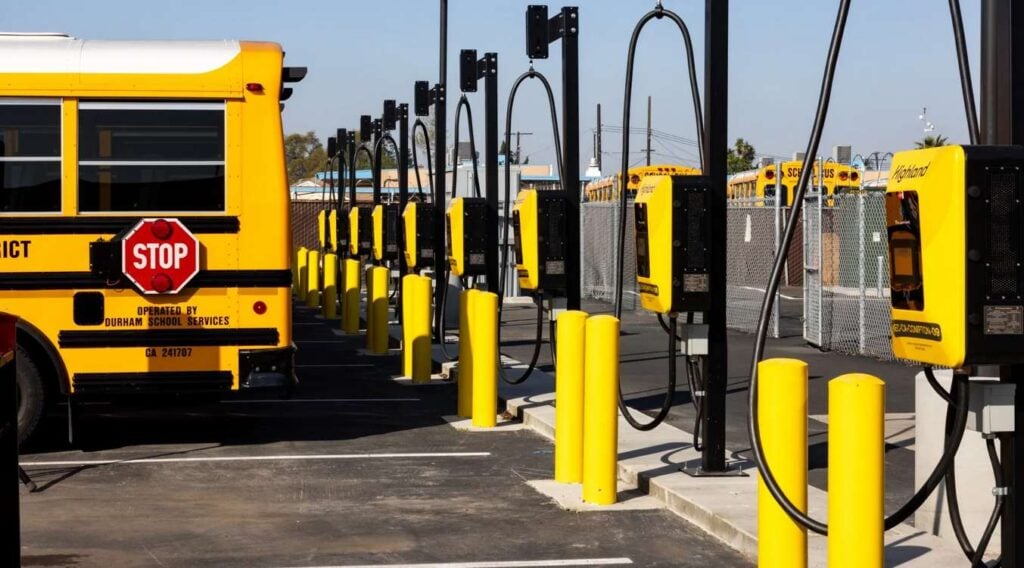
Vehicle-to-grid technology is getting its first school-bus workout in the Denver area: six electric buses in the Cherry Creek School District in Colorado return to their depot after afternoon routes and push stored energy back to the local grid during peak demand hours.
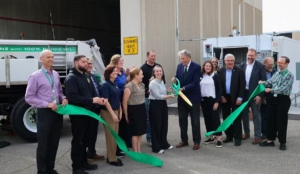
“This partnership works to support our environmental goals while delivering long-term operational savings,” said Jennifer Perry, Cherry Creek’s interim superintendent, speaking at the June 3 groundbreaking for the new bus facility.
The buses charge overnight when grid demand is lowest, run morning and afternoon routes, and return with enough remaining capacity to support residential demand during the late-afternoon and early-evening surge when households come home and draw on appliances and air conditioning. Highland Electric Fleets designed the bi-directional charging system that makes the transfer possible.
Highland Electric Fleets collected a $2.4 million rebate through a federal government partnership to fund the six buses and the depot facility. Cherry Creek School District paid nothing toward the cost.
Perry cited two ongoing cost drivers that support the program’s economics: elevated diesel prices and the 95% reduction in moving parts that electric drivetrains carry relative to diesel engines, which lowers long-term maintenance costs.
Highland Electric Fleets estimates that two dozen buses operating in this configuration could help the grid absorb peak demand from 100 homes, with a fleet of a few hundred capable of supporting more than a thousand. The company has additional pilot programs of the same type running in other locations.
Editor’s note: This industry update was written by Modern Public Fleet staff from an announcement by the supplier or source named above. How we handle supplier announcements