Report Authors Say Electric Bus Depots Rely on Fire Codes Not Written for Them
The Fire Protection Research Foundation’s transit bus fire report is due in early 2027; co-authors recommend a hazard mitigation analysis.
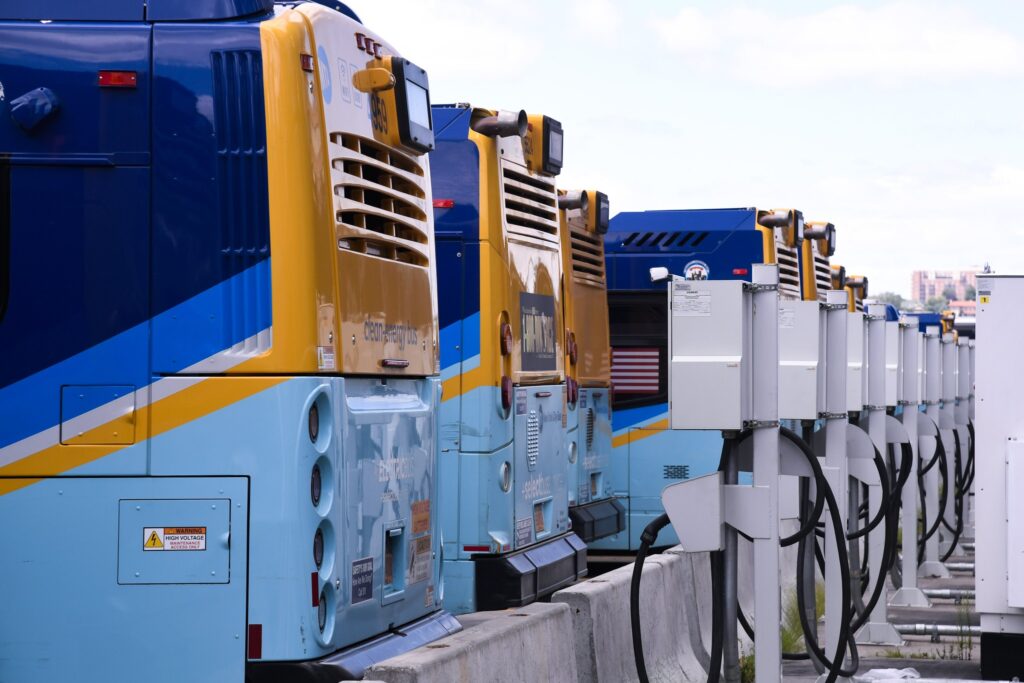
Source: NFPA Journal ↗
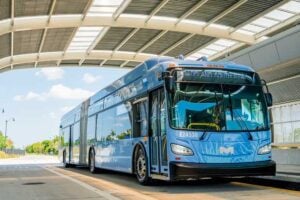
Transit agencies adding battery-electric buses are relying on fire and building codes that were not written for bus depots full of large lithium-ion batteries, according to co-authors of a Fire Protection Research Foundation report, in a condensed version of an NFPA Podcast interview published in NFPA Journal on Nov. 6. The report, “Lithium-ion Battery Transit Bus Fire Prevention and Risk Management,” is due in early 2027 after three years of work. The research was done for the Transportation Research Board’s Transit Cooperative Research Program, Project E-14.
Researchers and safety officials say there is no evidence that electric buses catch fire at higher rates than diesel buses, NFPA Journal reported. Fires involving large lithium-ion batteries, however, tend to spread faster, are harder to put out and can release flammable gases that create explosive atmospheres in enclosed spaces.
Battery Size and Hazard
Bus battery capacities run five to 10 times those of a standard EV, up to about 900 kilowatt-hours compared with about 200 kilowatt-hours for the largest EVs, said Victoria Hutchison, chief operating officer at Energy Safety Response Group. Adam Jakubowski, a senior consultant at the firm, said 900 kilowatt-hours is about what the average U.S. home uses in a month.
A passenger vehicle or truck fire has a heat release rate of 6 to 20 megawatts, Hutchison said, but an electric transit bus carries so much fire load that it cannot be burned safely in a lab. Researchers have relied on modeling, and the firm plans an outdoor burn.
The Code Gap
Hutchison said the biggest problem is having to lean on traditional building and fire standards, such as NFPA 13 for sprinklers, NFPA 72 for fire alarms and NFPA 855 for stationary energy storage, none of which fits the activity in a bus depot. NFPA 800, the Battery Safety Code, is in draft form with some preliminary provisions. Converting a diesel depot to electric buses is typically not treated as a change in occupancy, Jakubowski said, so the requirements don’t necessarily change, and existing suppression and detection systems designed for diesel storage may be challenged. Proposals for higher sprinkler densities have not been validated by large-scale test data, Hutchison said.
What the Authors Recommend
The report recommends a hazard mitigation analysis and a layers-of-protection approach, and it identifies more than 30 threats depots could face. Jakubowski said the two most important barriers are emergency response planning and fire department response, which work only if agencies train on them. Hutchison said the battery is not involved in more than half of electric bus fires, so responders need to recognize the signs, and batteries sit in different places on different buses.
Adoption
BloombergNEF estimates 43% of buses purchased worldwide in 2026 are fully electric or hybrid, rising to 74% by 2035. CALSTART, now Catalyst Mobility, counts just over 7,000 electric buses in the U.S. in 2025, roughly 10% of the transit bus fleet, growing by more than 10% a year.