Vision Zero in Action: How Public Fleets Are Making Roads Safer
Madison and New York City show how telematics, safer vehicle specs, driver training and speed-limiting technology put public fleets at the center of Vision Zero
When Mahanth Joishy joined the City of Madison, Wisconsin, as its fleet service superintendent, he wanted to bring Vision Zero to the city and state for the first time. It was one of his primary reasons for taking the job. But there was little interest at first.
That changed when new leadership came on board. Traffic Engineering Director Yang Tao and Mayor Satya Rhodes-Conway supported and led the initiative, and the city launched its program in 2020. Today, Madison’s fleet is using telematics, driver coaching and safer vehicle specifications to support the city’s Vision Zero goals.
Joishy, who, prior to Madison, had served as New York City’s director of fleet safety and is now co-founder and principal of F2 Fleet Consulting, knows that Vision Zero isn’t typically a fleet-led initiative. It’s usually led by transportation or traffic engineering departments, but fleet can play a major role.
“You need executive leadership on Vision Zero, ideally mayoral, to include all the different departments that would be involved,” Joishy said.
Setting an Example
One major contribution to Vision Zero is that fleet vehicles are moving billboards.
“Fleet [vehicles] cover the roadways of your city and will be seen by everyone in the community. Your city vehicles or your government fleets can set an example for the rest of the community when it comes to driving safely and sustainably,” Joishy said. “For example, slowing down saves gasoline or diesel … and reduces collisions too.”

Eric Richardson, founder and principal of EBR Safety Solutions and previously deputy chief fleet management officer at New York City, focuses on advising public agencies on fleet safety and Vision Zero strategies. He agrees that setting an example is key.
“I think where we’ve seen the most success in Vision Zero is where there’s been a fleet component. A lot of that has had to do with the fact that we’ve been focusing on ensuring we have safer vehicles in government fleets, in regulated fleets and in contracted fleets,” he said. “We would have never had side guards in New York City or a Stop Super Speeder Law in many states across the country leveraging intelligent speed assistance if not for the fact that city government did it first.”
Richardson also points to Chicago, Boston, Los Angeles and San Francisco as cities where government fleet safety initiatives have helped establish standards for other fleets.
Madison: Making Safety Improvements Happen
Madison’s initial Vision Zero fleet initiatives include expanding safety technologies into heavy-duty vehicles, spec’ing vehicles with crash prevention technology and implementing telematics to track safety behaviors for coaching and policy decisions.
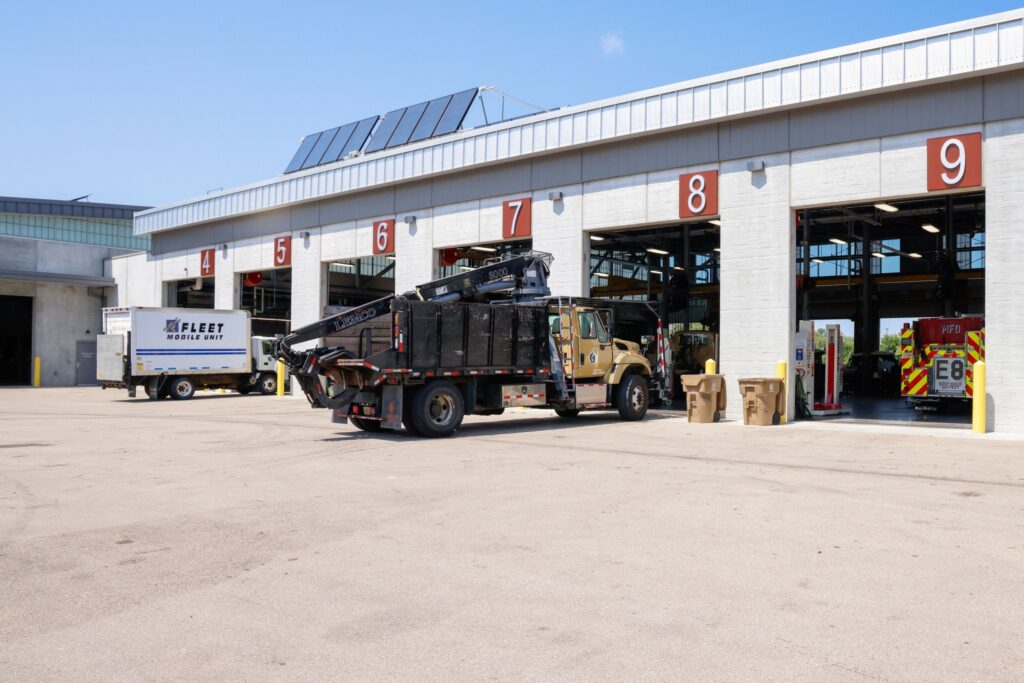

According to Rachel Darken, current fleet service superintendent, successful fleet safety initiatives continue and evolve as needs change. The fleet has expanded its GPS monitoring to most Public Works and Transportation vehicles. It has expanded its safe driving reports and is collaborating with agencies on driver coaching. It’s also continuing to buy safer vehicles when possible.
However, it’s also important to pivot when things don’t work. The city found that safe driving bumper stickers weren’t working. The city did receive calls and reports, but these didn’t translate into measured driver improvement.
Darken has a list of goals that she hopes to accomplish as time, resources and budgeting allow. She wants to expand safe driver training programs and make it mandatory for all drivers, with remediation programs for chronic offenders. She wants to provide on-demand training rather than real-time scheduled training. She’d like to roll out an intelligent speed assistance pilot.
“There are a lot of tools that are out there that we don’t necessarily have the ability to [implement] all at once,” she explained.
NYC: Building on a Successful Program
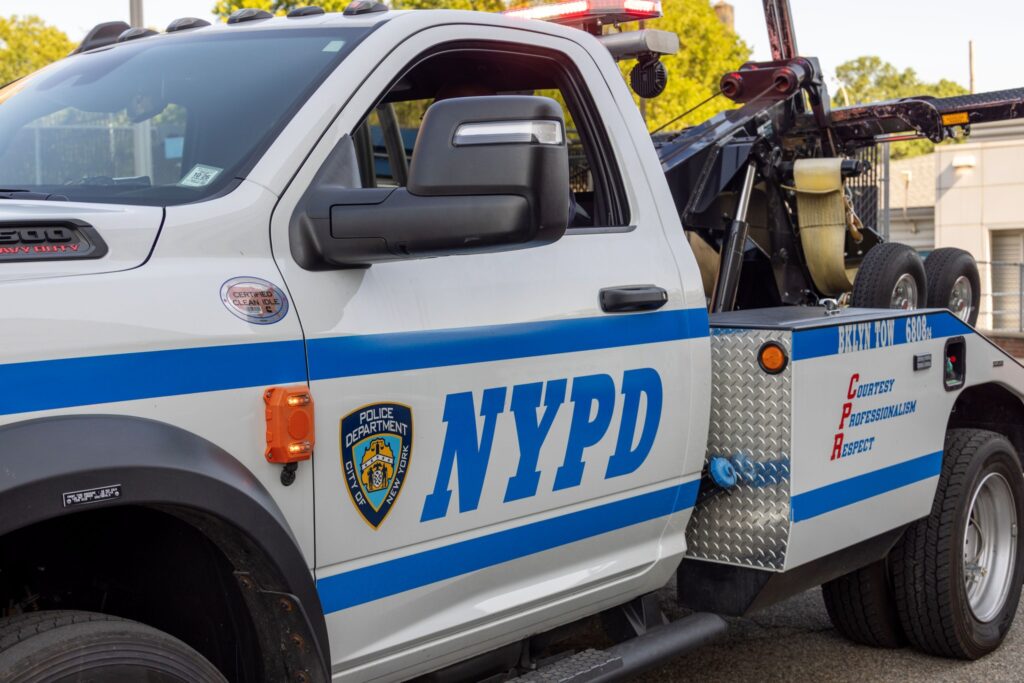
New York City began its Vision Zero program in 2014. Its fleet initiatives included tracking safety through telematics; expanding driver training; improving collision reporting; and improving vehicle safety by installing side guards on large trucks, buying high-vision cabover trucks and installing surround cameras on low-vision trucks.
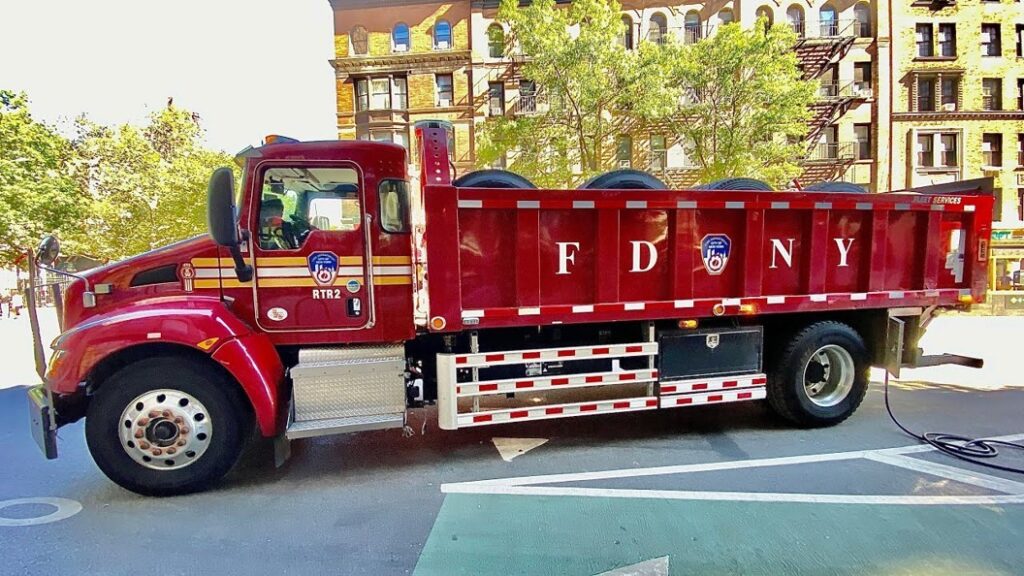
Training remains a major component of NYC’s fleet safety program. According to Chief Fleet Officer Keith Kerman, more than 19,000 operators completed an all-day safety course in fiscal year 2026. The city offers training online and in person, covering safe driving practices, safety technologies and lessons learned from actual crashes.
In September, Mayor Zohran Kwame Mamdani released Vision Zero Reimagined, building on the previous policy. Kerman explained that the fleet element mainly consists of two new initiatives: pedestrian warning systems and intelligent speed assistance (ISA).
The fleet is installing pedestrian voice alerts on 4,000 trucks; 1,100 trucks already have them. When the truck turns or backs up, a voice warns pedestrians that the truck is turning or moving.
“We believe this will be very impactful in helping to safeguard the general public, pedestrians, when these trucks are turning in very congested spaces,” Kerman said. The new tech works with the existing technology: Pedestrian alerts warn people outside the truck, while surround cameras help drivers overcome visibility limitations.
One challenge Kerman said the city has faced is installing the audible warnings on emergency vehicles with sirens and lights, as well as louder vehicles such as refuse trucks. Kerman said the city will have to determine if this technology makes sense in these cases.
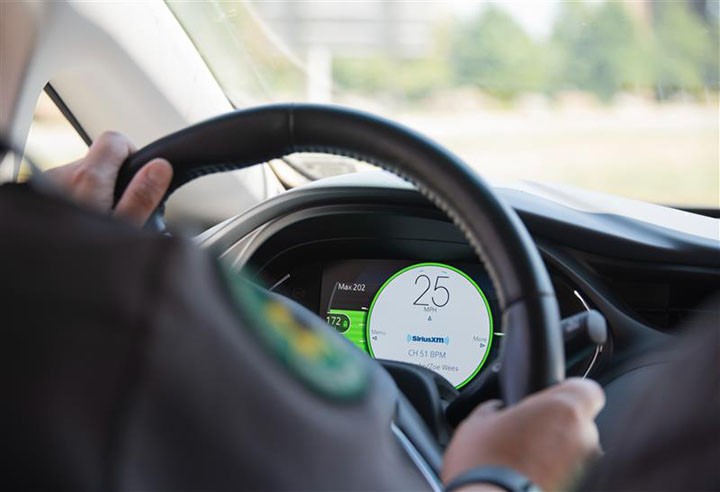
The second focus is ISA, which uses telematics data and an onboard device to prevent vehicles from exceeding posted speed limits.
“We don’t force-brake a person,” Kerman said. “But we don’t let you accelerate beyond the speed limit.”
New York City has equipped 1,000 vehicles across 23 makes and models with ISA, logging 10 million miles. Mayor Mamdani recently announced plans to expand the initiative to at least 2,000 more vehicles by 2029. Early results show that ISA can reduce severe speeding. A study with the U.S. DOT Volpe Center found that ISA reduced the time vehicles spent driving more than 11 mph above the posted speed limit by 64%. The analysis excluded congested driving conditions.
Kerman acknowledges that NYC has more resources to focus on safety than many other municipalities. But he argued that safety investments can also save money.
“We spend over $150 million a year in claims and litigation tied to the city [fleet] — an enormous, enormous outlay of money. These initiatives can reduce costs,” he explained. He added that public agencies also need to consider property and vehicle damage, downtime and the central focus: reducing injuries and deaths.
Tracking Results
Fleet results from the 2023-2024 Vision Zero Madison Progress Report (released this fall) show reductions in speeding, idling, hard acceleration and harsh braking in certain vehicle classes. The city doesn’t yet have data on whether these improvements affect vehicle crashes and injuries. Joishy argues that global Vision Zero data reveals they should, in time.

Tao, now director of Madison’s renamed Mobility & Infrastructure Division, added that the number of fatalities on Madison city-controlled streets dropped by 58% since 2020, although it’s hard to calculate how much any specific initiative contributed to the decline.
“It is extremely difficult for Rachel’s team to measure the actual safety impact,” he said. “I feel like our combined efforts are making a difference, even though it’s going to be really hard to measure individual components and how effective those are. But I think everything we’re doing is contributing to that big picture outcome.”
New York City has also been measuring the impact of its fleet safety initiatives. Annual reports show a sustained reduction in preventable crashes and injuries, but there can be fluctuations. For example, preventable collisions decreased from 2.9 per 100,000 miles in fiscal year 2022 to 2.5 in fiscal year 2025. In fiscal year 2026, it rose to 3.2, and Kerman attributed the increase to winter storm operations during the blizzard, an extremely challenging emergency situation.
Making the Case for Vision Zero
“The good news, at least about Vision Zero, is it’s hard to argue against. It’s hard to argue against traffic safety,” Joishy said. He added that local agencies already have safety initiatives that would fall under the program — like the police department enforcing speeding and drunk driving laws and a fleet department making an effort to reduce collisions.
“All these safety measures can be adopted with or without Vision Zero, but making it part of the Vision Zero branding gives a sense of ownership and accountability to everyone who drives a city vehicle,” Joishy said.
He added that the Vision Zero project helped him push for an unpopular policy at both Madison and New York: banning cell phone use for city vehicle drivers except in emergencies. It also helped him convince leadership at Madison to adopt telematics.
Madison was the first city in Wisconsin to adopt Vision Zero, and while it has expanded to various municipalities in the Madison area, it’s certainly not widespread yet. That’s something Joishy hopes to expand on.
For fleet managers looking to boost fleet safety even without the program, Darken recommends “having a safety lens.”
“A lot of this is normal fleet operation stuff, to be thinking about how you manage safety within your fleet,” she said. She recommends fleet managers start somewhere, incorporate a change and see if it produces the desired results. Maybe it’s figuring out your highest risk area and finding ways to reduce that risk, or spec’ing vehicles for safety or using telematics data to focus on safety.
Tao reiterated that while fleet managers don’t lead a Vision Zero program, they are an essential part of it. He recalled Joishy advocating for the program with his (Tao’s) predecessor and getting nowhere.
“Things change. I really saw the value of it, and I jumped on it,” he said. “If fleet managers believe in the value of Vision Zero, they can [be] the change agent.”