Toledo’s Proposed 2027 Budget Has No Money for Fire Trucks or Other Vehicles After Levy Fails
The fire vehicle line goes from $2.75 million to zero after the firefighters’ union said two of the city’s seven ladder trucks were in service.
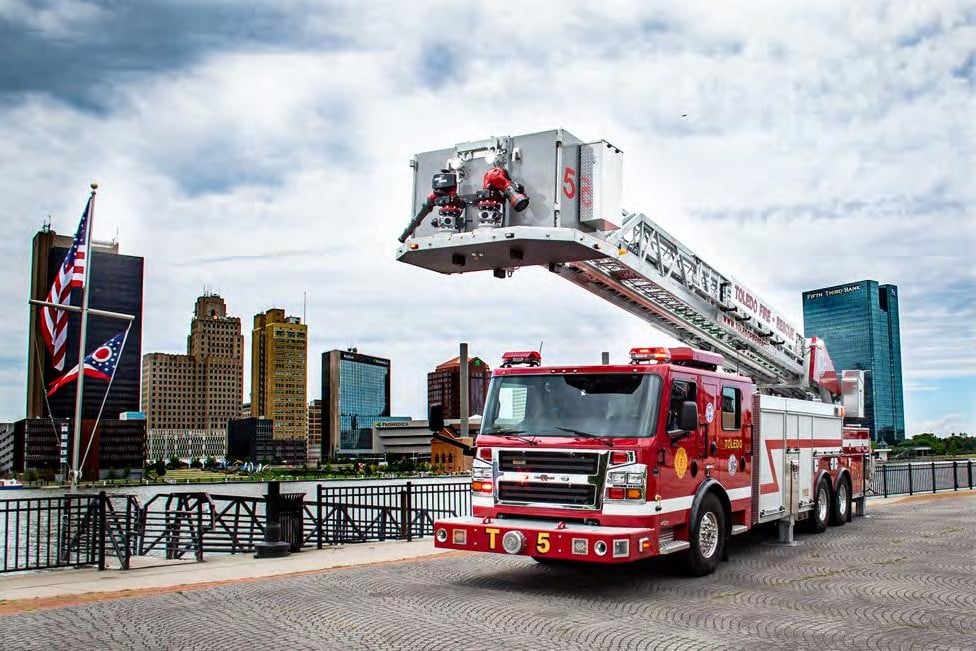
Source: City of Toledo ↗
Toledo, Ohio, would set aside no new money for fire apparatus, police cars or other city vehicles in 2027 under the budget Mayor Wade Kapszukiewicz sent to City Council on Nov. 16. The capital fund’s vehicle acquisition line goes from $6,333,393 in the 2026 amended budget to zero, according to the 2027 proposed budget detail.
Days earlier, in a WTOL report, the president of the firefighters’ union said only two of the city’s seven ladder trucks were running.
The budget follows the Nov. 3 defeat of Issue 16, the neighborhood safety levy, which the mayor wrote “would have brought new revenue to bolster police and fire.” Without it, he wrote in his budget letter, public safety “cannot be fully spared.”
No Money for Fire Apparatus
Toledo Fire & Rescue’s vehicle line falls from $2,750,293 in 2026 to zero. The new fire vehicle money in the 2026 proposed budget was $1 million, with ambulances and engines the priority. The 2026 figure is an amended budget, which can include money carried forward from earlier years.
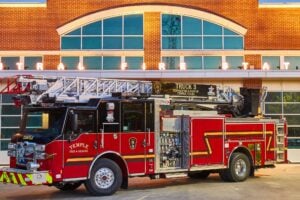
The department operates 37 apparatus, including three of the seven ladder trucks the city owns, WTOL reported Nov. 11. The department typically needs three ladder trucks in service, but Joe Cira, president of Toledo Firefighters Local 92, told the station only two were operational at the time of the interview. All 15 ambulances were running, he said, but there were no spares, and at an October budget hearing he told city leaders the department had no reserve engines available that day.
Cira said some apparatus are more than 20 years old, new units take two to three years to arrive after they are ordered and, to his knowledge, about three new ambulances were the only apparatus on order. The department’s 2024 annual report lists a Rosenbauer aerial platform delivered that year and four Spartan engines expected by the end of 2025.
The union has called for 23 apparatus over five years, which Cira estimated at more than $25 million. He put a ladder truck at about $3 million, engines at $1 million to $2 million and ambulances at about $750,000. At his estimate, one ladder truck costs more than the department’s entire 2026 vehicle line. Cira told WTOL the union had been pressing for more resources before the levy failed and that the department now faces the possibility of further cuts.
Fire Chief Allison Armstrong said in a statement to WTOL that departments nationwide face long delivery times, parts delays and rising costs, and that the department has enough ambulances in service to meet current demand. “The Fire Administration remains committed to pursuing all available avenues to maintain our fleet and secure funding for new apparatus,” she said.
Police and General Fleet
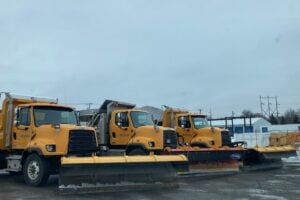
Police vehicles go from $1,304,497 to zero, and Fleet Operations vehicles go from $1,884,695 to zero. The 2026 plan had added $1 million each for police and non-public-safety vehicles, plus $375,000 for one snow plow as part of an annual replacement program.
Equipment goes to zero as well. The capital fund’s machinery and equipment line falls from $2,525,024 to nothing, including $403,507 for Fleet Operations and $270,000 for Fire & Rescue. The 2027 list of new capital projects, $9,973,175, is road and bridge grant matches, an arts set-aside and a fire timekeeping software renewal.
The shop budget holds. The Municipal Garage fund that pays for Fleet Operations rises from $16,171,126 to $16,992,720, and the division keeps 64.4 positions, including 30 automotive repair technicians. The budget would also end the city’s nuisance mowing and curbside recycling programs, the mayor wrote.
The capital fund keeps sending $24 million a year to the general fund, and the five-year capital plan continues that transfer through 2031, $120 million in all.
The plan is a proposal. Under the city’s budget rules, council adopts a temporary appropriation before Jan. 1 and a permanent budget by March 31.