GM Ran 92,000 Virtual Crash Tests on the 2027 Silverado 1500
GM says about 80% of the new pickup’s safety engineering was done in simulation, with dozens of physical crash tests used to confirm the results and improve the models.
Source: General Motors ↗
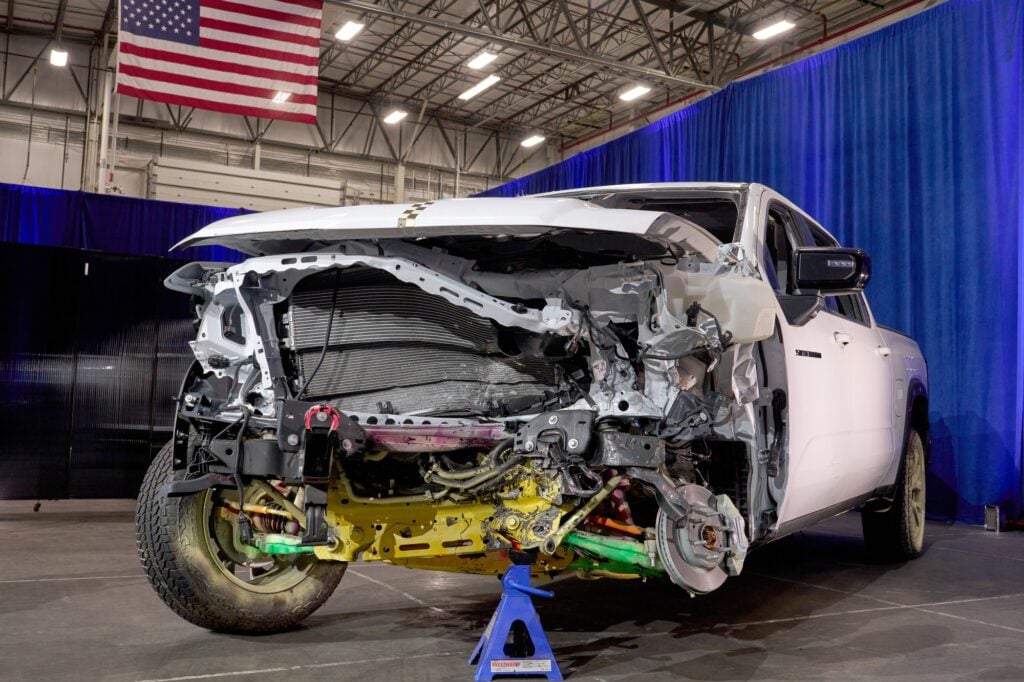
General Motors engineers ran about 92,000 virtual crash tests while developing the 2027 Chevrolet Silverado 1500, and around 80% of the truck’s safety engineering was done in simulation, GM said Nov. 16. The truck also went through dozens of physical crash tests, and the work generated almost 2 petabytes of data.
GM did not release crash test results for the 2027 model, and the Insurance Institute for Highway Safety (IIHS) had not posted a rating for it as of Nov. 18.
A Frontal Test With a Back-Seat Dummy
GM described one of those physical tests: a 40-mph frontal crash in which 40% of the truck’s width, on the driver’s side, hits a barrier, with a 50th percentile male dummy in the driver’s seat and a 5th percentile female dummy behind in the back seat. For that test, GM said, its Global Safety Product Integration team looked at hundreds of variations in how the vehicle structure and the passenger restraint system would perform.
How the Simulation Work Is Used
GM said virtual variation analysis lets engineers see how small changes, such as material thickness or how components are joined, affect crash performance, and how variability in materials, manufacturing and the test itself changes the outcome. AI is helping engineers analyze those variations, which GM tied to its goal of halving vehicle development time from the current industry standard of four to five years.
“Virtual engineering does not replace physical testing,” said Regina Carto, GM vice president of global product safety, systems and certification. “It makes physical testing more targeted, more efficient, and more informative.”