Cities Pay Early for Fire Trucks to Capture Prepayment Discounts as Prices Climb
Broken Arrow will prepay $4.19 million to take a $403,000 discount, Pittsburgh fast-tracked a $20 million lease to meet a prepayment deadline, and Richmond’s fire chief says an engine now costs $1.31 million.
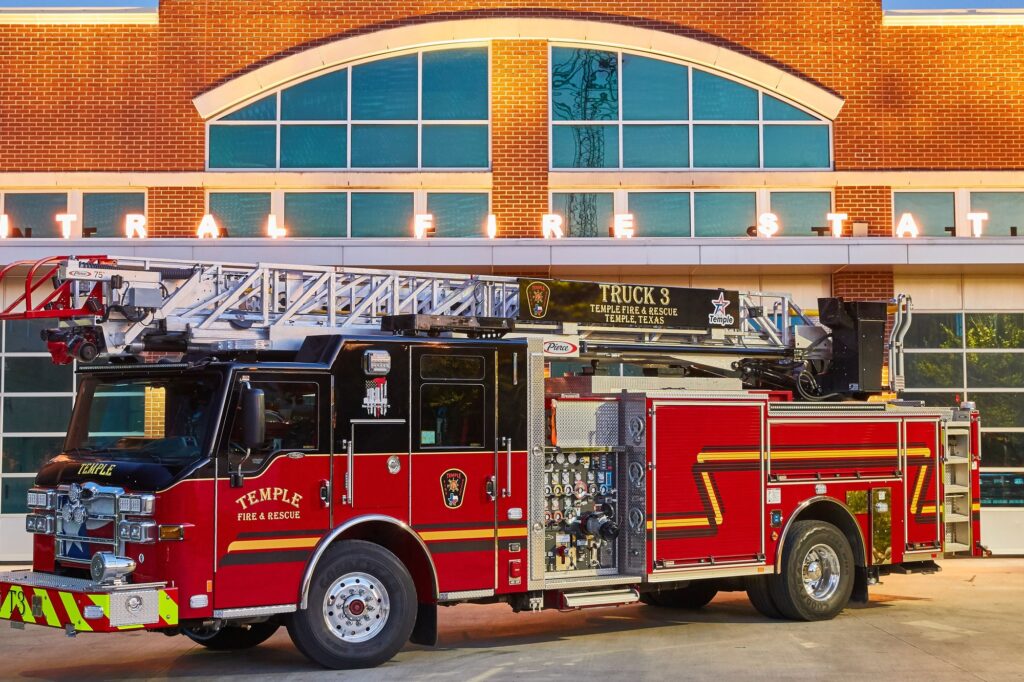
Source: City of Broken Arrow ↗
Two cities moved money early to capture prepayment discounts on fire trucks as apparatus prices climb and builds are quoted as long as 41 months. Broken Arrow, Okla., will prepay $4.19 million for three Pierce trucks it does not expect until the spring of 2030, taking a $403,144.23 prepayment discount. Pittsburgh fast-tracked up to $20,069,600 for a five-year lease of fire vehicles to meet a prepayment-discount deadline. And in Richmond, Va., the fire chief told a council committee an engine now costs $1.31 million, 62% more than the city’s 2021 plan projected for 2027.
Broken Arrow: Pay Now, Get the Trucks in 2030
Broken Arrow’s City Council approved the purchase of two Pierce Enforcer aerial ladder trucks and an Enforcer pumper on Nov. 16, through dealer Conrad Fire Equipment and the Houston-Galveston Area Council (HGACBuy) cooperative contract, according to the city’s meeting highlights. Pierce quoted an estimated 41-month build for the two aerials, at $3.49 million for the pair, and 32 months for the pumper, at $1,095,598.70.
The discount is the interest Pierce would otherwise charge. Pierce “routinely secures a loan to build each apparatus,” and that interest is passed along in the final price if a city pays at delivery, according to the city staff report. Because the city pays roughly 40 months ahead, Conrad will post a performance bond for the full price until the trucks are delivered and accepted.
The quotes carry risk both ways. If the Producer Price Index for manufacturing components rises at a compounded annual rate of 5.0% or more, Pierce may raise the price by the increase over 5.0% for each year, and the city may cancel without penalty within 30 days of that notice. Canceling for any other reason costs 10% after the order is accepted, 20% after approval drawings and 30% upon material requisition. The money comes from the Fire Sales Tax Fund, to be reimbursed from general obligation bond sales in 2027, 2028 and 2029. The new ladders would replace two 2019 front-line ladder trucks, Ladder 2 and Ladder 6, which would move to reserve, and the pumper would replace Engine 3, a 2020 front-line pumper that would also move to reserve. Two 2010 ladders and a 2002 pumper would be declared surplus.
Pittsburgh: A Lease to Lock In a Discount
Pittsburgh approved sending up to $20,069,600 to the City of Pittsburgh Equipment Leasing Authority for a five-year lease of Bureau of Fire vehicles. Budget director Rea Price asked council to waive its rules “in order to meet the November 13, 2026 deadline to receive a pre-payment discount.” The fiscal impact statement lists $4 million a year from 2027 through 2031 plus $13,920 a year from the fire bureau’s operating budget. The city announced Sept. 3 that it had ordered eight custom engines and five custom ladder trucks, backed by Highmark Health’s $4 million annual investment over five years, and said the delivery timeline “has not yet been determined.”
Richmond: What Waiting Costs
Richmond Fire Chief Jeffrey Segal told the City Council’s Public Safety Committee on Oct. 27, in a fleet presentation, that a tractor-drawn aerial now costs $3.11 million against $1.74 million planned, up 79%, on top of the engine increase. His presentation put the cost of a one-year delay at about $179,000 per engine and $395,000 per aerial, from prices rising 3% a quarter plus extra upkeep on the older unit. Truck 66 has taken $949,000 in repairs on a $483,000 truck. Richmond’s goal is 10 to 15 years in front-line service and 15 to 20 in reserve, while the NFPA 1900 standard listed in the presentation is 15 years to reserve and 25 to retirement. The department estimates it needs $6.3 million in fiscal 2028 for two engines, one truck, a brush unit and three utility vehicles. Segal said delivery times may shrink from three to four years to about 22 to 24 months, according to the committee’s meeting notes.
“Unknown to us, the market went sky high,” Segal said, The Richmonder reported. The outlet reported that more than 60 local government complaints over apparatus prices have been consolidated into an antitrust class action in federal court, that the manufacturers have denied any violation of antitrust law and that Richmond has “no current plans to join the litigation.”
Pierce Production Fell Short
Oshkosh, Pierce’s parent, told investors in its third-quarter Form 10-Q that municipal fire apparatus production “was significantly below our expectations” because of initiatives to modernize manufacturing at Pierce. “Municipal fire apparatus sales volume was down $75 million compared to the third quarter of 2025,” the filing says.