First Student and Con Edison Deploy Electric School Bus Charging in New York City
First Charge trenchless infrastructure cut construction costs 13% at Brooklyn and Queens bus depots
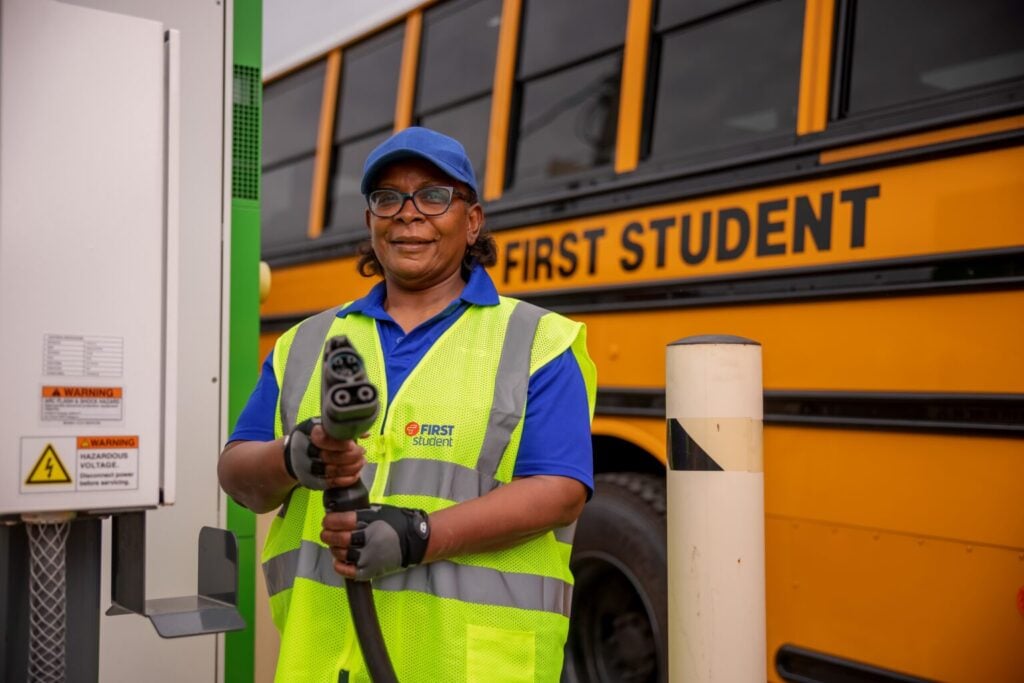
Source: First Student, Inc. ↗
A trenchless, modular charging infrastructure system cut construction costs 13% at electric school bus depots in Brooklyn and Queens as First Student and Con Edison completed the first phase of a school bus electrification project serving the New York City Department of Education.
The cost reduction came from avoiding conventional underground trenching. First Student’s First Charge system routes service lines above ground, eliminating the excavation work that drives up installation costs and timelines in dense urban settings. Con Edison and the New York State Energy Research and Development Authority (NYSERDA) provided funding for the project. That funding included six bus vouchers awarded through NYSERDA’s New York School Bus Incentive Program, channeled through First Student’s bus manufacturer, International, along with funding for four retrofit buses through the New York Truck Voucher Incentive Program.
The depots also use load management software to schedule charging during off-peak hours, reducing energy costs for the fleet.
“Deploying electric school buses at scale requires more than vehicles; it requires the right infrastructure, technology, and utility partnership,” said Kevin Matthews, head of electrification at First Student. “Working with Con Edison, we’ve demonstrated a more efficient approach that can help overcome some of the cost and construction challenges that have traditionally made fleet electrification difficult in dense urban environments.”
Vicki Kuo, senior vice president of customer energy solutions at Con Edison, said eliminating the buried service line lowers upfront costs and “is a strategy that other fleet owners can replicate to save money and complete projects more quickly.”
John Kenning, CEO and president of First Student, said, “Safety will always be at the heart of everything we do, and we’re proud to pair that commitment with innovation that is improving the sustainability of student transportation.”
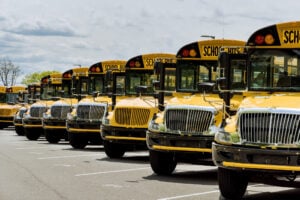
During the 2025-26 school year, First Student operated approximately 490 electric school buses with more than 550 additional vehicles on order, and the company has logged more than 11.2 million miles on electric buses. First Student plans to add 40 electric school buses to its New York City fleet and is evaluating further work at its Brooklyn facilities, including expanded solar generation and development of a smart energy hub.