Beyond the Hype: Make AI Work the Way Your Fleet Does
From shop notes to repair invoices, Colin J. Knudsen shows where AI can save time and why every result still needs a human check.
Municipal fleet managers rarely lack information. Work orders, vehicle histories, shop records, invoices, telematics reports and emails document what happens across their operations.
The challenge is finding time to assemble records, identify what matters and take action before another urgent request interrupts the work.
Artificial intelligence (AI) can reduce that administrative burden.

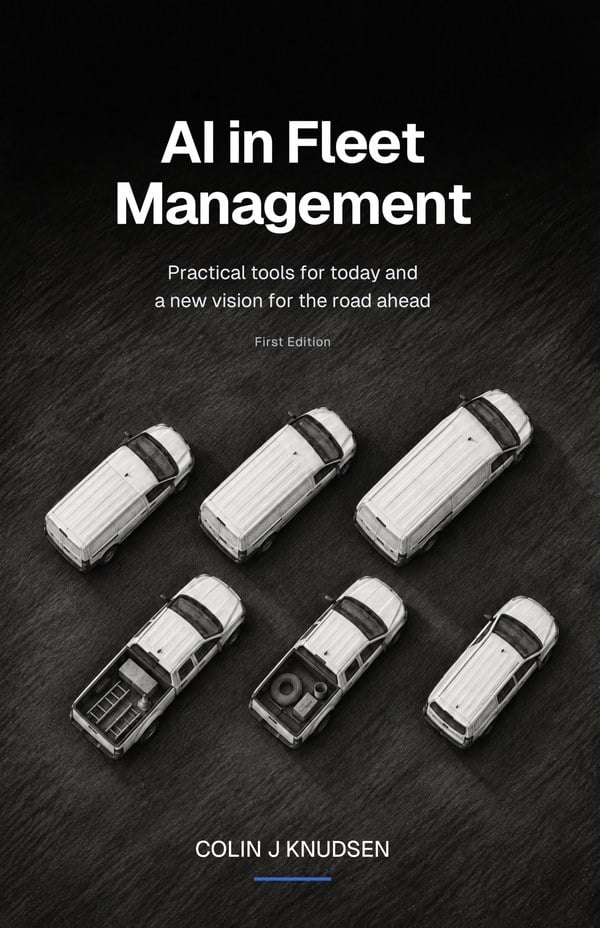
Colin J. Knudsen, co-founder and chief operating officer of ProAction, a fleet management software and services company, and author of “AI in Fleet Management: Practical Tools for Today and a New Vision for the Road Ahead,” recommends starting with familiar fleet tasks.
He encourages managers to use AI to organize records, analyze maintenance patterns and support decisions while keeping people in control. But before taking that step, he advises, “Ask AI what you should do.”
Knudsen recommends that fleet managers tell the tool about the tasks they handle each day, the data they have available and the organizational policies that govern their AI use. Then, he said to ask the AI to identify tasks where its use could save time or improve decisions.
Identify One Task Worth Improving
The first step is to identify a task worth improving.
Knudsen recommends choosing one with a clear outcome that employees can verify against original records.
For example, fleet managers might turn shop notes into updates, summarize vendor correspondence, review repair estimates or compare maintenance costs across departments.
Starting small addresses employee resistance to AI tools. Knudsen said past experiences with disruptive software changes can make employees hesitant to adopt another tool. Likewise, fleet personnel already juggle demanding schedules, so learning a new system can feel like added work without a clear payoff.
A successful AI project shows hesitant employees how AI can make tasks easier or quicker. Starting small lets fleet managers trial the tool on non-sensitive notes or a sample report with a municipality-approved tool.
Knudsen recommends giving AI a straightforward assignment and intended audience. A maintenance supervisor might need a summary of outstanding repair decisions, while a department head needs vehicle availability and expected return dates. The next and most important step, he said, is to review the output, correct omissions and save the instructions that produced useful results.
Next comes human oversight. Knudsen’s white paper offers a hypothetical brake-vibration report to illustrate why human review still matters.
In the scenario, a shop offers a tentative inspection slot but does not confirm an appointment. The AI-generated update must make that distinction clear, separate proposed repairs from authorized inspection costs and flag unanswered questions. Without human review, the report could misrepresent tentative plans as confirmed commitments.
Establish Data Rules
Before introducing AI into daily operations, municipal fleets must establish clear rules for protecting their data.
Knudsen recommends involving IT and information-security teams early to identify approved tools, determine what information employees can share and understand how AI providers store and use that data. This team can authorize who can access AI-generated reports and review procurement and records-retention requirements that may influence tool selection.
Knudsen also recommends explaining the organization’s restrictions to the AI assistant using a statement such as, “My company does or doesn’t allow me to share certain data.” This context helps fleet managers find tasks they can explore without violating agency policies.
With boundaries in place, fleet personnel can test AI using synthetic examples, redacted records or information approved for the selected tool. Knudsen advises keeping driver details, sensitive location information and protected operational records out of unauthorized systems and consulting IT whenever questions arise about what employees can share.
To maintain those safeguards as AI use expands, Knudsen said each project should follow the same process: use approved data, define the task, review the results and control who receives the finished information.
Bring Maintenance Records Together
Maintenance offers an immediate AI opportunity because repair histories, service invoices and vehicle data often reside in siloed systems.
Knudsen recommends combining exports from internal systems and outside service providers to develop a more complete picture of maintenance spending and vehicle performance.
Fleet managers can then begin a pilot comparing three months of maintenance activity for similar vehicles. They can export vehicle identifiers, work orders, invoice lines, mileage, labor costs and downtime, then establish which vehicles and dates to include. Before analyzing the data, they can also check for duplicate entries and confirm that credits appear correctly.
Knudsen stresses the vehicle identification number (VIN) provides a common reference point for connecting those records across systems.
“Each report includes a VIN tied to vehicle spending. AI can use that VIN to connect data from diverse sources and generate more detailed reports,” he said.
Ask the Right Questions
Uploading a spreadsheet and asking AI to summarize it may yield totals the fleet already knows. A stronger request specifies the comparison needed and the decision the manager hopes to make.
Knudsen recommends asking AI to help draft the request itself. “I think one of the biggest things you can do is to ask it to create prompts itself,” he said. A manager might explain the available maintenance exports and ask the AI assistant to construct a detailed analysis prompt before running it.
For example, a fleet manager might ask: Which vehicles have the highest maintenance cost per mile? Which repairs generated the most downtime? How many days were spent awaiting parts or authorization? What source records support each finding?
The resulting report should direct attention to a manageable set of vehicles, vendors or processes. It should also distinguish an observed pattern from its potential causes.
Verify the Evidence
Knudsen cautions that AI may produce a plausible explanation that includes a mistake.
For example, it may count a duplicate invoice twice, miss a credit or choose one of two conflicting dates without flagging the disagreement. This requires fleet managers to review outputs against original records before using an AI report to approve spending or recommend policy changes.
Knudsen’s white paper advises asking for the underlying invoice numbers, work orders and calculations rather than accepting a confident summary. In one fictional example cited in the paper, a repeated $220 invoice line item changed the total until the manager checked the source and confirmed the duplication.
Build verification into every pilot, Knudsen advises.
Do this by comparing AI-generated totals against existing reports, investigating unusual findings and documenting corrections. Ask the system to identify missing information and conflicting records. If two registration records show different dates, for example, AI should flag the discrepancy for review rather than select a date without explanation.
These checks help fleet managers determine whether they can trust the results and use them to make informed decisions, Knudsen said.
Reduce Communication Work
A single repair may generate estimates, invoices, driver inquiries, supervisor updates and authorization requests, leaving fleet personnel to piece together the vehicle’s status from multiple messages. AI can help fleet managers keep these repair communications organized.
Knudsen suggests connecting authorized email accounts to an approved AI tool to organize that information. The system can review incoming messages and attachments, identify completed repairs and group updates by vehicle.
“You can ask, ‘Hey, do you know what work was completed today based on emails that I got in my in my inbox?’ It’ll tell you. It’ll line item it out. It’ll group it by vehicle,” he said.
With that information in one place, fleet managers can prepare status updates for drivers and supervisors, identify outstanding approvals and respond to questions without searching through individual emails. Still, staff must verify repair details, costs and schedules before distributing updates, and municipal IT teams must approve email access and data-handling permissions before connecting the systems.
Fit Tech to Workflows
Knudsen encourages fleet managers to consider how AI fits into their existing operations before investing in modern technology.
Municipal fleets already follow established processes for work orders, repair approvals, vehicle tracking and communication, he explains. New software can complicate those tasks by forcing employees to duplicate data entry or switch between systems.
“But why would you conform to the software? The software should conform to how you work,” he said.
To put that advice into practice, he advises fleet managers to map how work moves through their department.
For example, consider a common repair. Who opens the work order? Who reviews the estimate and approves the expense? How does the shop notify the requesting department when the vehicle is ready? Identifying these steps pinpoints where AI might reduce manual data entry, consolidate information or speed communication.
“The goal is to select technology that supports those workflows rather than forcing employees to work around the software,” he said.
Get Ready
As fleets gain experience with AI, Knudsen expects the technology to handle more coordination between drivers, repair shops and service providers. He predicts future systems will gather information, recommend actions and complete routine tasks once an authorized employee approves them.
“I think agentic fleet management is going to be a pretty common thing,” he said.
Still, he said, AI can streamline fleet operations, but managers must retain control over safety, spending and critical decisions.
By starting with familiar tasks, setting clear approval limits and demanding transparency from vendors, municipal fleets can adopt automation with confidence while keeping employees focused on work that requires their expertise.
Fleet directors can request a free copy of “AI in Fleet Management” from ProAction. The guide provides practical tools to implement AI into fleet workflows.