California Reopens Electric School Bus Incentive Program With At Least $55 Million
Applications open Nov. 17 at 10 a.m. PT, first come, first served; the second solicitation offers up to $415,000 for a Type D bus.
Source: California Energy Commission ↗
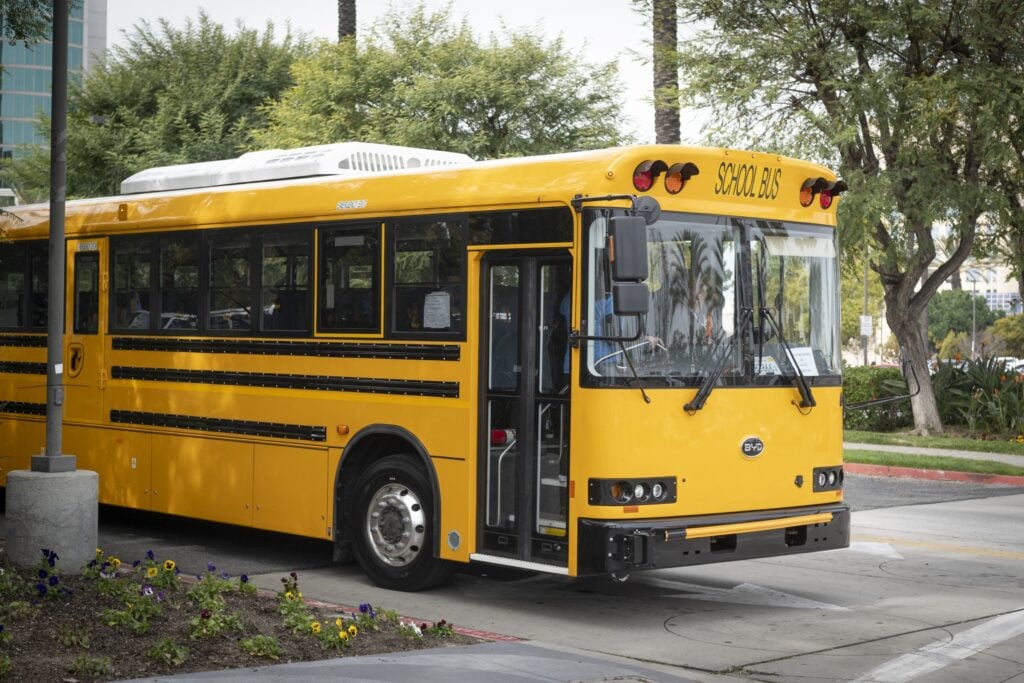
California school districts can apply for at least $55 million in state funding for zero-emission school buses and charging equipment in the second solicitation of the Zero-Emission School Bus and Infrastructure (ZESBI) incentive project, announced Nov. 3. The California Air Resources Board and the California Energy Commission fund the project, and Catalyst Mobility, formerly CALSTART, administers it.
The Nov. 3 date opens a pre-application period, not the filing window. Districts can create an account in the ZESBI Application Portal, upload documents and fill out an application now, and the Energy Commission’s solicitation page says applications can be submitted starting Tuesday, Nov. 17, at 10 a.m. Pacific time. Catalyst Mobility’s announcement says funding becomes available Nov. 3 and does not mention the Nov. 17 date. Awards go first come, first served, by the timestamp on the application, until the money runs out.
Eligible applicants are California public school districts, public charter schools, joint powers authorities and county offices of education serving K-12 students, according to CARB’s Implementation Manual, published Oct. 29. Applicants must hold title to the buses, though a district that contracts out its bus operations can apply. Private schools are not eligible.
Maximum vehicle incentive per bus
| Bus type | Base incentive | Incentive increase | Wheelchair lift | Maximum |
|---|---|---|---|---|
| Type A | $280,000 | $40,000 | $15,000 | $335,000 |
| Type C | $340,000 | $40,000 | $15,000 | $395,000 |
| Type D | $360,000 | $40,000 | $15,000 | $415,000 |
The $40,000 increase is a separate, one-time award that can be spent only on the zero-emission bus or eligible costs and cannot raise the number of buses an applicant buys. Recipients may be required to sign an addendum to their incentive agreement. CARB’s manual says all approved ZESBI applications have been eligible for the increase since spring 2026, so it predates this round. Catalyst Mobility said it helps offset the end of the federal Commercial Clean Vehicle Credit and tariff-related price increases.
“The public asked for more funding to spur (zero-emissions) school bus adoption in areas affected by transportation-related air pollution, and CARB and the California Energy Commission put that request to work,” Rachel Chard, senior director of bus programs at Catalyst Mobility, said in a written statement.
Each application must request at least one charger per bus; vehicle-only and infrastructure-only applications are not accepted. The ZESBI site lists charger incentives of up to $20,000 per Level 2 charger and $75,000 per DC fast charger, with up to $95,000 for the first bidirectional DC fast charger. New buses must have a gross vehicle weight rating over 10,000 pounds, be capable of bidirectional (vehicle-to-grid) charging and come from an approved Hybrid and Zero-Emission Truck and Bus Voucher Incentive Project (HVIP) dealer.
Each new bus requires scrapping an old internal combustion school bus owned by the district, with a chassis model year of 2010 or older, within 12 months of delivery. Applicants have 30 calendar days to submit the second part of the application, and buses must be delivered within 540 days of the purchase order, with liquidated damages of $100 per day per bus for late delivery. ZESBI funding can be combined with some local and federal programs, including the EPA Clean School Bus program, but not with standard HVIP.