St. Louis Police Board Approves Drone Unit to Answer Some 911 Calls
The mayor cast the lone no vote, and the department’s plan for more than $68 million in Justice Department money includes doubling its drone fleet.
Source: St. Louis Metropolitan Police Department; St. Louis Public Radio ↗
The St. Louis Board of Police Commissioners voted 4-1 on Nov. 4 to approve the special order governing the St. Louis Metropolitan Police Department’s new Aerial Response Unit, which sends drones to some 911 calls, the department said. The unit answered its first 911 call that day.
Mayor Cara Spencer cast the lone no vote, saying there had not been enough time for community input and calling the program flawed, St. Louis Public Radio reported. Police Chief Robert Tracy signed the order right after the meeting. Board President Chris Saracino said the approval “establishes an important framework for responsible use of this technology.”
The Equipment
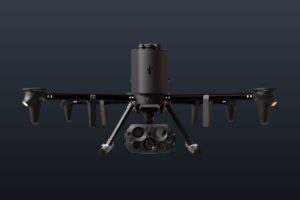
The department has six BRINC drones, bought with support from the St. Louis Police Foundation and its donors. The drones carry thermal imaging, high-powered cameras, emergency lighting and real-time communication equipment and launch from docking stations. Docking stations are in place in the North and Central Patrol areas, and installation is continuing in South Patrol, where the department expects to expand operations later in November.
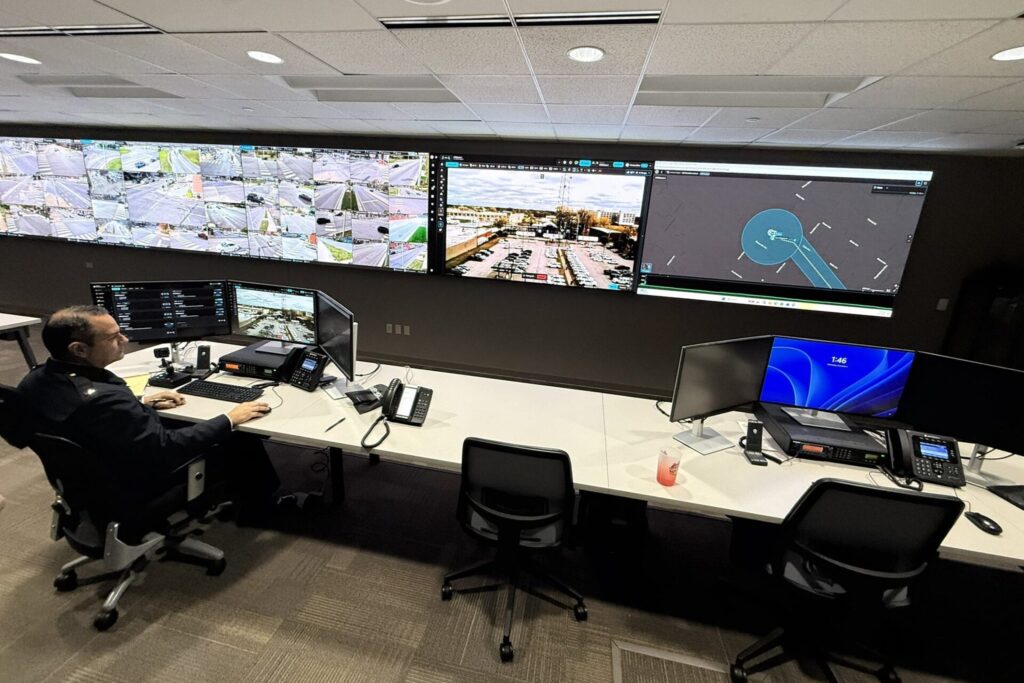
Pilots certified by the Federal Aviation Administration fly the drones remotely, and the special order names the department’s Real Time Crime Center as a location that can serve as the operations center. The department also bought a radar system that tracks other drones in the sky to avoid conflicts, St. Louis Public Radio reported.
How It Works
Drones go only to select high-priority 911 calls and other qualifying incidents and are not flown on routine patrols, the department said. Responses will be limited at first and will expand based on staffing, scheduling, coverage and testing. In some cases a drone may arrive before officers and give them a view of the scene before they go in.
On the first call, in the 4800 block of Sacramento Avenue, a caller reported a person knocking on doors and entering an alley. While the drone was on its way, Real Time Crime Center staff called the caller back and learned the person had left. The pilot searched the area and found no one matching the description. Officers were told they could disregard the call and were sent to a domestic disturbance call instead, the department said.
Policy Limits
Under Special Order 5-35, the drones cannot be weaponized, cannot be used for random or generalized surveillance or to patrol neighborhoods solely to look for criminal activity and cannot use facial recognition or biometric identification unless separately authorized by department policy and permitted by law. They may not be used to interfere with lawful First Amendment activity, and observing a demonstration, protest or rally must be tied to a legitimate public safety purpose.
While flying to a call, the camera faces forward toward the horizon and tilts down only on scene, according to the department’s drone FAQ. Video is stored on BRINC’s LiveOps platform on U.S.-based servers, and the special order says recordings follow the department’s video record retention policy.
Jay Stanley, a privacy expert at the American Civil Liberties Union, said he was glad the policy rules out routine surveillance but that questions remain about data retention and the use of recordings, St. Louis Public Radio reported.
Transparency Portal
The department launched a public transparency portal on Nov. 6. It shows where drones have flown and how often, how often they arrived before officers, calls resolved without sending officers, arrests they helped with, average flight time and objects located, such as vehicles and firearms.
Federal Grant
The Justice Department awarded St. Louis more than $68 million through its Model Cities Initiative, according to a Nov. 9 Justice Department release posted by the police department. St. Louis is one of four jurisdictions chosen; the others are Jacksonville, Florida; Jackson, Mississippi; and East Baton Rouge Parish, Louisiana. St. Louis’ proposed investments include doubling the department’s drone fleet, expanding gunshot detection coverage and modernizing the Real Time Crime Center.
Spencer said neither she nor any other city official signed off on the grant application. Tracy said the department applied after federal officials approached it, that the board president could sign off under the state’s governance structure and that the city will be involved as the grant is carried out, St. Louis Public Radio reported.