Fleet Staffing Challenges: How Glendale Rebuilt Morale and Retention
When Craig Croner, CPFP, joined the City of Glendale, Arizona, in August 2021, the fleet operation was in a tough spot. The organization was still coming out of the COVID pandemic, morale was low and technicians were leaving for other organizations. In addition, the fleet division had gone more than a year without leadership after the previous fleet manager died from COVID-related complications.
Croner stepped into the role, knowing the problems weren’t going to be solved overnight. Over the next several years, the Glendale fleet rebuilt its technician pay structure, created a clear employee career path, partnered with local trade schools and rolled out incentives designed to retain experienced techs while attracting new ones.
In this Q&A, Croner, now the city’s deputy director of field operations, discusses what it took to stabilize the operation, secure leadership buy-in for major changes and rebuild trust with employees during a difficult time. This Q&A has been edited for length and clarity.
Q: Tell me about the situation when you first came on board at Glendale.
A: After my predecessor died, the fleet operation was without leadership for a little over a year because it was just hard to hire and go through the trauma of losing a leader during COVID. And that was a tough situation for the organization.
With morale down and technicians leaving, that negatively affected our customers. If you’re in the fleet world, you know you really need a customer focus. Our KPIs were off: our preventive maintenance compliance rates were down, and our fleet utilization and availability were bad.
When I really started to dig into the data, I found that customer demands exceeded the resources that we had. This was negatively impacting the technicians, because they all wanted to do a good job. But if there’s more work than what they can physically handle, overtime goes up and burnout goes up accordingly.
Q: What were some of the first things you addressed?
A: My number one goal was to stop the bleeding. I wanted to incentivize the people who are already here and try to retain those people.
We thought about providing incentives and wanted to focus on the low-hanging fruit—something we can address today that will have an impact immediately. I wanted to make sure the technicians had a good tool allowance. We bumped it up from $400 a year to up to $1,000 a year. Everyone automatically gets $500, and if they have receipts for up to $1,000 worth of expenses in that year, we will reimburse up to that $1,000.
Q: How did you get buy-in for the increased tool allowance?
A: I had to go to the mayor and City Council and ask for that during the budget process. I started out asking for $750 per technician. After they read all the reports we sent them, the mayor actually said, “I don’t think this is enough.”
In my memo to the city manager’s office, it noted that most technicians had anywhere from $30,000 to $50,000 worth of tools. When you look at that, $1,000 or a $750 per-year reimbursement is pretty small compared to the total capital outlay that technicians have.
Q: What other immediate operational changes did you make?
A: The tire tech position had previously been converted to a service writer position. Without a tire tech, a technician who would normally work on the floor had to work in the tire shop one week out of seven, and they didn’t like that.
I addressed that with my boss. I wanted to contract that tire work out and put the techs back on the floor to increase our PM compliance. We decided we would contract that position out for a year and track the expense. And now we’ve brought that position in-house by utilizing good justification data.
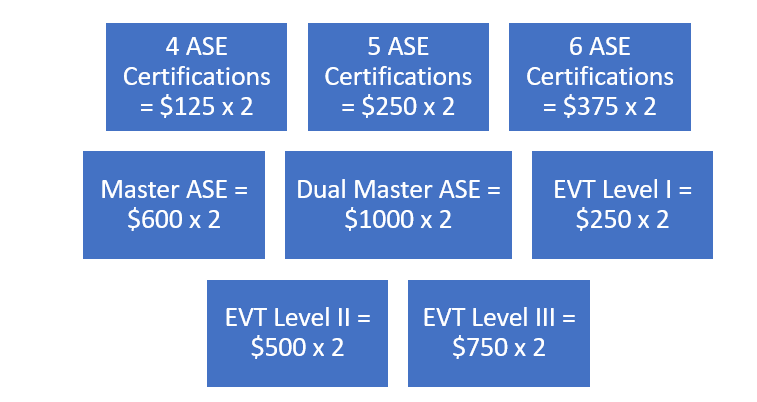
We also started an ASE incentive program. We cover all ASE and EVT tests, and technicians can get up to an additional $3,500 a year on their paychecks for having these certifications. As a result of our continued focus on training and certification, we have maintained ASE Blue Seal status for three consecutive years, with certifications in Automobile/Light Truck, Medium/Heavy Truck and Transit Bus service.
Q: Tell me about how you approached recruiting and retention long–term.
A: We were having a hard time recruiting people because our job classification pay grades were low. Human Resources was understaffed, so my staff and I helped do the legwork and put together some recommendations. The project took two and a half years, but we were able to create a total reclassification process.
The fleet operation previously had a light-duty equipment mechanic and a light-duty equipment mechanic specialist senior, and basically, the same titles on the heavy-duty side. As such, we really only had four job classifications to work with.
We created a fleet mechanic, a fleet technician, a fleet journeyman technician and a journeyman lead.
Instead of having separate classifications for light and heavy duty, we created classifications that worked across both shops. This ultimately gave us eight classifications and a clear career path for our succession planning.
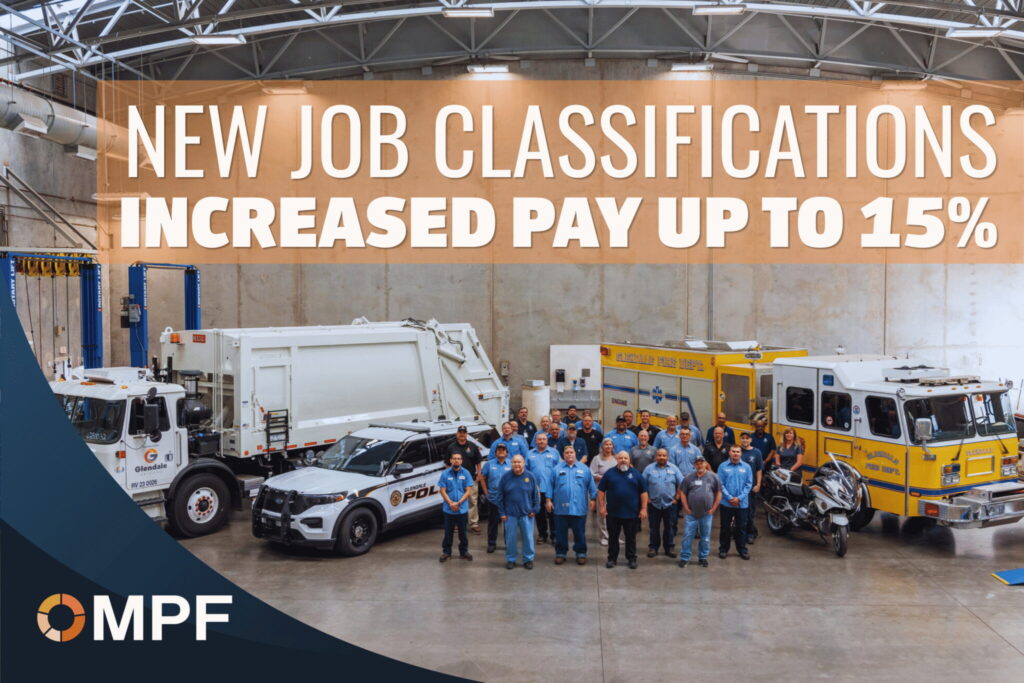
We were also successful in restructuring our technician pay scale. The Equipment Mechanic position was reclassified four pay grades higher, resulting in salary increases of approximately 8% to 15%. Some of our light-duty technicians received pay increases of up to 15% as a result of the new job classifications.
Q: How did the new structure support succession planning?
A: My main goal is that I want the person who’s coming in from a trade school to be able to look at a job classification structure and say, “In 10 years, I could be here.”
Now, if I’m a fleet mechanic, I know I need two years of experience before I can apply for a fleet technician role, and I’ll need at least two ASE certifications. If I want to move up into the journeyman lead position, I’m going to need five years of experience and a Master ASE certification.
Q: How were you able to justify spending more money on staffing and incentives?
A: When I go to executive leadership and ask for something, I always start with the end in mind. What’s the return on investment? Why do we need to do that?
For example, here’s what we’re doing today with not enough technicians. We must outsource a lot of that work. Our shop rate today is $110 an hour. If we send a bus to the dealer, they charge around $225 an hour. They take longer, and we don’t have any control or priority.
So when you start to look at the total cost of these projects, there’s a payback.
Q: How has bringing in younger technicians changed the culture?
A: When we started talking about bringing new technicians fresh out of trade school, some of the older techs had reservations. But the guys who were the most vocal are now some of the best mentors we have.
The younger techs are eager to learn. They want to get better. And I think that’s really built camaraderie in our shop culture.
Q: What were the biggest lessons learned from the transformation?
A: Understanding your people. From a leadership standpoint, you can’t just spring things on people. You have to paint a picture of what the long-term strategy is, you have to communicate and sometimes you must over-communicate to get people on board.
Reclassification was tough. Everybody had to reapply for their jobs because they were all new classifications. Some of our guys had been working for us for 30 years and hadn’t applied for a job in 30 years. We had to communicate effectively and give them a compelling reason why we needed to do this.
We had an all-hands meeting, and we put together a presentation that showed where they are now, where the new positions were going to be and what it would take to get there.
We retained everybody. Most people moved up, and nobody moved down monetarily.
At the end of the day, the technicians saw that we actually cared enough to put in that kind of effort just for them. I had a senior technician come up to me and say, “In all my years that I’ve worked here, I’ve never felt more appreciated.”