How High-Performing Public Fleets Stay on Top
Public fleet operations could track a hundred metrics. Steve Saltzgiver, CAFS, thinks they should focus on three to five.
The longtime fleet manager, current RTA strategic advisor and 100 Best Fleets judge says the key is figuring out where the operation needs to improve and focusing their attention there.
“You have to understand your operation and figure out where the gaps are,” Saltzgiver said.
That focus was one of several themes that emerged when Modern Public Fleet asked experienced fleet professionals what consistently separates strong operations from the rest.
Find the Gaps, Then Measure Them
For Saltzgiver, choosing the right metrics starts with understanding where the fleet needs to improve.

He saw that firsthand when he spent six months managing a quasi-public fleet in Hawaii. He identified four areas that needed attention: downtime, fleet right-sizing, mechanic productivity and preventive maintenance (PM) compliance.
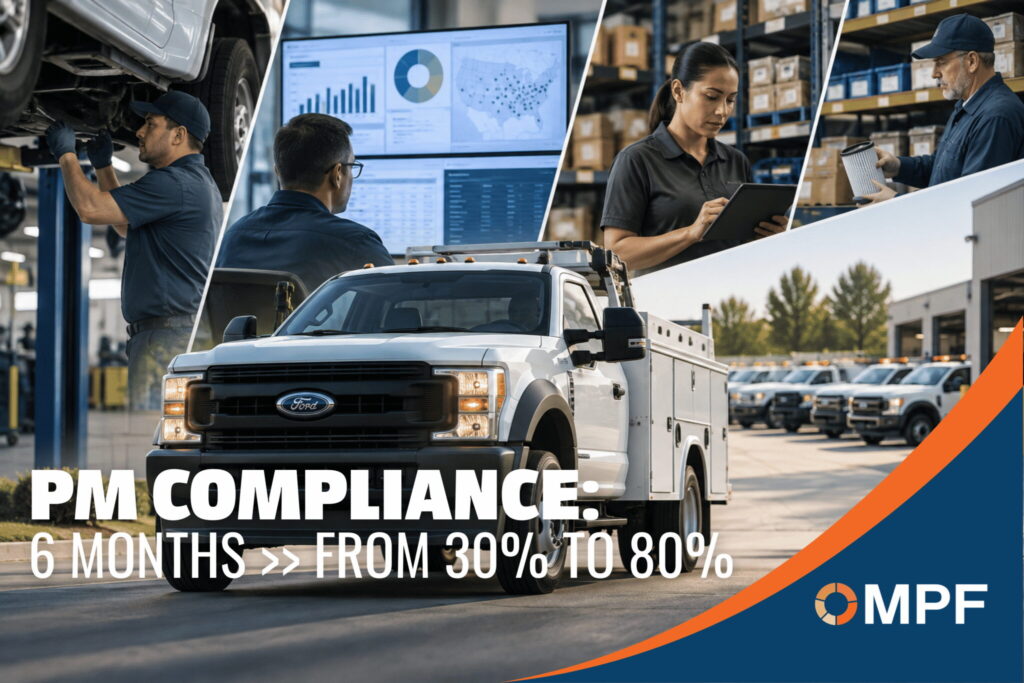
The team focused on those priorities. PM compliance, which was about 30% when Saltzgiver arrived, reached 80% within six months. Vehicle availability increased to 97%.
Saltzgiver didn’t identify those priorities on his own. During his first two weeks, he met with managers from the customer departments and asked where the gaps were and what needed to improve. Their answers helped shape his goals.
Which measures matter most will depend on the operation. David Renschler, CPFP, fleet division manager for the City of Fairfield, California, prioritizes vehicle-in-commission rate and 24-hour turnaround time, while Craig Croner, CPFP, deputy director of field operations for the City of Glendale, Arizona, calls availability the “gold standard.” Justin Mullins, CPFP, fleet manager for Sarasota County, Florida, also tracks availability and maintenance cost per asset, but adds a less common measure: employee turnover.
“This is a good indicator of your organization’s internal health and impacts all the other metrics,” Mullins said. Continually losing experienced employees means continually replacing lost knowledge, making peak performance difficult to achieve.
Put it into practice: Identify your fleet’s biggest gaps, choose a few measures that reflect those priorities and focus on improving them.
Make Performance Visible
Tracking performance is only part of the job. High-performing fleets also find ways to keep that performance visible.
Saltzgiver recommends creating a one-page report built around three questions he used throughout his career: What have I accomplished? What do I intend to accomplish? And what’s in my way?
The last question is what he calls “clear the path.” It identifies the people, vendors or other obstacles preventing the fleet from reaching a goal. Sometimes, he added a fourth category showing the metrics he was tracking and his progress.
Saltzgiver completed the report weekly and shared it with stakeholders, although he said its primary audience was himself. It gave him a record of what had already been accomplished and kept his next priorities in front of him.
The format can vary. Saltzgiver sees strong fleets using annual state-of-the-fleet reports, monthly reports and other reporting structures to accomplish the same goal: making their work visible.

Croner sees reporting as a way for fleets to tell their story. He said high-performing fleets know how to “tell their story in a way that resonates with a wide range of audiences,” including leadership, elected officials, employees, customers and the public. Showing what the fleet has accomplished and how its work supports the organization’s mission can build trust and strengthen the case for resources.
Put it into practice: Create reports that keep accomplishments, priorities, roadblocks and progress in view.
Get More From the Tools You Already Have
Scott Rood, CAFM, a fleet management consultant at RTA and a 100 Best Fleets judge, sees a missed opportunity when he conducts fleet studies and best-practice assessments: Fleets don’t always take full advantage of the technology they already have.
Many use their fleet management information systems (FMIS) to track maintenance, parts consumption and lifecycle information and to generate reports. Other capabilities frequently go unused.
Warranties are one example. If a fleet replaces a starter that comes with a one-year warranty and it fails six months later, the system needs to have that information. Otherwise, the operation could end up paying for the same part again.
“I always preach to them that you really need to use the system to the full capacity,” Rood said.

Rood also sees fleets not effectively tracking comebacks or standard repair times, both of which can give managers a better picture of shop performance.
Then there’s the quality of the information going into the system. Something as simple as entering “Chevy” in one record and “Chevrolet” in another can create problems with the fleet’s data and reporting. The same applies to inconsistent model names, such as “150” and “F150.”
Put it into practice: Look beyond the basic functions of your FMIS and make sure the data going into it is consistent and accurate.
Build a Team That Wants to Stay
Several of the fleet professionals interviewed put people at the center of fleet performance. That includes competitive pay and benefits as well as career paths, employee involvement and support.
When judging the 100 Best, Rood looks for collaboration, celebration and a culture of trust, including whether employees want to stay, contribute and share ideas.
Mullins emphasizes employee development. High-performing fleet operations give people opportunities to grow through training, mentoring, experience, support, additional responsibility and authority. But development also means giving employees room to use what they’ve learned.
“The best managers focus on their organization’s culture,” Mullins said. “They train them, guide them, support them, but then get out of the way and let them excel.”
Croner also stresses clear expectations and accountability.
“Inspect what you expect, and give credit where credit is due,” he said.
For Croner, that means making sure expectations are met, recognizing employees and teams when things go well, and supporting them when challenges arise. That combination builds trust, morale and a culture where employees want to perform at their best.
Renschler also emphasizes recognition, along with training and advancement. His advice is to empower employees, mentor those who want to move up, and “celebrate the wins and learn from the misses, win together and lose together.”
Put it into practice: Develop employees, give them responsibility, recognize good work and build a culture where people have a reason to stay.
Get Outside the Fleet Department
Fleet performance also depends on relationships with the departments the fleet serves.
Croner views internal customers as partners. Strong fleets communicate proactively, understand departments’ operational needs and deliver reliable, responsive service. This builds trust and makes the fleet a more valuable part of the larger organization.
Renschler also identified regular customer feedback as a practice common to high-performing fleets. Those conversations give fleet managers a clearer understanding of what departments need from fleet and where service could improve.
Put it into practice: Ask user departments what they need from fleet, and make customer feedback part of your regular communication.
Don’t Let Success Turn Into Complacency
Mullins sees one characteristic repeatedly among the strongest fleet organizations: a “desire to do better and not rest on their laurels.”
That includes questioning established practices.

We should never be doing things just because ‘that is the way we have always done it,’” Mullins said.
Fleet leaders need to stay educated about available technology and industry best practices and look for ways emerging technologies and automation can improve operations or simplify routine work.
Croner sees another obstacle to improvement: fear of making mistakes.
“The most successful fleet organizations are willing to innovate, take calculated risks and learn from setbacks,” he said.
Managers who are overly concerned about failure can become reluctant to make decisions that could move the operation forward. Croner’s advice is to learn from the outcome, adapt and keep improving.
Put it into practice: Keep looking for ways to improve, whether that means challenging an established practice, adopting new technology or taking a calculated risk.
Stop Fighting the Same Fires
Mullins has advice for managers caught up in the day-to-day demands of fleet: Stop putting out forest fires and start cutting firebreaks.
Fleet managers need to understand the details of their operation while maintaining the 10,000-foot view. That’s difficult when the next breakdown, staffing problem or service issue always seems to demand immediate attention.
“Some managers love to be the hero who rushes in to fix the emergency,” Mullins said. “But why are these emergencies happening?”
Once the immediate problem is solved, Mullins said, the manager should identify its root cause to prevent it from happening again. That requires knowing what’s happening on the shop floor, then pulling back to look at the process or organizational issue behind it.
Put it into practice: Take care of today’s emergency, then figure out what has to change so you aren’t dealing with the same emergency tomorrow.