Jersey City Cuts Municipal Fleet by 70 Vehicles, Slashes Take-Home Assignments From 88 to 52
The first-ever audit of the city's 1,276-vehicle fleet also found roughly $400,000 spent on 10 unused scooters and triggered new geofencing, crash review and take-home authorization policies.

Source: Streetsblog Empire State ↗
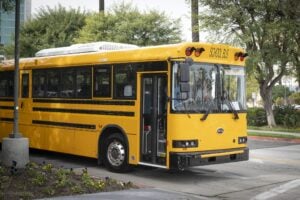
Jersey City, New Jersey, completed the first audit of its 1,276-vehicle municipal fleet and cut the total by 70 units, auctioning 40 vehicles and stripping 30 nonfunctional ones for parts, while reducing take-home assignments from 88 to 52, Streetsblog Empire State reported.
“A lot of what happens in city government is you just do things because that’s the way they’ve been done,” Mayor James Solomon said. A Department of Public Works audit found 88 employees taking city vehicles home and about $400,000 spent on 10 scooters sitting unused in a city lot. Of the 52 remaining take-home assignments, 49 are assigned to public safety.
The overhaul is aimed at safety as much as savings, with the city’s deficit cresting $50 million. Auction proceeds, avoided purchases and lower fuel costs are expected to yield a couple hundred thousand dollars, Solomon said, with every dollar directed toward the city’s budget deficit. The city plans to measure fuel use over the next 90 days.
Under the new policy, only emergency responders are eligible for take-home vehicles. Assignments must be re-authorized every 12 months, and fuel use, mileage and crashes are subject to monthly review. All drivers must complete Vision Zero defensive driving training. Whenever a vehicle without take-home approval crosses the city boundary, a citywide geofence triggers alerts to both the driver and the relevant department director, with one business day allowed for an explanation. Twenty vehicles found during the audit that lack proper geofencing have since been repaired.
Vehicle assignments and purchases will require sign-off from a new committee whose members come from the offices of finance, law, human resources and risk management; the same body will determine whether each crash involving a city vehicle was preventable. Drivers can be referred for retraining, and repeat preventable crashes carry escalating consequences. Solomon said some police officers and firefighters had been in multiple crashes without anyone flagging them. He does not believe defensive driving training is standard among cities.
The measures arrive as Solomon, who took office in January, pushes a broader street safety agenda. A police traffic enforcement unit was revived, and the city’s Vision Zero commitment was renewed in the first days of his administration. The city has also announced new safety measures at 17 high-crash intersections.
Rachael Fauss, senior policy adviser at Reinvent Albany, said in the Streetsblog report that cities should be able to justify every take-home assignment. “There should be a stated rationale for the vehicle, not just have it be a perk of the job,” she said, noting that a demonstrated safety need or equipment that cannot be transported otherwise would qualify. More vehicles on the road also means more exposure to lawsuits after crashes, she added, because the municipality can be liable.
Andrew Rein, president of the Citizens Budget Commission, agreed that every local government should examine its fleet. Vehicle purchases are often made department by department with no check on whether existing cars elsewhere in the city could fill the gap, Rein said, pointing to cross-agency sharing as an obvious remedy. “Do we need this many if we could allocate them better?” he said.
Solomon said he does not anticipate union resistance to the new rules in Jersey City. “You should only have a take-home vehicle if you know it’s really required,” he said.