Multnomah County Adopts EV-First Fleet Strategy, Targets Full Decarbonization by 2050
The unanimous Oct. 29 vote adopts a strategy that recommends an EV First procurement rule for the county’s 650-plus vehicles and sets greenhouse gas reduction targets of 50% by 2035 and 75% by 2040 from 2007 levels.
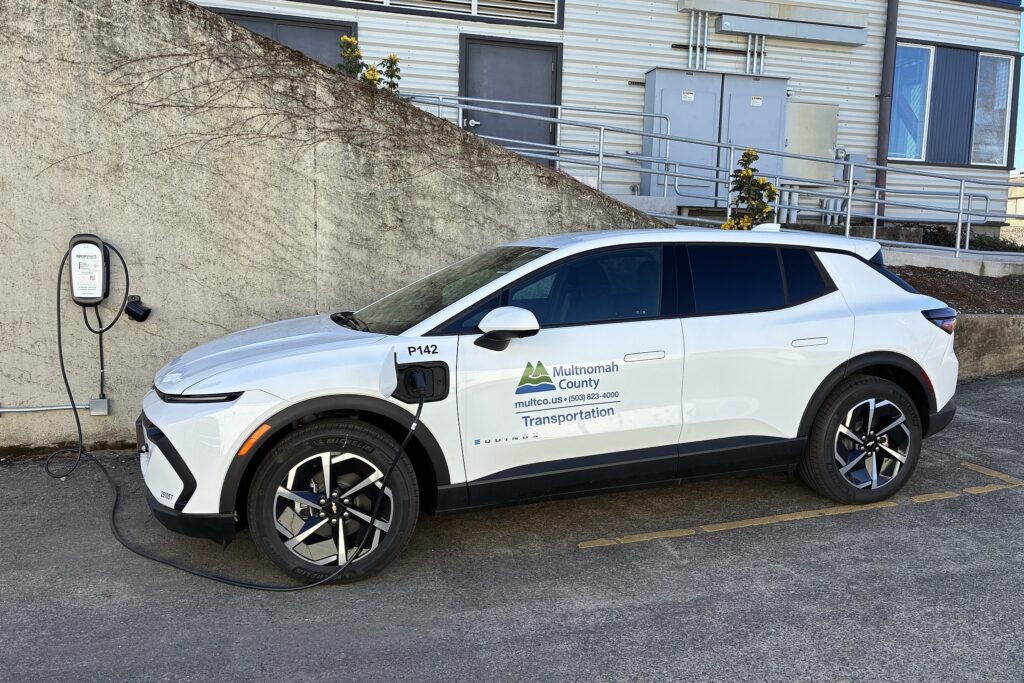
Source: Multnomah County ↗
The Multnomah County, Oregon, Board of Commissioners voted unanimously Oct. 29 to adopt a Fleet Decarbonization Strategy that sets a framework for moving the county’s fleet of more than 650 vehicles from gasoline and diesel to electric by 2050. The resolution, along with an Oct. 15 board briefing, responded to a fiscal year 2027 budget note.
The fleet is used for client visits, infrastructure maintenance, emergency management, law enforcement and health services. Fleet vehicles account for 35% of the county’s enterprise greenhouse gas emissions, according to the county. About 10% of the current fleet is electric, plug-in hybrid or hybrid, and the rest runs on internal combustion engines.
Four Recommendations
The strategy, drafted by the county’s Office of Sustainability, recommends:
- An “EV First” administrative rule requiring county departments to prioritize battery-electric vehicles in procurement when possible.
- An interdepartmental battery-electric vehicle task force to work through implementation challenges.
- Emissions reduction targets for 2035 and 2040 to track progress toward 2050.
- Centralized funding for charging infrastructure, rather than having individual departments bear the cost.
Interim Targets Added by Amendment
Commissioner Shannon Singleton introduced an amendment, approved unanimously, that sets interim fleet greenhouse gas reduction targets of 50% below 2007 levels by 2035 and 75% below 2007 levels by 2040. Without it, the task force, which has not yet been formed, would have been left to set targets. “I don’t think we need additional and long analysis on goals,” Singleton said.
The amendment also commits the county to support a skilled and trained local workforce through its procurement choices for charging infrastructure installation and maintenance, including contractors that participate in apprenticeship programs and employers that pay prevailing wages and benefits.
The Cost Case
Commissioner Julia Brim-Edwards, who co-sponsored the resolution with Singleton, said electric vehicles cost significantly less to fuel and maintain. “With difficult budget decisions ahead, this is an action we can take to reduce our long-term operating costs,” she said.
John Wasiutynski, director of the Office of Sustainability, said the initial costs of transitioning can be mitigated by partnerships with the state and utilities and by other outside funding. He said an electric fleet would also reduce longer-term maintenance costs and hedge against rising fuel prices.
Next Steps
The county will charter the Fleet Decarbonization Task Force and advance the EV First rule through its administrative procedure process, Wasiutynski said. The resolution follows a 2017 board resolution to meet 100% of community-wide energy needs with renewable energy by 2050, including full decarbonization of the county’s fleet, a 2021 resolution committing the county to fossil fuel-free buildings and fleet electrification, and the 2026 Climate Justice Plan.