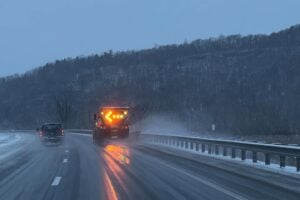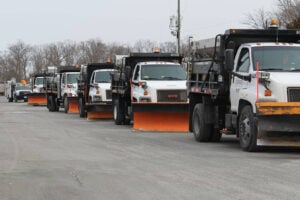
NYC Readies 2,200-Plus Plow-Ready Sanitation Vehicles and New Composite Blades for Winter
DSNY fitted 678 plows and spreaders with composite blades, bought its first 120 snow blowers and stockpiled 500 million pounds of salt, alongside a $25 million Code Blue expansion.
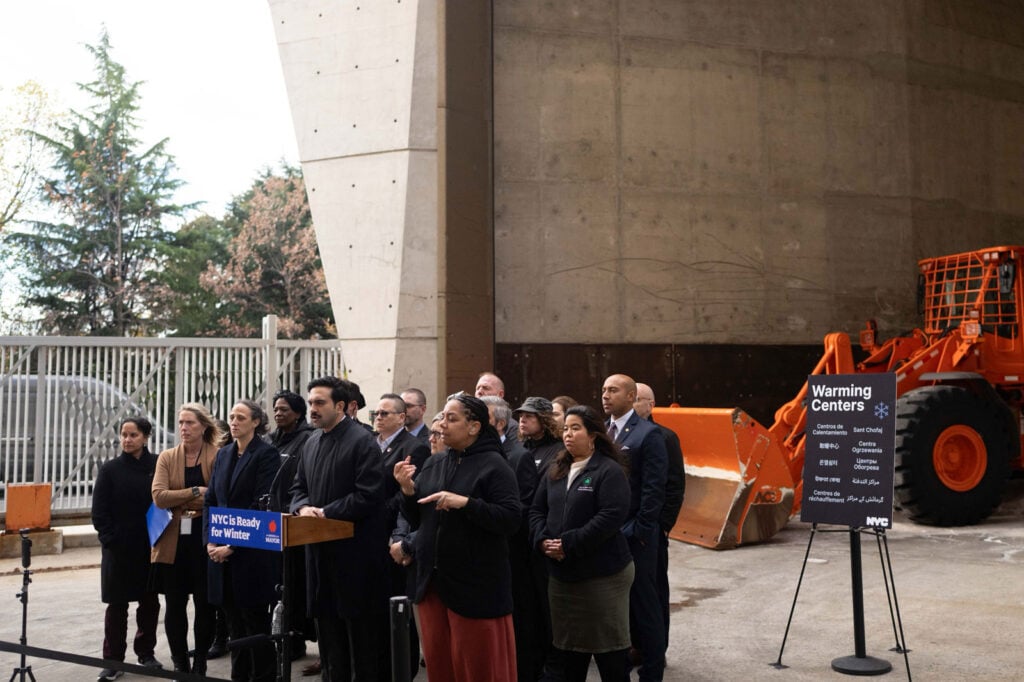
Source: NYC Mayor's Office ↗
New York City has staged more than 2,200 Department of Sanitation vehicles for conversion to snowplows, outfitted 678 plows and spreaders with new composite plow blades, stockpiled 500 million pounds of salt and acquired the agency’s first 120 snow blowers, as Mayor Zohran Kwame Mamdani also announced a $25 million expansion of the city’s Code Blue cold-weather system.
“The Department of Sanitation plans all year long to develop a strategic and adaptable playbook for every unique winter storm scenario, continually revising routes, assessing past performance and overhauling equipment,” said Sanitation Commissioner Gregory Anderson. “Last snow season, New York City received the most significant snowfall in years, and we have taken those lessons to heart and upgraded our strategy for clearing streets, public spaces and pedestrian infrastructure. We are prepared, equipped and ready to keep all New Yorkers safe and moving this winter, whether they drive, walk, ride, bike or roll.”
The new composite blades are engineered to conform to road contours and limit damage to bridges and highways. All 705 large and small salt spreaders and other snow removal equipment have been serviced and restored after heavy use last winter. The Department of Sanitation (DSNY) has 7,000 uniformed sanitation workers trained for snow clearing and 47 pieces of specialized equipment dedicated to protected bike lanes. This season, DSNY formally incorporated every bus stop, sidewalk and crosswalk into its internal route maps, enabling more precise resource deployment during and after storms. Eight new plow sector routes have been added in Staten Island’s hilliest areas to reach the borough’s steepest and narrowest streets. New forecast-trigger protocols will let the agency pre-position contractor equipment for pedestrian infrastructure clearance ahead of snowfall. The Emergency Snow Shoveler program has already enrolled more than 3,000 shovelers, against only a few hundred at the same point last year.
New York City Department of Transportation (NYC DOT) Commissioner Mike Flynn said his department is ready to deploy 76 trucks and personnel to back DSNY snow clearing and melting operations. NYC DOT spent $2 million on small snow clearing equipment, including tractors and gators with plow attachments, and set up new protocols with JCDecaux and Citi Bike to accelerate clearance of bus stops, bikeshare infrastructure and other priority transit areas. NYC Public Schools (NYCPS) acquired 10 all-terrain vehicles (ATVs) equipped with snowplows, 650 snow blowers and roughly 3,000 shovels, ice choppers and other hand tools, and upgraded existing equipment with 190 new snowplow and blade attachments. NYC Parks is readying nearly 400 vehicles out of 11 garages across the five boroughs to clear more than 2,000 miles of pathways, with priority given to park perimeters, commuter hubs and other high-traffic areas. The Department of Citywide Administrative Services (DCAS) is stocking the city’s Central Storehouse with up to six months’ worth of calcium chloride and rock salt.
The New York City Police Department (NYPD) is preparing to deploy tow trucks during storms to clear roads, assist stranded motorists and escort DSNY snowplows, and will also transport Department of Homeless Services (DHS) employees providing services for at-risk New Yorkers and deploy officers at high-volume traffic locations to help emergency vehicles move safely. The Fire Department (FDNY) will adjust on-call staffing across all engine companies during extreme weather emergencies and preposition high-axle vehicles for rapid deployment ahead of coastal flooding. New York City Emergency Management (NYCEM) is updating mutual aid agreements to ensure access to additional resources if needed, and is hosting preseason briefings with private-sector partners, the Advance Warning System, the Disability, Access and Functional Needs Advisory Council (DAFN) and elected officials at every level of government.
The New York City Housing Authority (NYCHA) carried out preventative maintenance, inspections and repairs on all 965 boilers, 1,472 hot water systems and 1,507 heat distribution systems across its developments. The authority opened a new 12,271-square-foot heating training facility that will deliver hands-on instruction for all 654 active frontline heating employees as well as future hires. Since last winter, NYCHA has committed more than $121 million to heating infrastructure upgrades at four developments, with another $728 million in work across 20 developments nearing completion this winter. The authority also directed more than $9.7 million to heating equipment repairs and replacements this year, with $6.4 million more committed to ongoing heating and hot water projects. Twenty-two mobile boilers are currently connected to developments, with four additional units available for deployment if needed. Chief Executive Officer Lisa Bova-Hiatt said NYCHA is taking a comprehensive approach to winter readiness, spanning preventative maintenance across every piece of heating infrastructure and expanded hands-on training for its frontline heating workforce.
The $25 million Code Blue expansion scales outreach, medical and shelter resources according to the severity and duration of cold conditions. More than 300 additional canvassers will work designated walking and driving routes through high-impact areas in all five boroughs, reaching 75% of locations where homeless New Yorkers are known to stay. Teams will engage every person they encounter rather than working from predetermined lists, an approach the city tested during Code Red operations this summer that engaged 20 times more people than previous efforts. Up to 55 NYC Health + Hospitals (H+H) WARM mobile units, each staffed by a registered nurse or nurse practitioner, will deliver medical support and transportation to warming centers and medical facilities. H+H will open at least three hospitals as warming centers and all 11 facilities during the most severe weather. DHS will activate eight drop-in centers, four new warming centers and 20 warming buses at peak level. The city is adding more than 600 single- and double-occupancy rooms, creating 800 beds for homeless New Yorkers during the coldest periods. An estimated 12,000 people served through Adult Protective Services (APS), the HIV/AIDS Services Administration (HASA), domestic violence services and Medicaid home care will receive wellness checks from Department of Social Services (DSS) and Department of Health and Mental Hygiene (DOHMH) outreach teams.
“After last winter, we took a hard look at what worked and what didn’t, and we’re changing how we do Code Blue,” said DSS Commissioner Erin Dalton. Rather than working from a list of names, she said, the agency will work from a map, covering blocks, subway stations and parks where people are known to be living outside. “We tested this approach during Code Red this summer, and we saw much better results: 20 times more people engaged and 7 times the people placed inside. With additional faster transport and up to 800 more low-barrier beds waiting, we expect this approach to reach more people, bring more of them inside and keep more New Yorkers safe through the coldest nights.”
“Extreme cold is a public health emergency, and because the most vulnerable New Yorkers can’t always come to us, we will meet them where they are with life-saving care,” said Dr. Ted Long, NYC Health + Hospitals senior vice president and chief medical officer for clinical services and population health. “Building on the success of our warming center and WARM mobile units last winter, we are expanding our WARM units with our partners at DHS to make sure we are going where we are needed most. Our teams are ready to bring warmth, compassionate care, and a path to ongoing, lasting support to every New Yorker who needs it.”
NYC Health Commissioner Dr. Alister F. Martin said last winter ranked among the coldest and snowiest in decades, which is why the Health Department is already working with syringe services providers to open overnight coverage during Code Blue activations and expanding outreach to support DSS during prolonged cold snaps. NYCEM Commissioner Christina Farrell said the agency has spent 2026 updating winter plans to incorporate lessons from the extreme cold and snowstorms the city experienced earlier in the year, and urged New Yorkers to review their winter heating safety and emergency plans at nyc.gov/beready.
NYCPS has tripled its emergency fuel delivery contracts. DCAS is overseeing fuel quality and supply at roughly 5,500 city locations and running interagency exercises to coordinate fuel delivery during emergencies. Fuel oil prices have climbed nearly 70% over the past year, and the Mayor’s Office of Climate and Environmental Justice and the Mayor’s Public Engagement Unit are canvassing all five boroughs to help residents lower their energy bills. The Department of Correction (DOC) completed repairs and upgrades to Rikers Island’s heating system for the 2026-27 winter season, replacing nearly 80 sections of heating equipment, repairing dozens of leaks and restoring lighting, pumps and ventilation in underground steam tunnels.