AI Takes the Wheel: How to Put It to Work
Find value with artificial intelligence without giving up the driver’s seat.
Artificial intelligence (AI) may feel like the hottest technology on the road, but the truth is fleets have used forms of AI for years.
“AI is not new,” says Rhonda Syler, Associate Professor of Computer Information Systems and Business Analytics at James Madison University, a Digital Statecraft Academy Cambridge Fellow and chair of the Commission on Information Technology for the City of Alexandria, Virginia. She explains that predictive models have long used structured data to forecast outcomes, such as noting when a vehicle part might fail so it can be replaced before the vehicle breaks down.

The game changer is the rise of generative AI and large language models such as ChatGPT, Claude and Gemini. These tools train on massive datasets to learn patterns, structures and relationships. And unlike traditional models, which depend heavily on structured data and predefined queries, these tools allow users to work conversationally with free-form material and, Syler says they can “make structured sense out of an unstructured mess.”
These advances have found their way into fleet technology, with fleet management information systems (FMIS) and telematics providers adding AI capabilities to their platforms. Still, adoption varies widely. Some fleets use AI regularly, while others don’t use it at all.
Syler attributes uneven adoption to the rapid pace of AI development outpacing fleet professionals’ comfort levels. “For many fleet managers and technicians, AI is not a language they speak,” she says.
Put AI to Work
Learning the language starts with understanding where AI can make a difference, according to Syler. While fleets have long used AI for applications such as prediction and anomaly detection, today’s generative AI tools make the technology more accessible, allowing users to query and synthesize information using everyday language.
That accessibility can be especially valuable for fleets who lack analytical resources. Large state and municipal fleets may employ dedicated data analysts, but smaller fleets leave that work to busy fleet managers who wear multiple hats.
This reality makes data analysis one of AI’s most accessible and beneficial applications.

“The lowest-hanging fruit is to take the reports that you get out of your systems, give the data as much context as you can and feed it into AI. Things that normally would have needed an analyst can now be done with AI, especially if you have the knowledge or context to coach it,” says Marc Canton, vice president of fleet strategy for . “Now you have given yourself an analyst without having to hire one.”
AI can analyze fleet data in seconds to spot trends and reveal underlying causes for surface-level metrics.
For example, a fleet manager might ask AI to figure out why vehicle availability is low. The analysis may show that work orders average four days to complete. Further investigation may reveal that vehicles wait an average of two days for parts. Now the fleet manager can investigate if the issue lies with parts inventory, staffing or a different bottleneck.
AI can monitor fleet operations at a scale that would be difficult for employees to manage manually. Sean Herron, chief information security officer at Samsara, points to “pattern analysis at scale” as one of AI’s strongest applications.
AI pattern analysis might identify when a vehicle leaves a prescribed route, when an asset is transferred unexpectedly or when an operator’s actions do not align with an assigned workload. It can surface anomalies that might otherwise disappear in a sea of fleet data.

Fleets can also use AI to improve efficiency in their maintenance workflows, balancing speed, cost control and consistency,” says Brianna Perry Lange, senior product marketing manager at Fleetio.
AI-assisted service review is one of the strongest examples, Lange adds. When AI can assess incoming repair orders against vehicle history, preventive maintenance schedules, vendor patterns and cost benchmarks, it can help fleets approve straightforward work faster, flag service that needs review and catch anomalies before they become unnecessary spend.
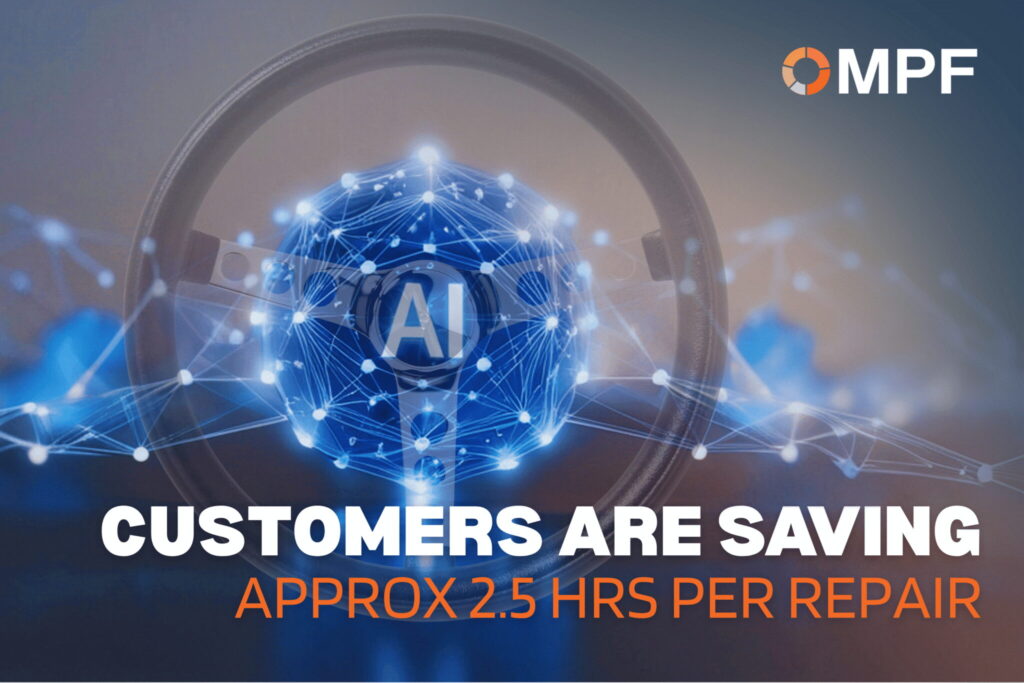
“We’re seeing that with Fleetio’s AI Service Advisor, where customers are saving approximately 2.5 hours per repair,” she says.
AI is also proving valuable in issue prioritization. Instead of forcing a fleet manager to manually sort through every inspection defect or telematics-triggered issue, AI can help identify which issues are truly critical, explain why and guide the team toward the right next step. That shortens response times and helps prevent minor issues from becoming major downtime events.
Lighten the Administrative Load
Not every AI application needs to tackle a complex fleet problem. Canton shares that some of the quickest wins come from taking routine work off employees’ plates.
FMIS may include AI tools that can scan and read invoices. Other AI systems might help fleet managers query their data and create a graph, chart or spreadsheet. General-purpose AI tools may analyze information exported from an FMIS to support strategic decision-making.
“These capabilities can turn raw data into something useful,” Canton says.
AI is a Tool, Not the Fleet Manager
Canton cautions against handing AI the keys and letting it make decisions on its own. AI can analyze information, reveal patterns and make recommendations, but the finished product still requires human oversight.
“AI can help you get to 80% or maybe 90% but it can’t get you to 100%,” Canton explains.
That last 10% or 20% matters, particularly when AI is weighing in on vehicle replacement, lifecycle analysis, staffing or maintenance decisions. Public fleet management is a niche field, Canton explains, and AI cannot replace the context, experience and judgment of an experienced fleet manager.
“The more niche your knowledge base is, the more important human intervention becomes,” he says. “AI can help you execute the process and procedural elements, but it will not give you the vision or the strategy. Fleet leaders must be the executive of the work and let the AI be an independent contributor to it.”
That means when AI recommends replacing a vehicle, adding technicians or changing a maintenance practice, someone with fleet expertise steps in to decide whether the recommendation actually makes sense.
Bad Data In, Bad Decisions Out
When it comes to data, garbage in means garbage out. For AI to function properly, it needs clean, reliable data.
“Clean data can help build trust,” Lange says. “Fleet leaders are far more likely to adopt AI when the rationale is transparent and the outputs align with what they know to be true operationally.”
Canton points out that “clean data” can mean two different things. The first is data quality: making sure the information being analyzed is accurate, organized and appropriate for the question being asked. The second is data sanitation: removing sensitive or identifying information before giving data to an AI system.

Data quality problems can be as simple as a mistyped number. A $500 repair entered as $5,000 can skew an analysis. Data fields also need to mean what the person or system analyzing them thinks they mean, and comparisons must involve the right vehicles and operating conditions.
Canton recalls when a lifecycle analysis showed maintenance costs declining as vehicles aged. The problem wasn’t the vehicles, but the data: The analyst and fleet manager had interpreted “year one” differently, reversing the years and producing potentially damaging recommendations.
“If you give AI unclean data, it increases the likelihood that you get a less than desirable result, or you can get pointed in the wrong direction,” Canton says.
Lange agrees stressing that AI is only as useful as the data it can draw from.
“In edge cases or situations where data is sparse, AI shouldn’t be filling in the gaps or pretending to know when the data isn’t there, but that means there are situations where AI needs stronger foundational data in order to provide the answer,” she says. “If service histories are incomplete, line items are inconsistent or costs are spread across disconnected systems, the recommendation or guidance will be less actionable.”
To approve services, identify anomalies and support lifecycle decisions, AI needs access to accurate records, consistent naming and enough historical context to distinguish a true outlier from normal variation.
Build the Guardrails
Before public fleets encourage employees to use AI, they must establish the rules of the road, Syler suggests. And Canton warns many public fleets haven’t taken that step.
“The public fleets I talk to have no acceptable-use policy for AI. The lack a policy that states which tools are approved, what data can go into them and who gets to decide,” he says. “That’s the first step, and it’s usually the missing one.”
An acceptable-use policy should address which tools employees may use, what information may be entered, who approves new applications and how AI-generated results will be verified. Public agencies also must consider data retention and discoverability.
Canton advises public fleets that any AI inputs can become public records and urges them to plan for prompt, data handling during record requests.
Syler likewise stresses the need for municipalities to set up guardrails around AI, particularly when employee records, private information and other sensitive data are involved.
But guardrails, she says, don’t have to become roadblocks. Syler understands why some municipalities initially restrict AI while evaluating its risks but cautions against stopping there. “You don’t want to kill innovation and efficiency, and all the great things that come from using it,” she says.
Get Shadow AI Into the Light
Government puts a speed bump in the path to AI adoption when they its use as they work on AI policies. But many municipal employees use the technology, anyway.
When municipalities don’t supply approved AI tools, employees may use their own, leading to reduced oversight on data and AI usage, according to Syler.
Herron compares the issue to shadow IT, where employees turn to outside technology to get their jobs done. “It is critically important to make the secure path also the easy path,” he says, recommending municipalities adopt approved enterprise AI tools that keep data within the organization’s control.
Make IT a Partner
“IT should be involved every step of the way,” Canton says. “I do not at all recommend that any organization go out and try to tackle AI without IT on board.”
In most cities and counties, IT will eventually become involved through security reviews, procurement or other approval processes, anyway. “The real choice isn’t whether IT gets involved. It’s whether you bring them in early as a partner or meet them at the end as a gatekeeper,” Canton says.
Fleet and IT bring different expertise to that conversation. IT can address data classification, retention schedules, security and integration architecture. Fleet can clearly explain the operational problem, what information is involved and what it hopes to do.
“A fleet that walks in saying ‘We want AI’ gets stalled. But a fleet that walks in with a real problem gets somewhere,” Canton stresses.
Train Employees to Question the Answer
Once policies and technology are in place, employees need AI training, according to Canton.
He recommends training employees on configuration, file hygiene, access permissions and model selection. Employees must understand what information should be removed before uploading a file, the systems and data AI has permission to access and which tools are appropriate for different tasks.

And most importantly, employees must be taught to verify the data AI presents. “Verification is the one step people skip, and in fleet it’s the one that will actually bite you,” Canton says.
AI might produce a polished vehicle replacement recommendation based on an unchecked assumption, misread code or faulty data. “Training people to interrogate the output matters more than training them on settings,” Canton stresses.
When choosing AI technology, Canton recommends looking for systems that can show the records behind an answer so employees can easily verify the results.
The Future
Public fleets should never rush into AI without policies, training or oversight. But waiting indefinitely carries its own risk.
“Organizations avoiding AI will be rare in a few years,” Herron predicts. “Those fleets that do not adapt as the technology changes risk being left behind.”