Win Influence Before Budget Season
Build trust and credibility to earn your seat at the decision-making table.
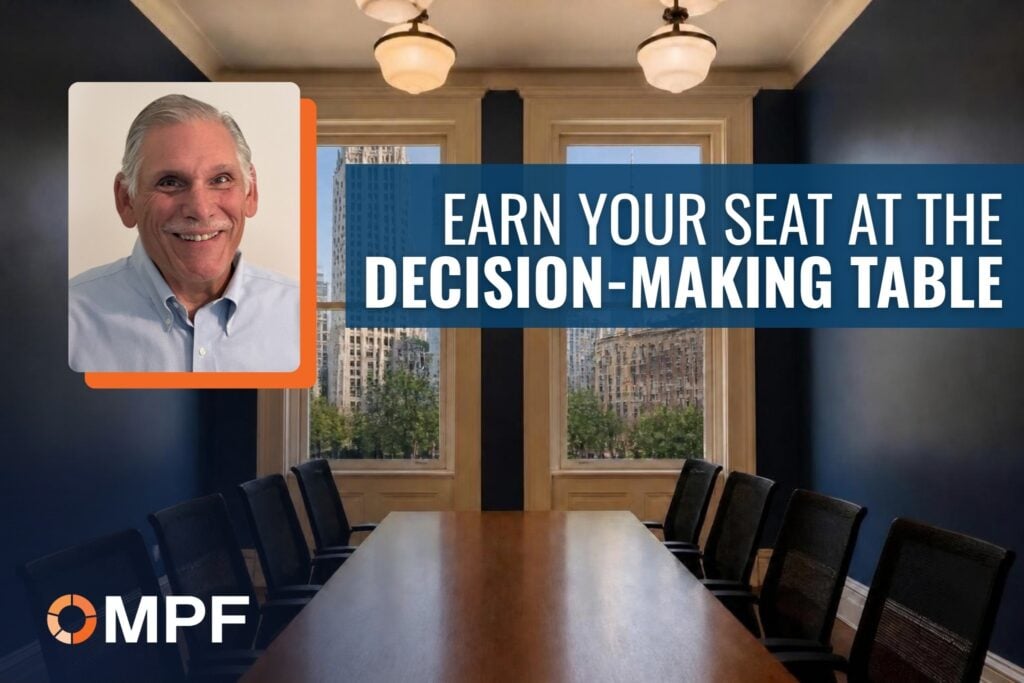
Robert Martinez climbed the career ladder and then kept building a bigger one.
In his nearly 40 years with the New York City Police Department, he advanced from mechanic to Director of the Fleet Services Division to Deputy Commissioner, overseeing nearly 1,000 employees, a $180 million budget and one of the nation’s largest municipal fleets.
The now owner of RSM Fleet Consulting shares his career trajectory not to pat himself on the back, but to emphasize that the most important wrench in a fleet manager’s toolbox is a seat at the decision-making table.
“You got to get noticed. You have got to be your own cheerleader, but keep it balanced,” he says. “It helps to establish a reputation of being honest and truthful.”
Martinez discovered over his decades-long career that the fleets that have influence and receive funding are run by fleet managers who earn the trust of finance and government leaders first.
Educate Yourself, Elevate Others
To be seen as a trusted advisor, Martinez says fleet managers must never stop learning.
He recalls that early in his career an engineer dismissed his thoughts about a recurring motorcycle repair issue. This experience pushed him to earn a degree in engineering. By understanding the science behind the vehicles he maintained, he says he was better equipped to explain problems to others.
Martinez later earned a bachelor’s degree in Electromechanical Engineering Technology and got a master’s degree in Engineering. He also attended executive leadership programs at New York University Wagner Graduate School of Public Service and Harvard Kennedy School. The education increased his influence and leadership roles.
“Without continued education, your career gets held up and you stay where you are,” he says. “Educating yourself helps you bridge the gap between technical operations and executive decision making.”
Martinez says he quickly learned that another critical part of the job is coaching others and encouraging them to build their skills. He took on the role as chief educator, ready to help his team understand the why behind procedures, how to use data to solve problems and how to translate technical issues into language everyone could understand.
A leader who teaches their team how they want things done, from safety to engineering to problem-solving, helps their department run better and earns the trust of staff and upper management.
Measure What Matters
Reporting repair statistics and expecting executives to connect the dots and agree to funding requests won’t work, according to Martinez. Leaders, he says, build trust on measurable results.
Martinez figured out early on that reporting on maintenance, vehicle age and mileage wasn’t enough. He knew he had to show results, but he lacked a means to measure what mattered.
“But if you don’t measure, you can’t manage,” he says. “It’s like going to a baseball game and not keeping score.”
The NYPD was already using a program called COMSTAT to improve policing effectiveness and reduce crime rates. Martinez, as Director of the Fleet Services Division, took what he learned from this program to create FLEETSTAT, a tool that measured and translated fleet performance into metrics leadership could understand.
FLEETSTAT tracked things like out-of-service vehicles, patrol cars and specialized vehicles, mechanical and accident repairs, parts delays, downtime and loaner fleet availability.
With this data in hand, Martinez says he could speak the language of leadership. He could ask leaders what information they were looking for, and say with confidence, “Let me find the numbers that can answer your questions. This gave leaders the information they needed to make informed decisions.”
He also regularly assembled his team to review FLEETSTAT metrics, identify concerns and work through solutions together. “The goal wasn’t to embarrass people. You don’t want to beat them up,” he says. “It was to improve performance. Metrics should develop people, not punish them.”
Later, when Martinez was promoted to Deputy Commissioner of the NYPD, he expanded FLEETSTAT to gain insight into fleet budgets and resource allocation. With these capabilities, he could present data that elevated fleet’s credibility across the organization.
Tell The Story Behind the Numbers
A spreadsheet that shares every metric under the sun won’t win over financial leaders if the story behind the numbers is missing. Martinez explains that leaders are more likely to approve budgets when they understand the business implications behind the data.
Martinez believes it’s up to fleet managers to provide the context that turns information into insight. He adds, “Sometimes the data doesn’t tell the true story. The numbers can lie.”
For example, an out-of-service rate alone doesn’t tell the full story. “I always look at out-of-service rates, but what you see may not always be what you get,” he says. “You have always got to coincide that with the age of your fleet. If the fleet is getting older, what does that mean?”
In another example, he shares that repair costs on older vehicles may go down, but that doesn’t mean the vehicles are more reliable.
“We know that repair costs go up every subsequent year of a vehicle’s life cycle,” he says. “So, if in their sixth year, repair costs go down, you need to look at why. You may find the reason repairs have gone down is that no one is using that vehicle anymore because it’s older and less reliable.”
Martinez says fleet managers also must consider utilization.
“When you look at out-of-service rates, fleet age and utilization, you can come up with a formula that really resonates with leadership,” he says. “If the vehicles are being used every day, and the vehicle out of service is going up, and the vehicles are old, you have great justification to get the funding you need.”
Show Hidden Costs
Fleet managers can also earn leadership’s trust by helping them understand the true costs of delaying vehicle replacements, Martinez stresses.
He shares these funding delays may reduce capital spending, but the savings will be offset by higher maintenance costs, increased downtime, lowered fleet safety and lost productivity.
“Delaying replacement doesn’t save money. It moves expenses into different budget categories,” he says. “It’s penny-wise and a dollar foolish to think lifecycles are the best way to go about balancing the budget.”
A fleet’s repair expenses will grow as vehicles age beyond their intended lifecycle and warranties expire. And if breakdowns happen more often, it will drive up downtime and reduce productivity. When vehicles are older, a fleet can miss out on the latest advances in safety technology, fuel efficiency and emissions.
“In a perfect world, you’d have one-fifth of your fleet replaced every year, and the money to replace it would be there,” he says. “But that doesn’t happen, so you have to be ready to communicate what will happen to the fleet if they don’t fund it. For instance, you may miss out on vehicle safety improvements, such as ABS brakes or backup cameras.”
Martinez recommends looping in risk management experts to share the costs of a single lawsuit and how insurance costs will increase because of outdated vehicle technology.
Showing how newer vehicles will help the organization meet sustainability goals can also motivate replacement decisions. Martinez recommends sharing data to show how a hybrid or an electric vehicle will green operations.
When fleet managers take the lead on these conversations, they can position themselves as strategic advisors who lower risk, spend money wisely and lead operational strategy.
Lessons Learned
Over his career, Martinez has seen firsthand that a leader who builds credibility every day through honest communication, continuous learning, meaningful performance measures, and a willingness to educate others will quickly earn the trust of everyone from the top down.
“Influence is built not granted,” he concludes.