Fleet Professional of the Year Tim Coxwell’s Playbook for a World-Class Fleet
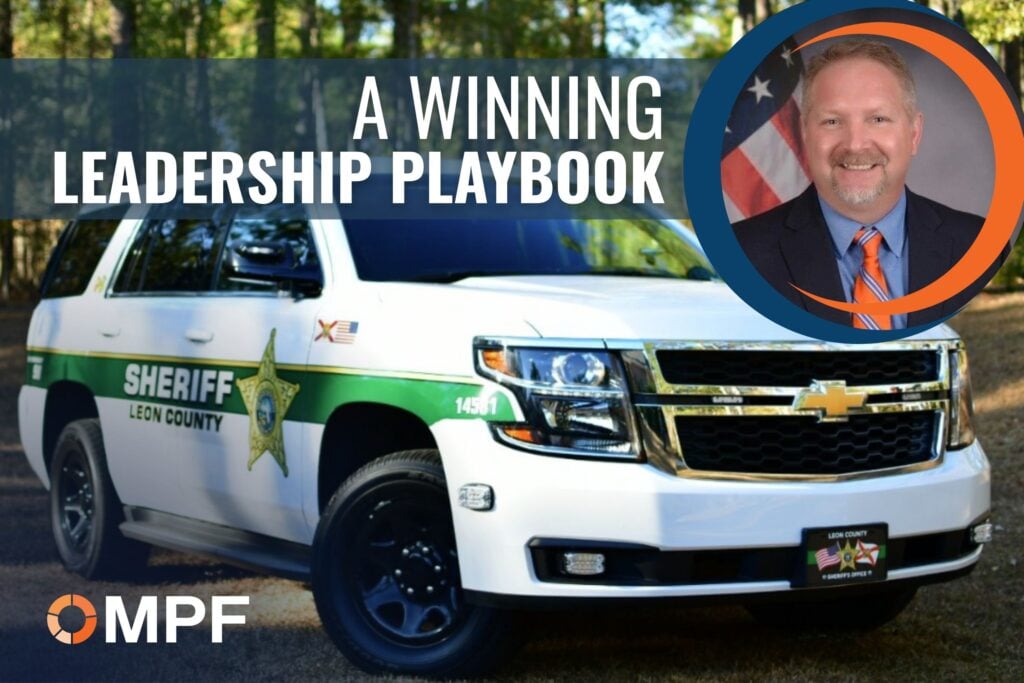
Tim Coxwell wasn’t looking for a job in fleet management when the Leon County, Florida, Sheriff’s Office asked him to help interview candidates for its next fleet director role in 2013. But when officials described the position, Coxwell thought, ”You know, I might be interested in that.”
He got the job, replacing someone who had been there for 31 years.
As it turned out, his background was well suited to the role. He had started out changing tires, doing alignments and brake jobs at Goodyear, learned parts inventory management at NAPA, and eventually oversaw operations for 60 automotive service locations.
Since he joined LCSO, he has helped build one of the nation’s top-performing fleet operations and was recognized as NAFA’s 2026 Fleet Professional of the Year. To do so, Coxwell focused on investing in his team, using data to guide decisions, communicating the fleet’s needs and value, and looking outside his own operation for ideas and benchmarks.
Invest in People Before You Lose Them
One of Coxwell’s proudest accomplishments is the fleet progression program, which has allowed him to retain staff. He applied a program the City of Tallahassee, Florida, had initiated, detailing steps for how technicians could earn more. It clarified the stages of each position—Technician 1, 2, 3, and Master Technician—based on experience and certifications. It gave employees a clearer path to higher pay, even allowing top-producing techs to progress from an annual salary of $45,000 to $75,000.
But for Coxwell, retaining and developing employees goes beyond compensation. He believes motivation can make or break a fleet operation.
“When fleets are failing, there’s a breakdown where motivation is lost,” he explained.
That loss of motivation can occur anywhere: with a technician, a supervisor, or a driver. Coxwell talks with his team about why they need to operate at a high level and regularly checks in with deputies and supervisors about their role in keeping the fleet running well.
”You can write the perfect plan, you can have perfect standards that everybody agrees to…but if you don’t get the cooperation out of the people who are driving the vehicles, and you don’t get the cooperation out of the people who are repairing and maintaining the vehicles, you’re not going to be successful,” he said.
Know What Your Metrics Are Telling You
Tracking KPIs is only useful if fleet managers understand what the numbers say about their operation.
Coxwell keeps a close eye on several metrics:
- Asset availability gives an overall picture of how well the fleet is functioning. Fleet leadership can use it to see if they’re meeting their customers’ needs. LCSO routinely achieves 98% asset availability.
- Preventive maintenance (PM) compliance reveals the relationship between drivers and the fleet garage.
”If we’re doing a good job, [drivers are] going to understand the value of that PM and stick to it,” he said, adding that the fleet team does have to be more flexible on scheduling law enforcement vehicles since they may get last-minute calls that need immediate response. The fleet’s compliance level is above 90%.
- Parts inventory, which has improved from two turns annually to almost four. The fleet previously included many different makes and models, requiring the shop to stock parts it might use only once a year. Now, the patrol vehicles have been standardized to Chevrolet Tahoes, and the unmarked fleet is mostly comprised of Toyota RAV4 or Highlander hybrids, or Camry Hybridss, as well as 20 electric vehicles that don’t require many parts.
Creating a Replacement Strategy
When Coxwell arrived, the average fleet age was around nine years, which eventually reached 12 years. After a new sheriff challenged the organization to become ”world-class,” Coxwell set out to improve the operation—and himself.
The fleet operation worked to earn its ASE Blue Seal of Excellence, which it did in 2016. Coxwell entered the Certified Automotive Fleet Manager (CAFM) program and used what he learned to create a business plan in 2017. The team also began making greater use of its fleet management information system (FMIS).
With leadership support, new knowledge, and better tools, Coxwell was able to grow the fleet capital budget: The fleet spent $450,000 for new vehicles in 2017 versus $5 million in 2022 and $4.8 million last year. The total fleet fluctuates between 430 and 590 (depending on the remarketing schedule), and about 300 of these are patrol vehicles.
Coxwell’s replacement plan gives him data to support requests for new vehicles. His current plan calls for replacing vehicles in year five, although ordering is done a year earlier to allow for upfitting. His replacement decisions depend less on mileage and more on engine hours. He also considers operating costs, as well as the warranty periods for powertrains and emissions.
Use Technology to Solve Problems
Coxwell also relies heavily on telematics to manage the fleet. His operation uses telematics data to track utilization, flag maintenance and diagnostic issues, coach drivers, and manage vehicle life cycles.
The data comes from various platforms. The fleet division uses passive telematics through its fuel system, logging data points when vehicles come in for fueling. It uses Motorq for its Toyota and Tesla vehicles, obtaining real-time information. Marked units (patrol, warrants, K9s, and school resource vehicles) are managed through OnStar, and Whelen Cloud allows the fleet to update and review light bar systems and data.
In addition to maintenance and diagnostics, these systems also give Coxwell’s team information it can use to address driver behavior. If the Sheriff’s Office gets a complaint about a deputy going 75 in a 30-mph speed zone, they can review that trip using OnStar and Whelen Cloud to see if the deputy was on a call and if they had their lights and sirens activated, Coxwell explained.
”That not only provides us the data to maybe answer a citizen complaint, but it also allows us to coach the driver in the event that they were doing something that was unnecessary or unsafe,” he added.
Fleet Managers Have to Tell Their Story
Coxwell believes fleet leaders need to make sure the rest of the organization understands the fleet’s role.
”Share your story. Tell your story about what it takes to be successful in fleet,” he said.
Before the department began applying for industry recognition, for example, Coxwell sent an agency-wide email showing how other fleets were ranked, announced Leon County’s plans to compete and challenged employees to predict how the fleet would finish.
Communication becomes especially important when funding is at stake. Fleet often isn’t in the room when final budget decisions are made, so the people who are there need to understand fleet’s needs well enough to advocate for them.
”We want those people who are in the room to have the words and needs of fleet top of mind, so they know, ’Hey, I can’t cut $500,000 out of fleet. It’s going to create a lot of service problems,’” he said.
Look Outside Your Own Fleet
Coxwell doesn’t try to figure everything out on his own. He looks to other fleets and fleet managers for ideas and advice.
Industry awards are one benchmarking tool. Coxwell began entering programs such as the 100 Best Fleets and Leading Fleets to see how his operation compared with top performers. He has also incorporated KPIs used by the 100 Best Fleets into his own operation.
”It’s kind of like looking in a mirror,” he explained. ”What does it hurt for us to apply and see what we’re good at and see what we’re not good at—and try and work on those things?”
Through FLAGFA, Coxwell has built relationships with fleet managers he can turn to when he encounters a problem, including Sean Williams at Collier County Sheriff’s Office and Jeff Hawthorne at Palm Beach County Sheriff’s Office, as well as current FLAGFA President Brian Carroll from the Canaveral Port Authority, who runs a similar-sized shop to Coxwell’s.
”All of that feedback they gave me over the years really helped contribute to the success of our fleet program, because there’s a chance that what you’re dealing with, somebody else has already dealt with,” he said.
Coxwell now serves as FLAGFA vice president and incoming president, giving him the opportunity to return some of that support to the fleet community.
”We communicate with one another, and we help each other get better,” he said. ”A rising tide lifts all boats. And FLAGFA is that rising tide.”
Be Ready Before You’re Asked to Do More
For fleet managers looking to advance their careers, Coxwell has straightforward advice: Get your certifications early.
Coxwell came to the Sheriff’s Office with years of automotive experience and his ASE Master Automobile Technician certification. But when the new sheriff challenged the department to become “world class,” he began adding to that technical background.
He went on to earn his CAFM from NAFA, Certified Equipment Manager (CEM) from AEMP, and Certified Public Fleet Professional (CPFP) from APWA, learning more than how to manage vehicles. The programs helped him develop the business knowledge and communication tools needed to work with Finance, Human Resources, IT, General Counsel, and other stakeholders across the organization.
”The fleet manager needs to be prepared for when the time comes when they are asked to do more,” Coxwell said.