Dallas Turns Garbage Trucks Into a Property-Condition Surveillance Fleet
City equipped sanitation vehicles with cameras as a low-cost public-safety tool
Source: NBC 5 ↗
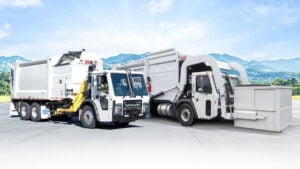
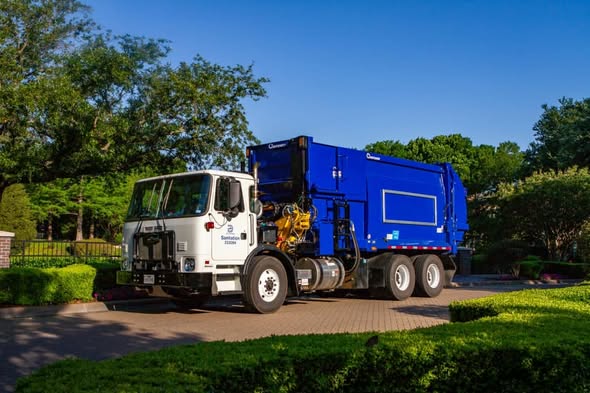
Dallas, Texas, has mounted AI-powered cameras on its bulk-trash and brush-collection trucks under a three-year, $2.5 million contract with City Detect, using the existing fleet to conduct property-condition surveillance across residential streets without purchasing additional vehicles or adding driver hours.
Code Compliance Director Chris Christian said the program extends a short-staffed inspection team by identifying potential violations that officers would otherwise have to locate street by street. According to city records, the only measurable goal on file before the cameras went live was “5,200 courtesy notices per year” once the program reached full rollout.
The cameras have been operating since April. Between April and early August the city sent roughly 500 courtesy notices tied to camera detections; by early September that figure had climbed to 1,800. In approximately four months the system photographed tens of thousands of homes and flagged more than 21,000 properties for potential code violations including overgrown grass, peeling paint and illegal dumping. Each flagged address is run through City Detect’s PASS AI algorithm and assigned a blight score on a 1-to-4 scale. Code officers, not the algorithm, decide which flagged properties receive a notice, according to the city’s statement. Notices left unaddressed can turn into fines.
City Detect markets the approach on the basis that cameras piggyback on routes and mileage a city has already budgeted for trash pickup, with no added fuel cost or dedicated inspection vehicle. The company lists deployments in Stockton, Cathedral City and Lancaster, Calif.; Prescott Valley, Ariz.; and Anniston, Ala. Officials in Huntsville, Ala., and Cape Coral, Fla., are publicly weighing similar arrangements. City Detect’s chief executive has said the system blurs faces and license plates and is not connected to any law-enforcement database.
Daniel Woislaw, an attorney with the Institute for Justice, told reporters that “blight is often used” as a pretext in neighborhoods facing development pressure, a concern raised after mapping of flagged addresses found concentrations in economically challenged parts of southern Dallas. At least one Dallas council member is seeking to defund the program.