Lytx Adds Speed for Conditions to Dynamic Risk, Drawing on 341 Billion Miles of Data
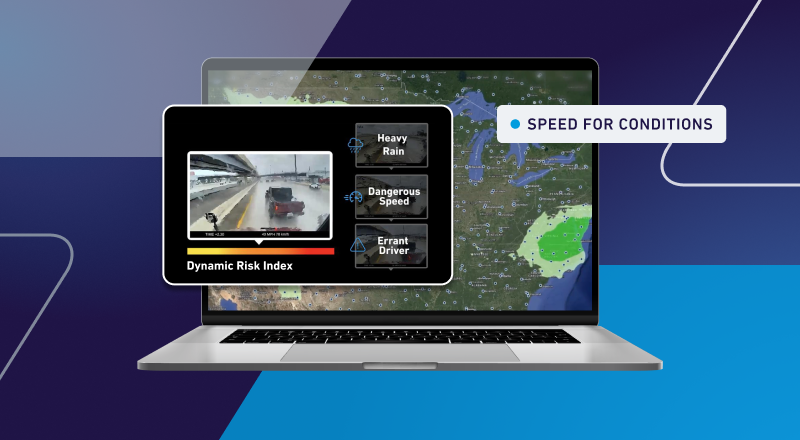
The new feature flags when a driver's speed is legal but unsafe given road or weather conditions, then triggers an in-cab alert after 30 seconds over the adjusted threshold.
Source: Lytx ↗
A pool of 341 billion miles of driving data backs the Speed for Conditions feature that Lytx Inc. has added to its Dynamic Risk platform, flagging when a driver’s speed is legal under posted limits but elevated relative to current road or weather conditions.
The feature uses Lytx’s machine vision and artificial intelligence technology to classify adverse weather conditions on the device in real time, then computes a condition-adjusted speed limit based on each fleet’s own configurable speed-reduction policy. When a driver exceeds that adjusted threshold for a sustained 30-second interval, the system can trigger an in-cab alert through audio, LED or both. The event is tagged as Speed for Conditions, scored separately from standard speeding in the Dynamic Risk Index, and queued for coaching with supporting context in the Event Viewer, where coaches can review actual speed, the effective threshold in effect, and the road condition the system detected.
“Every driver knows the speed limit, but the speed limit is not always the safe speed,” said Chris Cabrera, chief executive officer at Lytx. “With Speed for Conditions, we’re helping fleets move beyond static measures of risk and toward real-time intelligence that reflects what drivers are actually facing on the road. This is the next step in our Dynamic Risk vision: helping drivers self-correct in the moment and giving managers the context they need to coach fairly, prioritize effectively, and operate more safely.”
Speed for Conditions is available now as part of Dynamic Risk, which Lytx describes as its advanced suite for identifying, assessing and acting on environmental risk in real time by combining in-cab and out-of-cab data with road context and weather intelligence.
Three other Dynamic Risk capabilities are also available now. In-Cab Weather Alerts push real-time hazardous-weather notifications to drivers and can prompt managers to reroute or adjust scheduling. Weather Tagging applies to close to 100% of events, with Wet Road and Snowy Road detection operational at night when ambient light is present and Low Visibility tagging limited to daylight by design. Roadwork Detection uses machine vision to identify active construction zones so fleets can account for delay, scheduling and safety impacts.
Two additional capabilities are coming. Dynamic Adjust for Zones will introduce geofence-driven controls that can automatically adjust camera behavior, enable or disable machine vision and artificial intelligence processing, and apply zone-specific speed policy when a vehicle enters or exits a defined area. Route Hazards will flag elevated-risk routes before they become a problem, covering low-clearance bridges and high-risk intersections.
“Dynamic Risk is about giving fleets the intelligence to see risk sooner and respond with confidence,” Cabrera said. “Whether it’s rain, snow, roadwork, pedestrian activity, or a zone-specific policy, we’re helping turn complex road context into clear, actionable guidance for drivers and managers.”
Editor’s note: This industry update was provided by the supplier or source and has not been independently verified by Modern Public Fleet. How we handle supplier announcements