NYC to Triple Intelligent Speed Assistance Fleet to 3,000 Vehicles Over 3 Years
Mayor Mamdani's expansion follows a 64% speeding reduction among the 1,000 already-equipped units, which have logged more than 10 million miles.
Source: The official website of the City of New York ↗
New York City announced Oct. 22 that it would install intelligent speed assistance technology in 2,000 additional municipal vehicles over the next three years, expanding the city’s equipped fleet from 1,000 to 3,000 units, Mayor Zohran Kwame Mamdani and Department of Citywide Administrative Services (DCAS) Commissioner Yume Kitasei said.
The Department of Citywide Administrative Services launched the intelligent speed assistance initiative in 2022 with 50 vehicles. The program now covers more than 1,000 city vehicles, which have collectively logged more than 10 million miles. A joint study by DCAS and the U.S. Department of Transportation’s Volpe National Transportation Systems Center found that equipped vehicles reduced speeding by 64% overall and by 82% on high-speed roads, including highways.
The city’s 2025 Safe Fleet Transition Plan classifies intelligent speed assistance as “required technology,” the plan’s highest designation, and identifies it as a best-practice safety technology. The expansion is directed in part by Executive Order 19, which Mayor Mamdani signed in July 2026 and which requires DCAS to retrofit all nonemergency municipal trucks with pedestrian alerts and to require both pedestrian alerts and intelligent speed assistance in all new nonemergency vehicle and truck purchases.
“What started as a pilot of just 50 vehicles has grown into a program that will soon reach 3,000 and has been a model for fleet safety across the nation,” Commissioner Kitasei said. “From speed assistance to pedestrian alerts, sideguards and all of the safety upgrades we continue to install and explore, we’re investing in technology that builds a city fleet that is not only safer, but also more efficient and sustainable.”
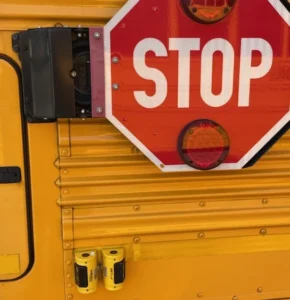
Alongside the expansion, DCAS announced a partnership with New York City School Bus Umbrella Services (NYCSBUS) to install pedestrian alerts on 100 school buses, marking the first test of the technology for school transportation. Matt Berlin, CEO of NYCSBUS, said the organization had already worked with DCAS to implement the Safe Fleet Transition Plan for school buses, including telematics, training and intelligent speed assistance. “We are excited to move to the next stage of this implementation by testing pedestrian turn alerts in various configurations so that we can continue to keep school busing one of the safest modes of transportation in the city,” Berlin said.
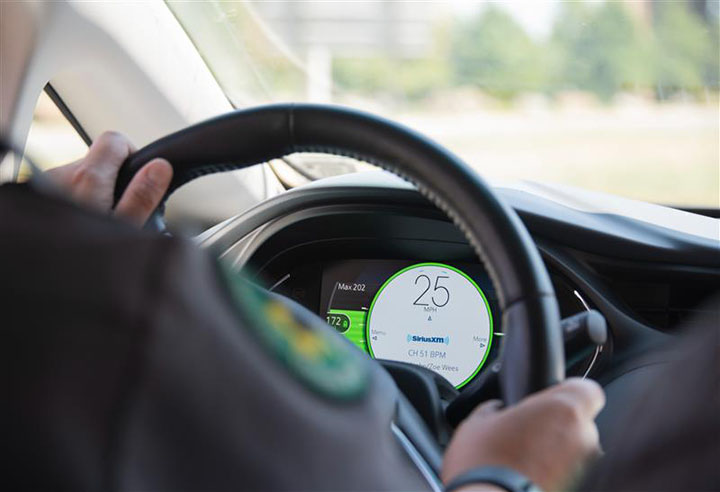
DCAS manages speed and location data for more than 30,000 municipal vehicles and school buses through its Fleet Office of Real Time Tracking. That office also oversees the intelligent speed assistance program’s speed-limit maps, tracking systems and controls. The technology limits vehicle acceleration when a vehicle exceeds the posted speed limit or a speed threshold set by DCAS.
Keith Kerman, DCAS deputy commissioner and chief fleet officer, announced the initiatives at the city’s 11th Annual NYC Fleet Safety Forum at Queens Theatre. “At today’s 11th Annual NYC Fleet Safety Forum at Queens Theatre, we are launching important initiatives to build on the executive order, tripling city vehicles with intelligent speed assistance (ISA) and introducing pedestrian alerts for the first time on school buses,” Kerman said. “Both technologies will help keep New Yorkers safe.”
Amy Cohen, founder and president of Families for Safe Streets, whose son Sammy was killed by a speeding driver, called intelligent speed assistance “exactly the kind of proven, common-sense technology that prevents tragedies like ours.” and urged every city fleet in the country to follow New York’s lead. Ben Furnas, executive director of Transportation Alternatives, said the program’s success demonstrates the technology is ready for wider application and expressed support for pending city council legislation he identified as Stop Super Speeders. Council Member Lincoln Restler also backed the expansion, saying he is eager to see the ISA model extended to dangerous drivers citywide.
DCAS also manages more than 6,000 electric vehicles and 2,600 charging ports as part of New York state’s largest municipal electric vehicle fleet and charging network.
The 2,000-vehicle retrofit was announced as a three-year commitment, framed within Mayor Mamdani’s 10-year street safety blueprint, Vision Zero Reimagined.