Growing Their Own: How Madison Is Building Its Next Generation of Fleet Technicians
When qualified applicants became harder to find, the City of Madison turned to apprenticeships to develop its own technicians. Eight years later, the program offers practical lessons on recruiting young talent, making mentorship work and building a workforce pipeline without overwhelming the shop.
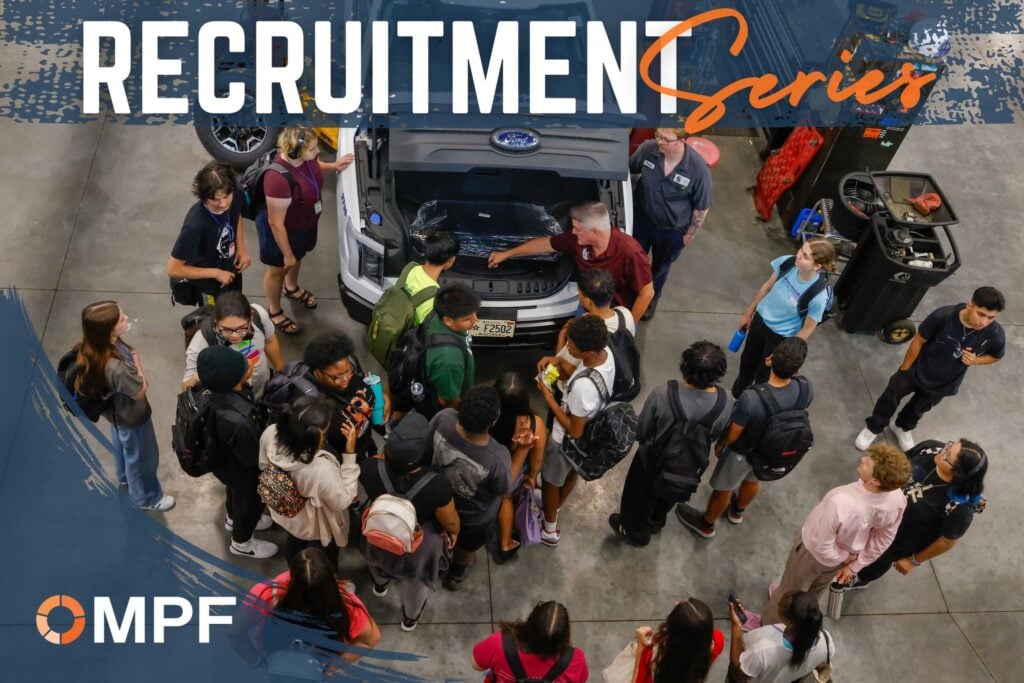
There was a time when the City of Madison, Wisconsin, could post a fleet technician opening and expect 60 or 70 applications. As retirements approached and fewer technicians entered the trade, that comfortable applicant pool began disappearing. One posting might attract 10 candidates, while another drew only six.
For a fleet operation responsible for keeping essential city equipment running, those numbers were becoming difficult to ignore. Madison’s response was to start developing its own technicians.
In early 2018, the city launched an apprenticeship program that introduces high school students to municipal fleet work while giving them hands-on experience alongside seasoned technicians. Students who discover an interest in the trade can continue through technical college, potentially moving into permanent fleet positions.
Eight years later, two former high school apprentices have become full-time Madison fleet technicians. That’s a meaningful return for a program that deliberately limits itself to one or two high school apprentices at a time, particularly when qualified applicants remain scarce.
The results are encouraging, but the lessons behind them may be even more useful to fleet managers considering a similar approach. Madison has learned that bringing young people into the shop requires a different way of thinking about recruitment, technician workloads and what makes someone ready for the job.
Let candidates see the job before they apply
When Madison first launched its program, attracting interested students wasn’t particularly difficult. Keeping every student interested once they understood the work proved more challenging. Some discovered a few months into the apprenticeship that the reality of working in a fleet shop didn’t match their expectations. Rather than accept that attrition as inevitable, Madison changed its recruitment process.
“We’ve actually added a component at the beginning where any student can sign up to do a job shadow,” said Rachel Darken, Madison’s fleet services superintendent. “And that’s really the first step for our application process.”
Now prospective apprentices spend time alongside a technician before formally applying. Students observe repairs, ask questions and get a firsthand look at the shop’s daily operations without performing any work themselves. The experience gives students a better understanding of the opportunity while allowing technicians to assess their interest and familiarity with mechanical work.
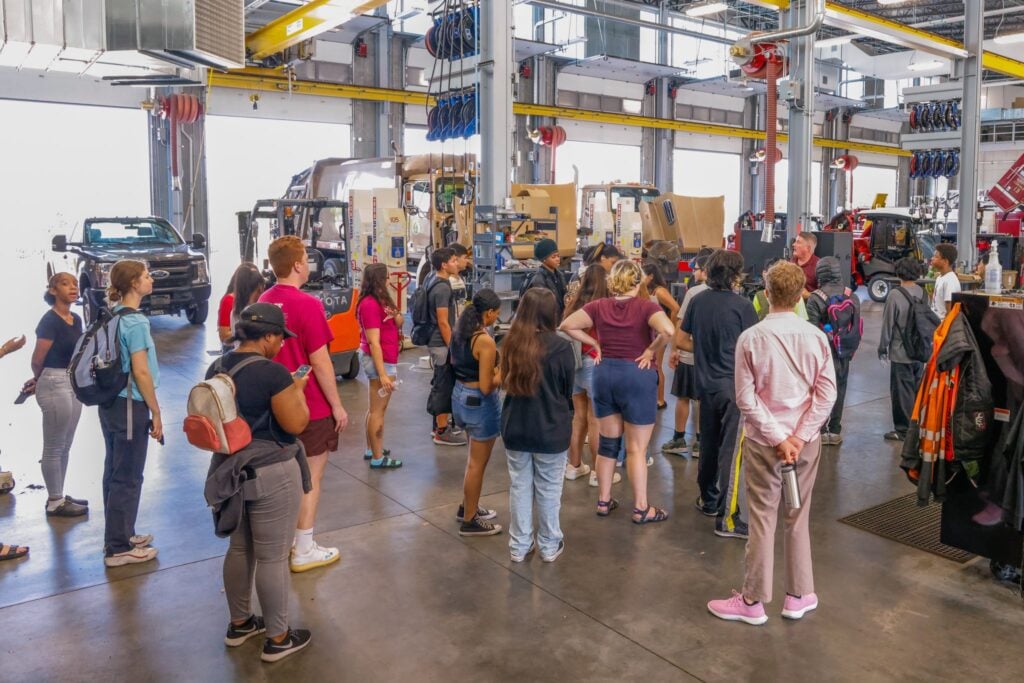
Some candidates arrive with experience working on family vehicles. Others have barely held a wrench, and a traditional interview may reveal very little about their potential. Technicians can recommend another shadowing opportunity when a student needs more exposure before deciding whether to pursue the apprenticeship. Those who move forward complete a formal application and panel interview, which also introduces them to the city’s hiring process.
This change gives Madison a better opportunity to evaluate candidates based on their interest in the work rather than their ability to interview like experienced job applicants.
For fleets struggling to recruit younger workers, it’s worth considering whether their selection process rewards the qualities that make someone a promising apprentice. A confident interviewee and a curious future technician aren’t necessarily the same person.
Keep the program small enough to teach
Madison’s apprenticeship program has remained intentionally modest, even as interest from local schools has continued. “We very much limit our apprenticeship to one or two high school students at a time,” Darken said. That decision reflects an early lesson about the demands apprentices place on a working shop. Teaching requires a different approach from performing repairs, particularly for technicians accustomed to completing familiar jobs without explaining every step.
High school apprentices generally work a few hours per day, three or four days a week. They receive a basic set of tools and work alongside an assigned technician mentor, initially helping with relatively straightforward tasks such as oil changes or tire rotations.
As their abilities develop, they begin taking on more responsibility. The pace depends on each student’s skills and readiness rather than a rigid schedule.
Madison Fleet General Foreperson Mark Vander Waal, who has worked with the program since its inception, said one indication of progress is when an apprentice begins asking for independent assignments instead of waiting for a mentor to identify the next task.
“I think the hardest thing is not rushing that day and yet still recognizing when they are ready,” he said.
The distinction matters when a shop is balancing its responsibility to develop technicians with the immediate demands of maintaining vehicles. Assigning work too quickly can undermine confidence or compromise quality, while holding capable apprentices back limits their growth. Madison relies on ongoing communication between the apprentice, mentor and supervisor to make those judgments.
Give mentors room to teach
Madison asks technicians to volunteer as mentors, recognizing that even highly skilled mechanics may not enjoy teaching or have the capacity to do it continuously. Technicians who have mentored for several years can take a break, allowing others to step into the role. The arrangement has helped maintain participation without turning mentorship into an unwanted assignment.
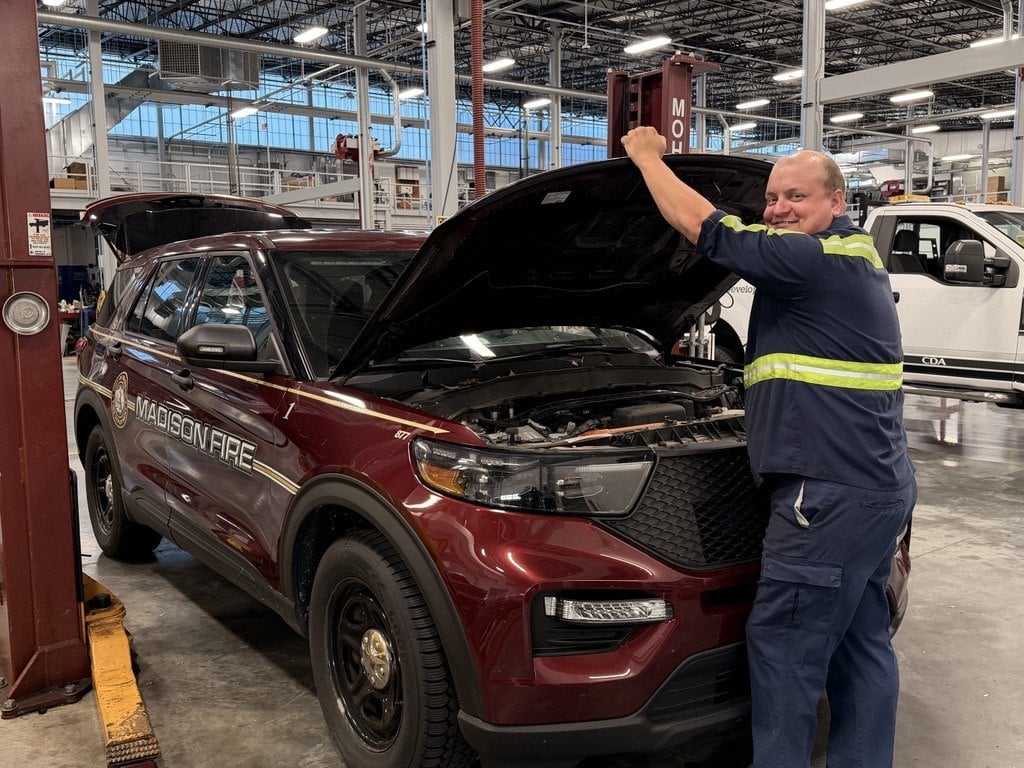
David Johnson, a Madison technician mentoring an apprentice for the first time, initially expected to concentrate on teaching diagnostics and repair procedures. Within a few weeks, he realized that helping a young employee develop confidence and recover from mistakes was just as important. He also believes effective mentors need to explain the reasoning behind a repair rather than simply demonstrating the procedure. “We have enough brake and tire slingers,” Johnson said. “This industry is going to need more A techs, and giving people an opportunity to learn the why instead of just the how is invaluable.”
That presents a challenge for any fleet using live repair work as its training environment. Shops have limited control over the equipment that comes in or the problems technicians encounter. An apprentice might observe a complicated diagnostic procedure one week and wait months before another opportunity to practice it appears. Madison has developed some flexibility around that reality.
One current high school apprentice works with two different technicians, allowing the supervisor to adjust assignments according to incoming work, the apprentice’s abilities and the mentors’ workloads. If one technician is occupied with a complex repair that requires uninterrupted attention, the apprentice can work with the other mentor when appropriate.
The arrangement also creates more opportunities to experience different types of work without forcing every learning opportunity into one technician’s schedule. Darken said the program hasn’t negatively affected maintenance performance, including the shop’s ability to keep up with preventive maintenance work. Limiting the number of apprentices and adjusting assignments have helped Madison maintain that balance.
For other fleets, the lesson is that mentorship needs operational support. Even an enthusiastic technician can struggle to teach effectively if the shop expects the same production output regardless of the additional responsibility.
Teach the employee along with the technician
Many of Madison’s high school apprentices are entering their first professional workplace, which means supervisors are introducing expectations that experienced employees take for granted. Students learn to use the time clock, record labor against work orders and manage their schedules around school.
They also need to understand workplace safety, accountability and what it means to be part of a team responsible for equipment that city departments depend on. Vander Waal considers that development a fundamental part of the apprenticeship. “It is our responsibility to not only teach them technical service but also how to be a good employee,” he said.
Madison benefits from Wisconsin’s established youth apprenticeship framework, which provides curriculum and educational benchmarks. The city still had to work through its own hiring requirements, including creating an hourly employment classification and determining how apprentices would progress. Employee association representatives were involved early because their members would be the technicians working directly with students.
Those conversations helped establish a structure that fits within the city’s existing operations rather than requiring Fleet to manage an entirely separate training system.
Students who successfully complete the high school portion can continue working for Madison while attending Madison College’s automotive or diesel technician programs. Depending on when they enter, the overall apprenticeship may last two to four years.
By the time students complete their associate degree, the goal is for them to have enough technical experience and familiarity with municipal operations to compete for permanent fleet technician positions. That familiarity is an advantage Madison can’t necessarily expect from outside applicants. Former apprentices already understand the city’s procedures and shop expectations, reducing the adjustment period that comes with bringing someone into municipal fleet work.
The technician who almost never found Fleet
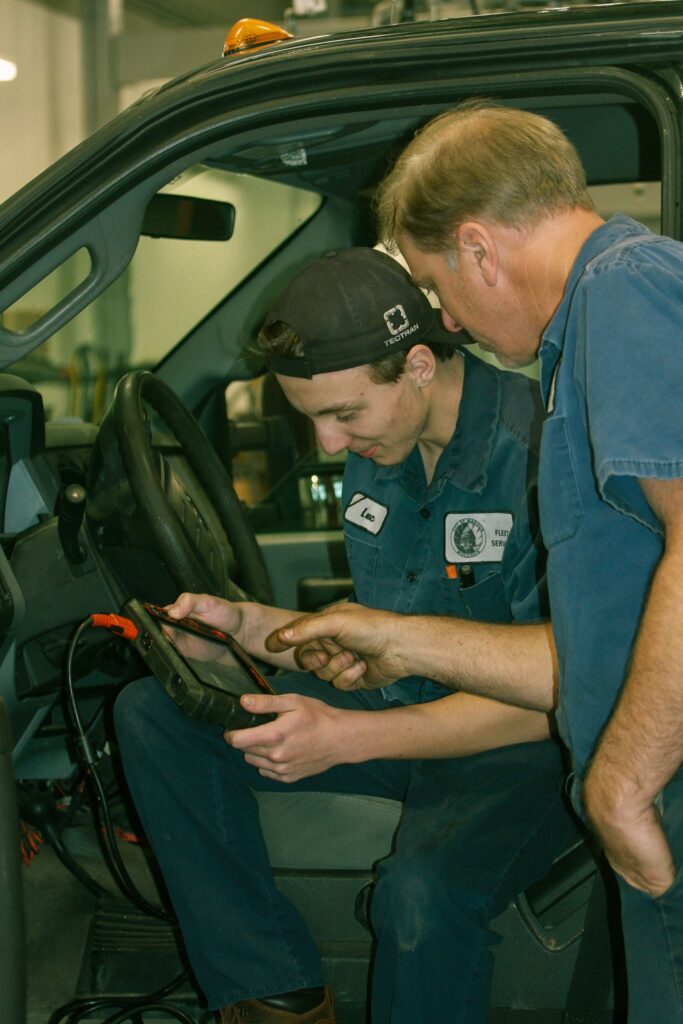
Luc Meuzelaar, a former Madison apprentice who now works as a full-time fleet technician, illustrates another benefit of the program: It introduces young people to careers they may never have considered. His high school counselor suggested the opportunity while discussing plans for his senior year. Meuzelaar was also considering apprenticeships at local dealerships, but municipal fleet work caught his attention because it was unfamiliar.
“Fleet stood out to me as I had never really thought about what went into making everyday life in the city work,” he said. Although he’d helped his father work on cars and had taken automotive classes in high school, Meuzelaar had little experience with heavy-duty vehicles or municipal equipment. The transition required patience, and he estimates it took about a year before he began feeling comfortable with his abilities.
The support of an experienced mentor made the learning curve manageable. “In this field in particular I feel like there can be a lot of the ‘sink or swim’ attitude in a lot of shops,” Meuzelaar said. Having someone available to guide him helped make the career feel attainable, while the flexible schedule allowed him to continue his education at Madison College.
When asked what the apprenticeship program provided, he said, “For one, the fact this job even existed.” Meuzelaar now works on equipment he remembers seeing around Madison while growing up. “I never thought I’d be working on the same garbage trucks that I watched picking up my trash as a kid,” he said. His experience raises a useful question for fleet managers struggling to attract young candidates: How many potential technicians have never considered applying because they don’t know the opportunity exists?
Check in more often than the curriculum requires
Another adjustment Madison made after launching the program involved communication.
Initially, Fleet largely followed the school district’s schedule for formal evaluations and progress discussions. Over time, Darken realized the shop needed more frequent conversations to address concerns before they became serious.
She now checks in with supervisors and mentors at least monthly, asking how the arrangement is working and whether either party needs additional support. Quarterly evaluations involving the apprentice, mentor and supervisor also help connect hands-on experience with classroom instruction. If a student needs additional practice with a particular procedure, the team can look for appropriate opportunities when relevant work arrives.
Those conversations are particularly important because students develop at different rates and mentors bring different teaching styles to the arrangement. They also help Madison identify when a mentor needs a break or an assignment should be adjusted. Darken emphasized that forcing an arrangement that isn’t working serves neither the student nor the technician. The program has become more responsive as a result, with supervisors and mentors able to make adjustments throughout the apprenticeship instead of waiting for a formal evaluation.
A recruiting pipeline worth the patience
Madison continues to see relatively few applicants for permanent fleet technician openings, even with its apprenticeship program in place. The city hasn’t eliminated the larger workforce shortage, but it has created another way to develop qualified candidates who already understand the demands of municipal fleet work.
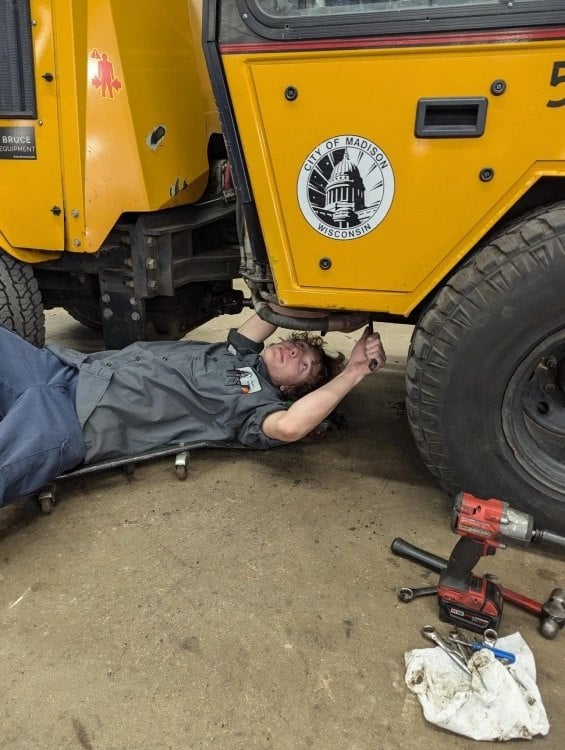
Two former high school apprentices are now productive full-time technicians, and Darken said those employees are encouraging friends to consider similar opportunities. The shop is seeing benefits among experienced staff as well. Technicians who have watched apprentices develop are becoming more willing to volunteer as mentors, helping sustain a program that depends on their participation.
For Darken, whose background includes youth development and job placement, one of the most rewarding moments comes when apprentices recognize equipment they’ve worked on operating around the city. The experience helps them understand how their work contributes to services residents rely on.
For fleet managers considering apprenticeships, Madison demonstrates what a relatively small program can accomplish when the organization is willing to invest time in developing people. The city has refined its selection process, built flexibility into mentorship and learned to address problems before they threaten the experience.
The payoff extends beyond the two technicians already hired. Madison has established a way to introduce students to a career many might otherwise overlook, while giving its experienced technicians a direct role in preparing their future coworkers. With qualified applicants still in short supply, that may be one of the more valuable investments a fleet operation can make.