Mayor Mamdani Unveils Vision Zero Reimagined to Make Streets Safer for Every New Yorker
Source: City of New York ↗
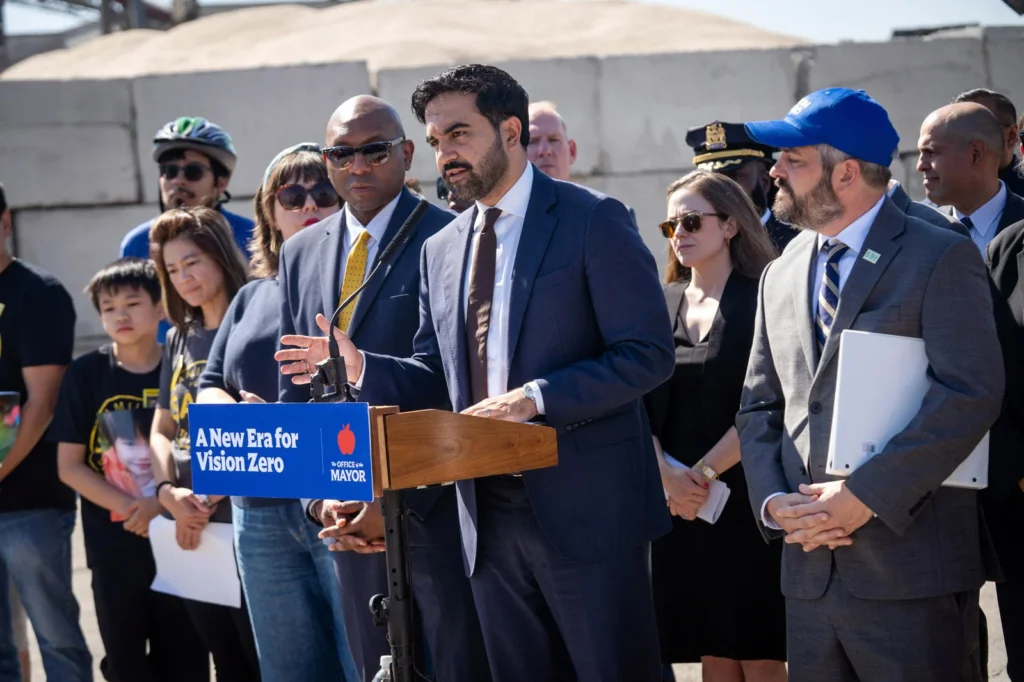
New York City Mayor Zohran Kwame Mamdani released Vision Zero Reimagined, a 10-year, 100-plus-policy action plan spanning 19 agencies that will expand automated enforcement, mandate new fleet safety technology and redesign the city’s most dangerous streets within three years.
Traffic deaths are down 30% since Vision Zero launched in 2014, according to the city. The new plan is organized around eight goals and applies to City-operated, contracted and regulated fleets alike.
Goal 8, the fleet-specific commitment, directs New York City to expand Intelligent Speed Assistance, automatic emergency braking, high-visibility truck designs, telematics and audible alerts across its municipal fleet and to strengthen driver training citywide. Department of Citywide Administrative Services (DCAS) Commissioner Yume Kitasei said DCAS will install surround cameras and pedestrian alerts and expand intelligent speed assistance. “Vision Zero Reimagined ensures New York City’s municipal fleet remains a national leader in safety innovation,” Kitasei said. Sanitation Commissioner Gregory Anderson said the Department of Sanitation (DSNY) fleet, which covers every borough, will operate under the new safety standards.
On enforcement, the plan targets a documented pattern: a small number of repeat offenders account for 37% of all traffic deaths, and vehicles that receive more than 16 speed camera violations in a year are twice as likely to be involved in a crash causing severe injury or death. Separately, 41% of all traffic fatalities involve a driver without a valid license, with a prior suspension or with multiple convictions. The city plans to close “ghost plate” enforcement gaps, tighten standards for license maintenance and restoration and launch New York City’s first Super Speeder program. That program was enabled by a State budget change secured by Governor Hochul and championed by State Senator Andrew Gounardes and Assembly Member Emily Gallagher; it includes speed limiters on vehicles of repeatedly reckless drivers under Gounardes’s Stop Super Speeders Act.
On infrastructure, the plan commits to completing safety redesigns on all untreated Vision Zero Priority Corridors within three years, installing hardened daylighting or better treatments at a minimum of 1,000 intersections per year and expanding Sammy’s Law speed-limit reductions citywide. The city will also develop its first pedestrian-only and pedestrian-priority districts.
Crashes involving cars account for nearly 90% of traffic fatalities in New York City, according to the plan. Goal 4 addresses oversized vehicles, directing the city to advocate for stronger federal pedestrian and cyclist safety standards, promote safer truck designs, seek local oversight of autonomous vehicle deployments and shift freight toward cargo bikes, rail and waterborne transport. Goal 2 creates an enforceable framework for e-micromobility, holding delivery platforms accountable, aligning e-bike rules with national and international standards and removing uncertified devices from city streets. Goal 7 calls for a unified Vision Zero data warehouse to guide future interventions.
“Vision Zero has been a game changer for street safety in New York City, with traffic deaths down 30% since its launch in 2014. Now we will aim even higher, dramatically expanding the City’s commitment to street safety for the first time since the program’s launch,” said NYC DOT Commissioner Mike Flynn. “We must utilize a comprehensive strategy that touches every aspect of the transportation system, so that children can confidently walk to school, more New Yorkers feel safe choosing biking and other sustainable forms of transportation and we can rest assured that we don’t have to share the streets with the most flagrant dangerous drivers who put all of us at risk.”