Sarasota County: Building Fleet a Shop That Fits the Job
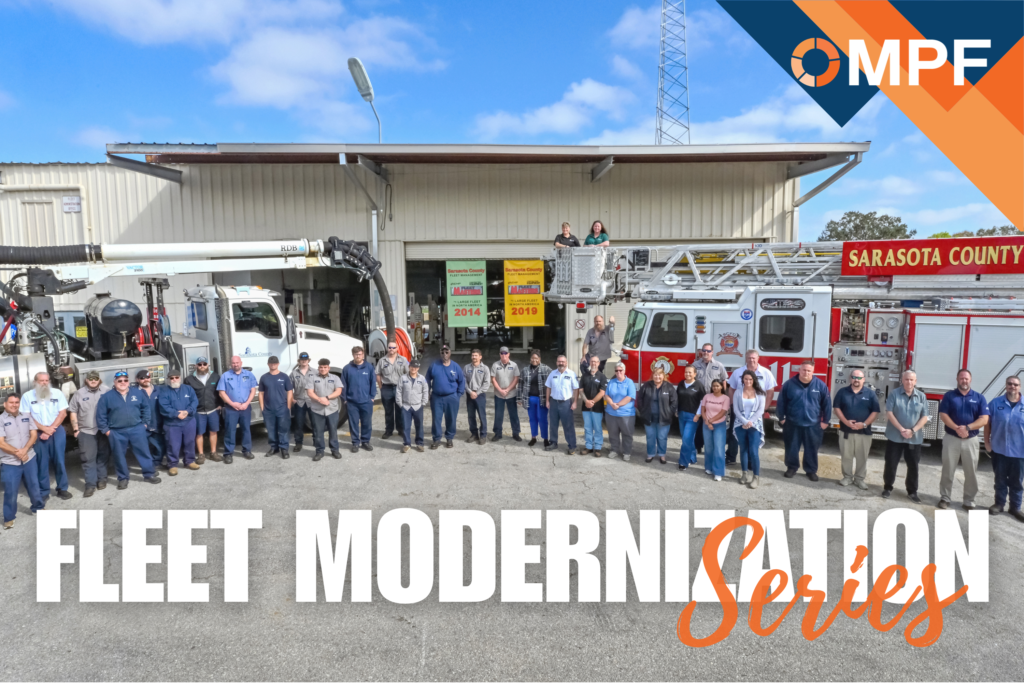
For years, Sarasota County Fleet had four maintenance facilities. What it didn’t have was a fleet facility. That distinction is at the center of the modernization effort Fleet Manager Justin Mullins has been leading since arriving at the Florida county.
The shops his team inherited were older buildings repurposed from other county uses, expanded when possible, and expected to accommodate a mixed fleet that now includes about 1,700 assets. That covers automotive units and construction equipment, along with parks assets and the county’s fire apparatus.
Michael Brennan, who has consulted with Sarasota County for years, is considerably less diplomatic about some of the existing space. “Everything that Justin has and inherited that he uses has been transferred to fleet by another county function,” Brennan said. One portion of the South County facility, he added, was “inadequate to fix a lawnmower in.”
Mullins would like it noted that they’ve cleaned that one up considerably. “You need to come see,” he told Brennan during the interview.
The exchange gets at a larger point. Sarasota’s fleet modernization isn’t a matter of buying nicer equipment for the shop. It’s about creating facilities that match the work technicians are being asked to perform, and making decisions today that won’t leave the county facing the same problem again a decade or two from now.
The Team Wasn’t the Problem
When Mullins arrived in Sarasota County after serving as assistant fleet manager for the City of Raleigh, North Carolina, he saw plenty that needed attention. He also saw something worth building around. “I had a very good team from the get-go,” he said.
The operation had been through several fleet managers in relatively quick succession, however, and Mullins found employees who had been pulled in different directions without a clear plan. “We had a great team, had some great talent, but it just needed direction,” he said.
Just as important, county leadership was prepared to support change. Mullins saw that before he took the job. Senior administrators were involved in his interview process, and he viewed that involvement as evidence that the county understood fleet’s importance.
Once hired, he didn’t have to persuade leadership that technology needed upgrading or that the operation had outgrown its facilities. They were already asking for countywide telematics, and they wanted a new fleet facility. The tougher question was how to pay for it.
Funding the Building Before Building the Building
Mullins arrived in August, too late to meaningfully change the budget already heading toward the new fiscal year. In the next budget cycle, however, Sarasota County established a service support fee tied to each asset.
That revenue began building the funds needed for architectural work and planning, allowing the county to move the project toward construction and eventually debt service. Within roughly a year of Mullins’ arrival, the groundwork for the new Service Support Building was underway.
There was some urgency behind that work. Sarasota County had attempted new fleet facilities before, including projects that made it as far as design before changes in leadership or priorities stopped them. Mullins understood that public-sector support isn’t permanent. Elections happen, budgets tighten, and priorities move.
This time, both the board and administration were supportive, so the team got going. The need wasn’t difficult to demonstrate. Existing shops were undersized. Some equipment didn’t fit inside, technicians were working around each other, and adding staff wasn’t much of an option when there was nowhere to put them.
The result will eventually consolidate Fleet into two locations: the new main facility and a substantially renovated South County shop.
That South County project, estimated at about $1.5 million, is important to Mullins’ larger point about modernization. Not every fleet needs, or can afford, a new building. Existing facilities can sometimes be reworked into much better shops through targeted investments. Sarasota plans to renovate the offices there, insulate the building, change the doors, and add air conditioning.
Build for the Biggest Thing Coming Through the Door
Mullins had an advantage when Sarasota began designing its new facility. He had already watched the City of Raleigh build two fleet facilities while he worked there, first as a technician and later in a supervisory role. He saw what worked. More usefully, he also saw what didn’t.
Sarasota’s new facility is being designed around 32 large bays rather than separating the shop into spaces dedicated to particular equipment sizes. One side will serve emergency services, while the other handles the rest of the county fleet.
The logic is refreshingly uncomplicated. “You can see three or four people in a large bay working on small cars,” Mullins said. “When you build a small shop with all these small bays, you can’t put big equipment in there.”
For Sarasota, the difficult maintenance work increasingly resides at the heavy end of the fleet. Fire apparatus and specialty equipment are large, parts can be difficult to source, and repairs are more complex. Meanwhile, maintenance demands for much of the light-duty fleet are changing as vehicle technology changes.
So Sarasota isn’t building a shop around what fits its fleet perfectly in 2026. It’s trying not to build limitations into a facility expected to last generations. “This building’s going to be around for 100 years,” Mullins said. “Who can tell what’s going to be worked on in this building in its lifetime?”
Sometimes Bigger Isn’t Better
Future-proofing doesn’t mean buying the largest version of everything available. More than half of the shop areas will have overhead XY cranes. Mullins’ previous experience helped determine their sizing.
At Raleigh, he had worked around a 20-ton crane that sounded impressive on paper but proved cumbersome for everyday jobs. The equipment itself could get in the way while technicians were maneuvering around an engine or transmission.
Sarasota opted for smaller cranes suited to the work technicians actually perform. “I mean, you can lift the building with that,” Mullins joked about the larger capacity. “You really don’t need that.”
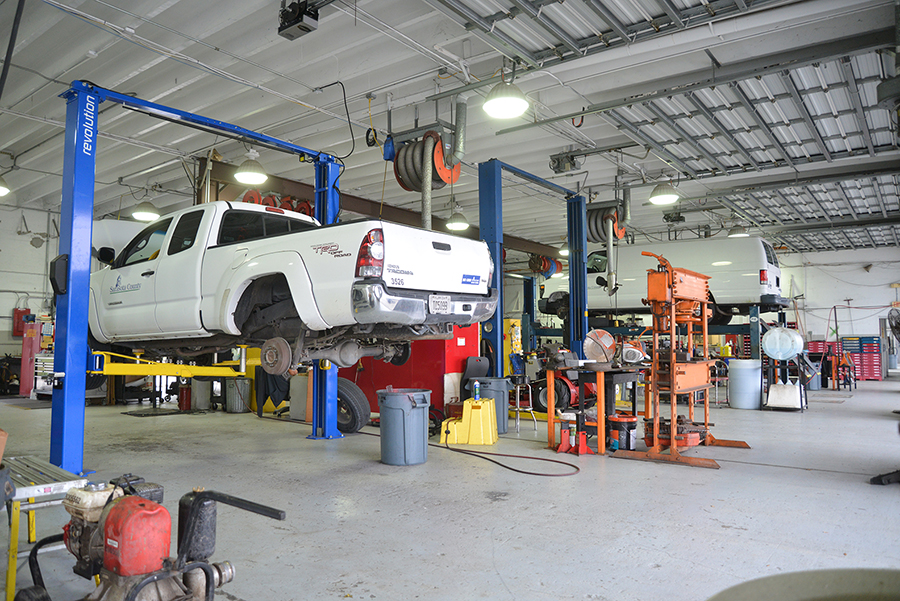
The county made a similar calculation with lifts. Mullins favors mobile lifts for heavy equipment because they give technicians more flexibility as vehicles, fuels, and maintenance demands change. In-ground lifts still make sense in certain spaces, including one South County bay where floor space limits other options.
That willingness to match the equipment to the work, rather than install something simply because it looks good on a facility spec sheet, runs throughout the project. Brennan sees that planning as one of the factors distinguishing Sarasota’s effort from many other public fleet facility projects.
“There are a lot of government fleets out there that are working on trying to build new facilities,” he said. “This is what sets Justin apart, sets Sarasota apart.” The county, he said, has put considerable thought into both what it needs now and what it may need in the future.
Yes, Air Conditioning Is Fleet Technology Too
One feature Mullins pushed particularly hard for sounds decidedly low-tech: air conditioning. Both the new facility and renovated South County shop will be climate controlled. In Florida, Mullins considers that more than an employee perk.
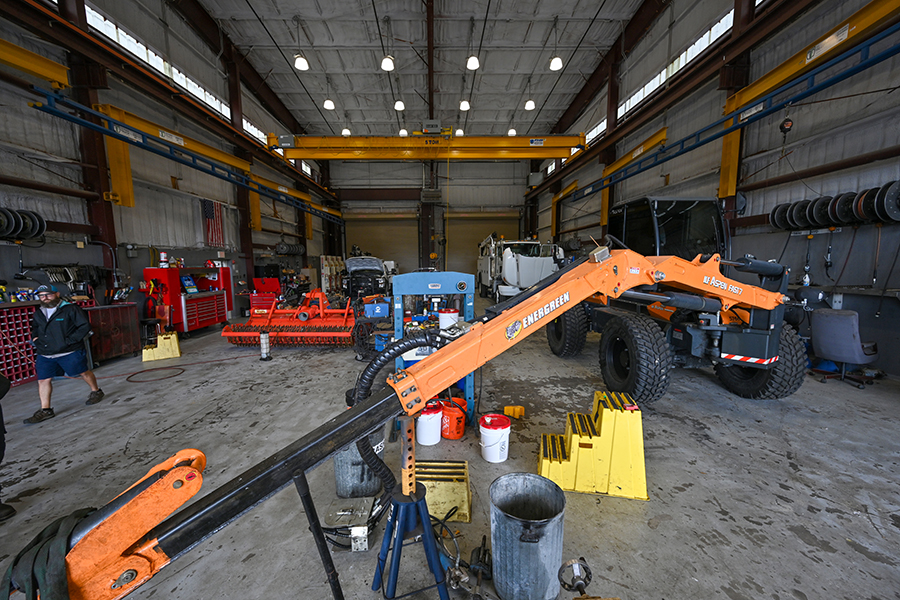
His argument during planning meetings was straightforward. The county wouldn’t construct a new administration building without air conditioning. Why should the workplace for technicians be treated differently, particularly when fleets are struggling to recruit technicians and asking existing employees for greater productivity?
Mullins had already seen the difference climate control made at Raleigh’s central operations facility. Before it opened, summer heat affected productivity, morale, and interactions among employees. “You’re getting like half the productivity in the summertime out of people because they’re just beat,” he said.
Once technicians moved into a climate-controlled building, Mullins noticed the tension subside. “It pays dividends,” he said. The return may be harder for someone looking only at a spreadsheet to quantify, he acknowledged, but it’s considerably easier to recognize from the shop floor.
Brennan agrees that climate control is particularly significant in Sarasota’s environment. He also pointed to the tilt-wall construction, with a substantial amount of insulation added to the walls and roof, as an important consideration in a region vulnerable to severe weather.
Modernization Doesn’t Require a New Building
For fleets working with considerably smaller capital budgets, Mullins’ advice isn’t to wait until someone hands over funding for a new shop. Remodel what can be remodeled. Improve the work environment where possible. Invest in technology that gives the operation usable data. Sarasota itself is taking both approaches, constructing one facility while rehabilitating another.
And don’t overlook the people who will actually work inside whatever facility results. Mullins involved technicians in decisions such as lift selection, and he considers hiring the right employees essential to any larger transformation. “You can’t hit the easy button on hiring people,” he said. “You’ve got to have the right people in the right places.”
Sarasota County’s modernization effort is substantial, but its facility strategy comes down to a practical question other fleets can ask regardless of budget: Does the shop make it easier for technicians to maintain the fleet, or are technicians spending their days working around the shop?
For years in Sarasota, the buildings dictated what Fleet could do. This time, Fleet gets to design the building around the work.