Does It Matter Who Fleet Reports To?
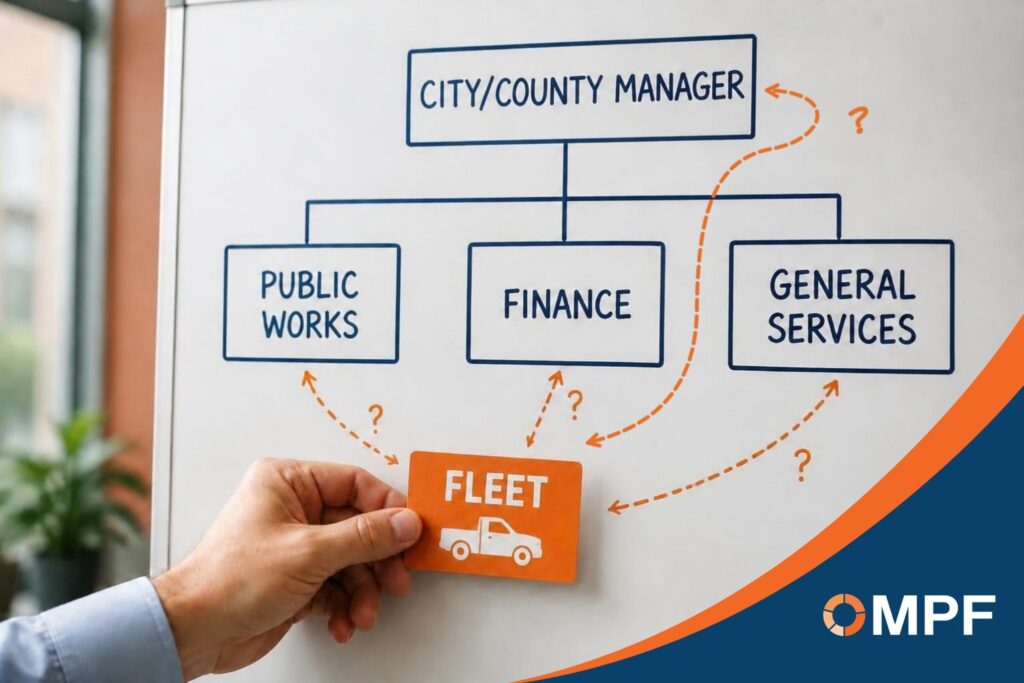
Many fleet divisions report to Public Works despite managing and servicing vehicles from different departments. Does this organizational structure negatively affect their ability to do their work efficiently and fairly? Some in the industry would argue so.

The way fleet management evolved, it makes sense that fleets often fall under Public Works, said Marc Canton, vice president of fleet strategy at RTA: The Fleet Success Company. Public Works departments fix buildings and roads, so they have shops, tools and mechanically inclined employees. It was natural that they would fix vehicles, too.
But fleet management has grown beyond the repair shop, with many organizations now involved throughout the vehicle lifecycle and serving departments across an entire city or county. Some fleets have also moved toward more centralized structures, reporting through General Services, Finance, Business Services or similar departments.
As fleet management has evolved, new issues have arisen. What happens when one of the fleet’s customer departments is also its boss, as in the case with Public Works? And customer neutrality aside, can fleet’s position on the org chart affect whether senior leadership hears its needs?
When Your Customer Is Also Your Boss
For Canton, one of the biggest problems with placing fleet under Public Works is simple: Public Works is also one of fleet’s customers.
Fleet may maintain vehicles for police, fire, utilities and other departments, but one of those customers has organizational authority over fleet. This can create actual or perceived favoritism.
Canton has heard both scenarios from fleet managers. Some say they feel pressure to prioritize Public Works, while others say their Public Works leadership doesn’t expect preferential treatment, but they still have to deal with the perception that it happens.

Dave Persad, CAFM, CEM, CPFP, director of fleet management and mobility for the City of Boynton Beach, Florida, currently reports to Public Works and understands the concern.
“If you’re housed within Public Works, my boss overseeing fleet is also my customer. That can muddy the waters,” he said.
For example, if his Public Works director asks him to prioritize certain trucks, he may have to do so.
Despite that, Persad doesn’t believe reporting through Public Works has negatively affected how other departments view his operation.
His fleet uses service level agreements (SLAs) with its customer departments. The agreements establish expectations around repairs and maintenance, turnaround times and spending approvals, so fleet and its customers know what level of service to expect. Persad sees the agreements as one way to insulate fleet from potential conflicts.

Bradley Northup, CAFM, public works superintendent for the City of Carlsbad, California, has had a different experience. Although fleet reports through Public Works, he said the pressure to prioritize vehicles tends to come from police and fire because of their emergency response responsibilities.
Public Works vehicles can also take priority. Sewer trucks, for example, have few backups available. Northup said his team considers those factors when deciding what gets repaired first.
“The pressure is based on what’s the most important vehicle at this moment that needs to go,” he said.
In fact, Northup said he sometimes hears the opposite complaint, that fleet is always working on police and fire vehicles.
A View from Finance

Kelly Reagan, fleet administrator for the City of Columbus, Ohio, reports through the Finance Department. He believes his reporting structure gives fleet a broader view of the organization’s needs.
“It makes all the difference in the world,” Reagan said. “Fleet perspective is not minimized to just Public Works or Fire or Police.”
Reagan said reporting through Finance has allowed Columbus to take a centralized approach to the fleet’s many functions: acquisition, maintenance, disposal, fueling infrastructure, regulatory compliance, sustainability, capital spending, etc.
Policies flow through Fleet Administration and Finance with an eye toward what’s best for the city as a whole, rather than one individual department.
Is Fleet’s Voice Reaching Leadership?
There’s another issue beyond customer neutrality: How many people sit between the fleet manager and the people making the decisions?
Canton argues that public fleet managers already struggle to make the case for replacement funding, staffing and other resources. Data and a strong business case matter, but they can only go so far if the fleet doesn’t have access to the people making those decisions.
“You could be the greatest at telling your story and leveraging data,” he said. “But if you’re not heard, you’re not heard.”
A fleet may be asking for additional replacement funding while facilities, landscaping and other Public Works functions are making their own requests. The Public Works director then decides which requests to move up the chain. And that goes for any department, not just Public Works. Whoever sits above fleet has to understand fleet well enough to communicate its needs.
Persad sees that challenge in his own operation. He pointed to acquisition costs, changing regulations and tariffs as examples of fleet issues that leadership needs to understand. Fleet managers need to communicate those issues without the message becoming diluted on its way to the people making decisions.
When an issue needs attention quickly, Persad said he has sometimes had to escalate it to decision-makers.
Northup’s experience in Carlsbad has been different. Although fleet reports through Public Works, the organization is small enough that he can engage directly with the Public Works director and, at times, the city manager.
“It’s a lot easier to get a seat at the table,” he said. “That may not be the case for every agency.”
In a larger organization, Northup said the challenge may be getting the department director to advocate for fleet’s needs alongside other priorities.
What About Removing the Layer?
Canton would take it a step further. Rather than moving fleet from one department to another, he argues that fleet could operate as a separate internal service and report directly to a city manager, county manager or similar executive.
Moving fleet from Public Works to General Services or Finance could provide more separation from its customers. But direct reporting would give fleet more direct access to the people making organization-wide decisions.
Canton argues that the structure should reflect what a modern fleet organization actually does.
Does Public Works Still Work?
Northup’s experience shows that it can.
He previously worked for San Diego County, California, where fleet was part of General Services, and now works under Public Works in Carlsbad. He hasn’t experienced significant friction from the reporting structure in his current organization.
But Northup doesn’t see Public Works as the answer for every fleet.
“It works in certain scenarios,” he said. “Organizations will influence the ability for something like this to work.”
Canton acknowledged that the potential conflict doesn’t always play out in practice. A Public Works director may understand the issue and make a point not to favor the department’s own vehicles.
Persad also sees benefits to his current structure. Fleet has access to shared Public Works administrative staff, although it has to compete with other functions for their time. He also doesn’t believe reporting through Public Works has hurt other departments’ perception of fleet, and his SLAs help establish consistent expectations across customer departments.
Still, he’s experienced some of the challenges Canton describes: a boss who is also a customer, and challenges in getting an issue in front of decision-makers.
So why don’t more organizations move fleet elsewhere? Canton points to a practical obstacle: Budget and people are power within government organizations. Moving fleet out of Public Works can mean moving its budget and employees with it, and departments may be reluctant to give up those resources.
That can make reorganizing fleet a tough sell, even when there may be a case for it.