I Hate AI, Social Media and Cell Phones
I hate AI, social media and cell phones. I mean that.
Now, hate is a strong word, but it’s the right word. Put AI next to teamwork with people. Put social media next to in-person connection. Put a cell phone next to a face-to-face conversation. The artificial doesn’t stand up to the genuine and the real. It never does. Artificial sweetener. Artificial turf. Artificial intelligence. Artificial connection.
For the record, I own an artificial Christmas tree. After 10 years of protesting, I gave in for convenience. Between the tree stand fights, where choice words from me became part of the holiday tradition, and heading to Lowe’s for a “cheap” tree versus paying $250 at the traditional lot, it wasn’t the memory I wanted my kids to hold on to years later. It still doesn’t smell like Christmas at my house.
So, I’m not above convenience. I use all three of these hated tools daily; they bring real productivity and efficiency, and we can’t stick our heads in the sand and pretend otherwise. We need to embrace them where they add value. But embracing them doesn’t mean walking away from the real thing: real relationships, real connection… in person.
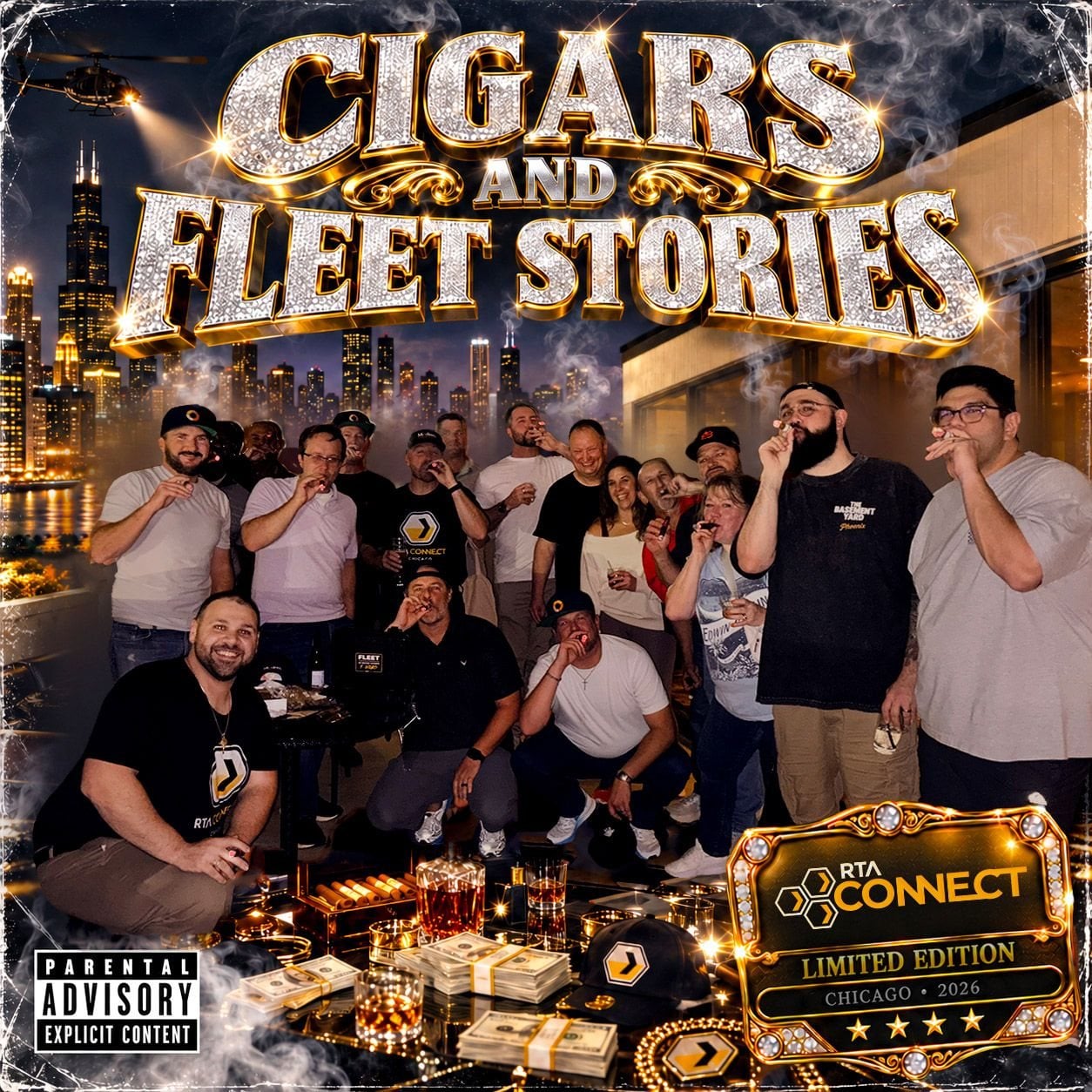
I was reminded of that at RTA Connect. I couldn’t wait to be back in a room with people. The content was very good, and the overall atmosphere and experience were created with real thoughtfulness. But the best part was the unplanned conversations, the ones over a meal or at after-hours get-togethers like Cigars and Fleet Stories. That’s where you see people’s personalities. Where we get to know each other. People talk about what’s really worrying them and share the stories a legal or communications department would never let near LinkedIn. That’s genuine, real connection, and there’s no artificial replacement for it.
We’ve learned this before. Early in COVID, virtual events were the big thing for about a month. Then we figured out they didn’t come close to being together in person. Zoom fatigue became real. We lost the water cooler, the hallway chat, the random conversation that solved a problem nobody knew they had; then we had to have in-person events taken away to appreciate their special place in our lives.
Now it’s AI’s turn to teach us the same lesson. Reality is changing, and I’m not pretending otherwise. AI could bring a lot of bad with it. Job loss is the mild version. If you listen to some people, the impact on humanity could be far worse.
“I smoke 10 to 15 cigars a day. At my age I have to hold on to something.” — George Burns
At RTA Connect, RTA CEO Josh Turley talked about being an “apocaloptimist.” He acknowledges the risks of AI but chooses to see the good anyway. The same tools that are so often used to divide, distract and disconnect can be used to do the opposite. They can give us efficiency, and time back for creativity and problem solving, so we spend more of our energy on the critical and less on the mundane.
The choice is ours, and so is the responsibility to use them well and not in ways that harm our teams or our operations. Whatever happens, genuine relationships and the human side of our jobs and our community can’t be replaced by the latest technology. At least, we need to fight to make sure they aren’t.
It’s personal at home, too. We waited on our 15-year-old’s cell phone until it got very uncomfortable not to give him one, and even now it’s limited in function. I’d seen too many dinners out and church youth events where young people (and the more mature) were in the same room and everyone was on their phone. I want him to learn early that the real world and real relationships are worth far more than a screen.
I don’t have the balance figured out. I’m writing this staring at a screen and planning to post it on social media. I use Claude Code daily to build a business, and he and his siblings see me working on my phone far too often. Tech is a necessity, and my work and their school run on it. The answer isn’t to throw every screen in a lake. Although many times I’d like to. It’s a conscious decision, over and over, to break away from the artificial for the real thing.
What This Means for Fleet Leaders
We all know fleet is a community and people business. Here are a few ways we can protect it.
- Start with your own team. Time on the shop floor. The team barbecue. The ice cream on a hot Friday. It looks small, but it builds the trust that pays off at 2 a.m. in a snowstorm.
- Show up for your peers. Go to the local association get-together and stay for the parking lot conversation. Then fight for the budget to get yourself and your people to user and industry conferences. Go with a problem to solve and bring back something specific.
- Take it in person with your vendors. Sit down with the ones who can actually help solve your problems, at their place or yours, instead of only watching the demo.
- Let the tools buy back time for people. Your agent creates efficiency, and LinkedIn is fine for sharing stories. Spend the time they give back well: be present in the room where you feed off the energy, ideas and spur-of-the-moment conversations you’d never search for or plan.
- Put the phone away. At the dinner table, the meeting, the shop floor. Crews and kids notice what you do far more than what you say.
Use the tools. They’re here to stay, and they can do a lot of good. Just don’t let them get in the way of personal connection, side-by-side teamwork and genuine leadership. A text, an email, an AI prompt or a phone call can carry some of that. The best of it still happens in person.
Now I want to hear from you. Fleet keeps getting more connected, from telematics and dashboards to AI-assisted work orders. How do you balance that progress with the need to stay hands-on, face to face and out on the shop floor? What do you keep in-person on purpose? Share it in the comments.
More from Eric Bearly
-
Five Public Fleet Priorities Heading Into 2027
Replacement funding, right-sizing, people, data and practical technology, and the case a fleet manager has to make for each.
-
Our Worst Mechanic Is Better Than Your Best
“Our worst mechanic is better than the best mechanic in private industry.” That’s what Angelo Mancuso, fleet manager for the City of Brampton, Ontario, told me within minutes of my visit. Now, I’ve…
-
Football, Trees and Legacies
Football’s back, and I have a confession. I grew up in the Los Angeles area in the 80’s and 90’s and never ”had a team.” They all left me. It makes me a…