A Government Fleet Manager’s Guide to AI
Successful AI adoption starts with a problem to solve, clean data and clear human oversight.
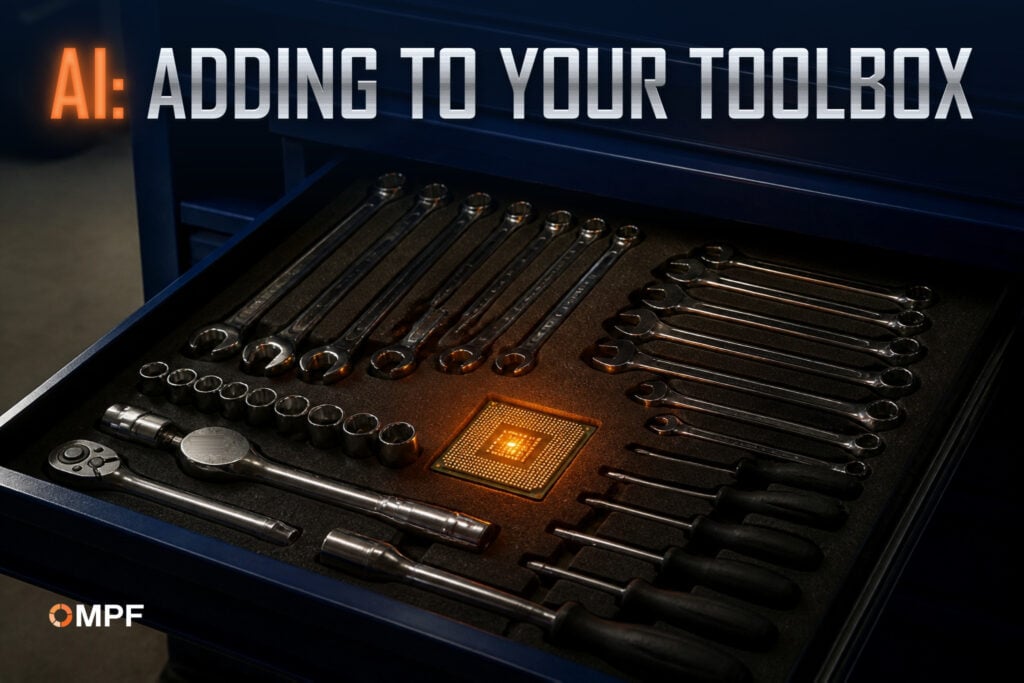
Shop cabinets overflow with tools that make technicians’ jobs faster, safer and easier. But more and more often the most powerful tools in a fleet operation aren’t found in the tool cabinet at all.
Artificial intelligence (AI) brings a new gizmo to the shop, one that can analyze information, identify patterns, automate repetitive tasks and bring important details to the surface faster.
“Today, we’re seeing fleets use AI to remove friction from manual, repetitive work and help teams speed up decision-making without sacrificing decision quality,” said Brianna Perry-Lang, senior product marketing manager at Fleetio.
But for successful adoption, fleet managers must determine where AI can create meaningful value, prepare the data needed to support it and put safeguards in place before expanding its use.
Start With the Problem
A frequent misstep happens when fleet managers decide the shop needs AI before they identify what they need it to accomplish, according to Perry-Lang.
“When organizations begin by asking which AI product to buy before identifying the workflow bottleneck they want to improve, they can end up with pilots that are interesting in theory but do not meaningfully change day-to-day execution,” she said.
She recommends identifying a few high-friction areas where employees lose time or decisions get delayed, then evaluating how AI might help. To figure out what these pain points are, fleet managers must review repair orders, sort inspection defects, analyze vehicle costs and various reports.
This upfront analysis also establishes a benchmark for assessing AI’s value.
Identify High-Value Applications

Maintenance is one area where AI is already showing practical potential. Perry-Lang said fleets are using AI to improve efficiency in maintenance workflows, balancing speed, cost control and consistency.
“AI-assisted service review is one of the strongest examples,” she said. “When AI can assess incoming repair orders against vehicle history, preventive maintenance schedules, vendor patterns and cost benchmarks, it can help fleets approve straightforward work faster, flag service that needs review, and catch anomalies before they become unnecessary spend.”
Using AI in this way also saves time. In fact, Perry-Lang said customers using the Fleetio AI Service Advisor are saving approximately 2.5 hours per repair.
AI can also help fleets prioritize issues coming from inspections, telematics systems and other sources. A fleet manager no longer has to manually review every alert or defect.
“AI can help identify which issues are truly critical, explain why and guide the team toward the next right step,” she said. “That shortens response times and helps prevent minor issues from becoming major downtime events.”
Put Fleet Data to Work
AI can enhance maintenance and asset workflows by acting as a decision-support layer across the full lifecycle of work. It can analyze utilization, cost and maintenance data across an entire account, enabling fleets to make better lifecycle decisions.
“What would normally take a fleet manager one or more days to filter and build, AI can surface insights in seconds or minutes,” Perry-Lang said. “That includes total cost of ownership by vehicle, identifying patterns that suggest an asset is becoming uneconomical to maintain and surfacing right-sizing opportunities across the fleet.”
Fleet managers overseeing public fleets with hundreds or thousands of assets can use AI to analyze large volumes of information faster to move from reactive decision-making toward more strategic asset management.
Get the Data Right First
Despite its benefits, Perry-Lang warns that AI cannot compensate for poor fleet data.
“AI is only as useful as the data it can draw from,” she said. “In edge cases, or situations where data is sparse, AI shouldn’t be filling in the gaps or pretending to know when the data isn’t there. But that means there are situations where AI needs stronger foundational data in order to provide an answer.”
If service histories are incomplete, line items are inconsistent or costs are scattered across disconnected systems, AI’s recommendations or guidance will be less actionable, she said.
Before deploying AI, fleets should examine whether records are complete, naming conventions are consistent and enough historical context exists to distinguish a true outlier from a normal variation.
“We see that clean data can help build trust,” she said. “Fleet leaders are more likely to adopt AI when the rationale is transparent, and the outputs align with what they know to be true operationally.”
Disconnected systems create another barrier, according to Perry-Lang.
If telematics information resides in one platform, inspections in another, fuel records somewhere else and maintenance history in yet another system, AI may lack the context needed to provide useful recommendations.
Connecting those information sources can therefore be as important as selecting the AI technology itself, she said.
“Connected systems bring that information together to give AI a more complete operational picture and enable more accurate insights, informed recommendations and meaningful action,” she said.
Start Small and Keep People Involved
Fleets do not need to automate major decisions with AI on day one. Instead, Perry-Lang recommends an incremental approach, beginning with lower-risk applications such as summarizing information, analyzing data or ingesting documents.
“They can expand their use of AI as confidence grows,” she said.
She recommends that fleets establish a small internal pilot group to test potential applications, identify shortcomings and document where the technology provides measurable value.
“In many fleets, a handful of people will naturally be more interested in these tools or quicker to understand where they fit,” she said. “That can be an advantage. Those early users can test practical use cases, build confidence, document what works, and then share those learnings with the broader team.”
Human oversight remains important during that process. Perry-Lang advises putting workflows in place to allow fleet employees to review recommendations before taking action.
That approach gives the organization an opportunity to compare AI-generated recommendations with actual results while employees become familiar with how the technology works.
Establish Guardrails
Perry-Lang said fleet policies must evolve as AI use expands.
Public fleets must understand what happens to the information they enter into an AI system, including where data is stored, who can access it, how long it is retained and whether it is used to train outside models.
“Rather than treating policy as a static rulebook [that gets] reviewed every few years, fleets should adopt a more dynamic framework that keeps pace with evolving AI capabilities,” she said. “That includes clarifying how fleet data is protected, how privacy and accountability are handled, who validates AI-driven insights, and where AI is permitted to act autonomously versus where it must remain advisory.”
Measure the Results
AI should be judged by its results, especially in government fleets that must justify spending tax dollars on new technology.
Perry-Lang recommends connecting AI initiatives to measurable outcomes such as faster service approvals, fewer delayed repairs, reduced administrative work, improved total-cost-of-ownership visibility and more consistent prioritization of safety-related issues.
Those metrics help fleet managers demonstrate whether AI is helping protect asset availability, control costs or improve productivity.
“In a budget-constrained environment, the argument is that AI can help protect the availability of assets and improve stewardship of taxpayer-funded equipment,” she said.
Tracking results also provides a basis for deciding whether a pilot should expand, change or end.
Keep AI in a Supporting Role
Perry-Lang expects the technology to increasingly connect operational signals with actions, allowing certain routine decisions to occur within predefined rules and permissions.
But she stresses AI does not eliminate the need for fleet professionals.
“Good fleet management depends on judgment, experience, policy awareness, vendor relationships, and an understanding of operational nuances,” she said. “What AI can do well is absorb repetitive tasks, monitor more signals than a person can realistically track at once, and keep routine work moving.”
That gives fleet professionals more time for the work that technology cannot replace, including evaluating exceptions, weighing tradeoffs, developing employees, managing relationships and making decisions for which someone must be accountable.
“Fleet AI is heading toward deeper workflow orchestration,” she said. “It will connect signals to actions across the maintenance lifecycle and autonomously act within defined rules and permissions, allowing fleet managers to refocus on larger operational decisions that need to be made.”